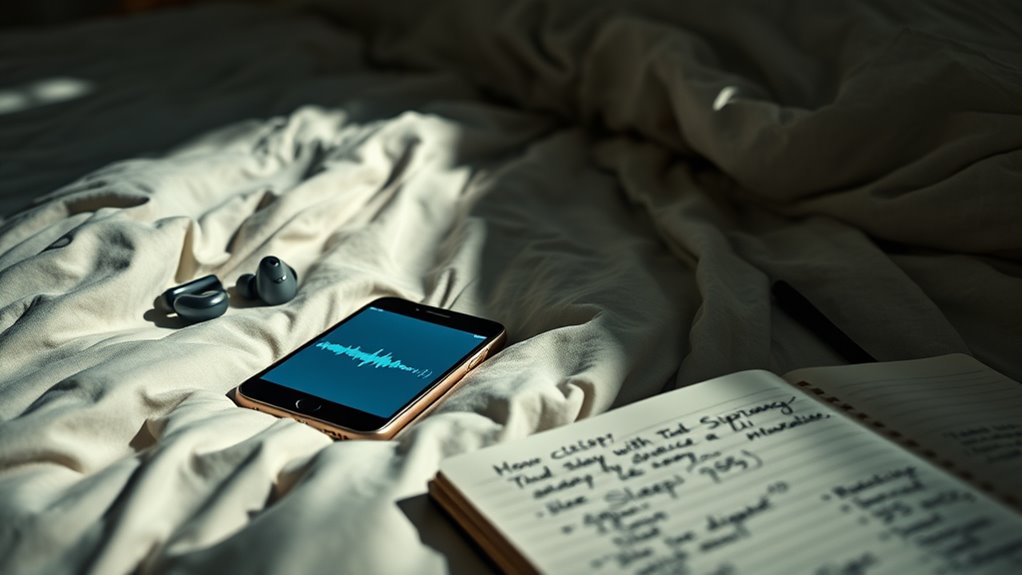

Snore recording apps can help you catch and analyze your sleep sounds, revealing snoring patterns and cycles. However, they often miss softer snores, background noises, or disturbances that can affect sleep quality. Noise filtering technology isn’t perfect and may misidentify sounds or overlook key details. While useful for initial insights, these apps don’t diagnose sleep issues. To uncover more about what’s happening during your sleep, keep exploring what these tools reveal.
Key Takeaways
- Snore recording apps detect and record loud snoring sounds but may miss softer or muffled snores due to noise filtering limitations.
- They analyze sound patterns to identify snoring frequency and patterns but cannot accurately determine sleep stages or severity.
- Recordings may overlook background noises or other sleep disturbances, leading to incomplete assessments of sleep quality.
- Apps cannot diagnose sleep disorders like sleep apnea; professional evaluation is necessary for accurate diagnosis.
- They serve as useful initial tools for monitoring habits but should be complemented with other data and medical advice for comprehensive sleep health.
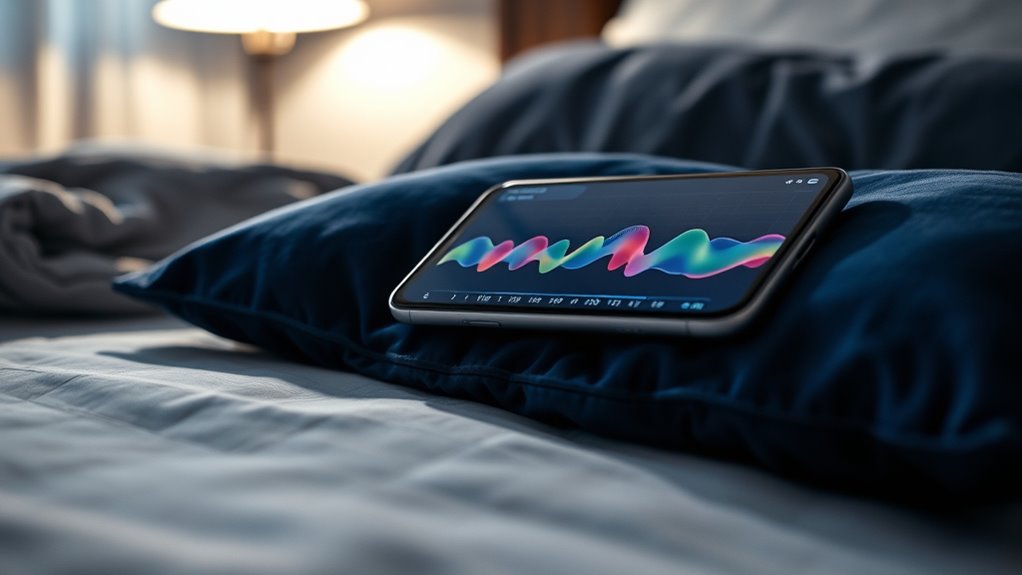
If you’re concerned about loud or frequent snoring, snore recording apps can help you monitor and understand your sleep patterns. These apps are designed to detect and record sounds during the night, giving you insights into when and how often you snore. By analyzing these recordings, you can identify patterns related to your sleep cycle, such as whether snoring worsens during specific stages like REM or deep sleep. Many apps also incorporate noise filtering technology, which helps distinguish your snoring from background noises like talking, pets, or outside sounds. This feature guarantees the recordings are more accurate, allowing you to focus on your actual snoring patterns rather than extraneous noise. Additionally, some apps provide guidance on unbiased advice and best practices for interpreting your recordings, helping you make more informed decisions about your sleep health. However, while these apps are useful, they do have limitations. Noise filtering isn’t perfect; sometimes, it can either overlook softer snoring or mistakenly identify other sounds as snoring. This means that the recordings might not always reflect the full extent of your sleep disturbances. Additionally, understanding your sleep cycle through recordings can be tricky. These apps often rely on sound alone, which doesn’t provide a complete picture of your sleep architecture. Without accompanying data like movement or heart rate, it’s challenging to precisely determine which sleep stages correspond to louder or more frequent snoring episodes. Another point to consider is that many snore recording apps focus on capturing sounds rather than analyzing their severity or impact on your sleep quality. They might tell you how often you snore but not how disruptive it is to your rest or whether it’s linked to underlying issues like sleep apnea. Some apps attempt to provide insights or alerts based on the recordings, but their accuracy can vary, and they shouldn’t replace professional medical advice. If your recordings reveal persistent or severe snoring, it’s wise to consult a healthcare provider. In essence, snore recording apps serve as helpful tools for initial monitoring and awareness. They can give you a clearer picture of your snoring habits, especially when combined with features like noise filtering that improve recording quality. Still, they’re not infallible, and understanding the full scope of your sleep health requires more thorough assessment. Use these apps as a starting point, but don’t rely solely on them to diagnose or treat sleep disorders. Instead, consider them as part of a broader approach to improving your sleep hygiene and seeking professional guidance when needed.

ZOETOUCH Smart Bluetooth Blood Pressure Monitor for Home Use, Clinically Accurate, Upper Arm Digital Wireless BP Machine with Large LED Display, App Connectivity, 2 Users, Fits Arms 8.7-16.5"
Reliable and Trusted Brand - ZOETOUCH automatic blood pressure monitor meets US 510 K (number K222887) and CE...
As an affiliate, we earn on qualifying purchases.
Frequently Asked Questions
Can Snore Apps Diagnose Sleep Apnea?
No, snore apps can’t diagnose sleep apnea. They may help with sleep apnea detection by capturing snoring patterns, but only a clinical diagnosis confirms the condition. If you suspect sleep apnea, you should consult a healthcare professional who can recommend a sleep study. These tests provide thorough data needed for an accurate diagnosis, which your app alone can’t deliver. Always seek professional advice for proper sleep disorder management.
How Accurate Are Snore Recording Apps?
Snore recording apps are like amateur detectives, trying to piece together your sleep story. They can catch loud noises during sleep stages, but their accuracy is limited—like trying to read a map in the fog. Noise levels vary, and subtle snoring or pauses often go unnoticed. So, while they give a general idea, don’t rely solely on them for a definitive diagnosis; consult a sleep specialist for that.
Do These Apps Record All Night Automatically?
Yes, most snore recording apps automatically record all night once you start them, but you should be aware of privacy concerns. These apps often access your microphone continuously, which might raise security issues. Additionally, app compatibility varies with devices, so verify your phone supports the app properly. Always review permissions and privacy policies before letting an app run overnight to protect your personal data.
Are Snore Recordings Private and Secure?
Think of your snore recordings as locks on a door—you want them secure. These apps often claim to protect your privacy, but privacy concerns remain. Reputable apps use data encryption to keep your recordings safe from outsiders. However, always review their privacy policies to understand how your data is stored and shared. You control your privacy, so choose apps that prioritize security and clearly explain their data handling practices.
Can Apps Distinguish Between Different Sleep Sounds?
Yes, many snore recording apps can distinguish between different sleep sounds through sound differentiation, helping identify whether you’re snoring, talking, or experiencing other noises. However, background noise can sometimes interfere, making it harder for the app to accurately categorize sounds. To get the best results, make certain your environment is quiet and free of unexpected noises, so the app can effectively analyze and differentiate your sleep sounds.
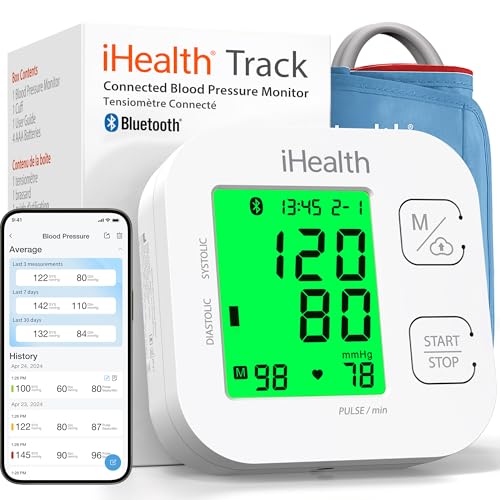
iHealth Track Smart Upper Arm Blood Pressure Monitor with Wide Range Cuff that fits Standard to Large Adult Arms, Bluetooth Compatible for iOS & Android Devices
Clinically Accurate: Easy Operation by two buttons, Advanced Accuracy, No Calibration required.
As an affiliate, we earn on qualifying purchases.
Conclusion
While snore recording apps can help you catch some noise, they’re not perfect—like a quack doctor claiming to diagnose everything. You might miss subtle sounds or misinterpret data, just like relying solely on a rotary phone in a smartphone world. If you’re serious about your sleep health, consider combining apps with professional advice. Don’t let these tools be your only guide; after all, even the best tech can’t replace a good old-fashioned sleep study.

Withings BPM Connect - Digital Blood Pressure Cuff & Heart Rate Monitor - Blood Pressure Machine Arm Cuff, FDA Cleared, FSA/HSA Eligible, IOS & Android
QUICK & EAST TO READ RESULTS with color-coded feedback on display case - this blood pressure cuff arm...
As an affiliate, we earn on qualifying purchases.

iHealth Jurni Smart Blood Pressure Monitor for Home Use, Rechargeable & High-Contrast Dual Display Upper Arm Blood Pressure Cuff for 2 Users, Clinically Validated, App-Enabled for iOS & Android
High-Contrast Dual Display for Clear Readings: The wide, backlit LCD screen with extra-large numbers makes it easy to...
As an affiliate, we earn on qualifying purchases.