To soothe tinnitus at bedtime, create a calming environment with soft, warm lighting and minimize noise. Use sound masking devices or nature sounds like gentle streams or rain at low volumes to cover tinnitus without overwhelming you. Personalize your sound choices and incorporate relaxation techniques such as meditation or breathing exercises to help shift your focus. Consistently practicing these audio strategies can improve your sleep—continue exploring ways to find what works best for you.
Key Takeaways
- Use personalized sound masking devices or nature sounds at low volume to cover tinnitus frequencies without causing distraction.
- Select consistent, soothing sounds like white noise or gentle nature noises to create a calming bedtime routine.
- Experiment with different sound types and volumes to find the most effective masking that reduces tinnitus awareness.
- Combine sound therapy with relaxation techniques such as guided meditation or breathing exercises for enhanced calming effect.
- Maintain regular use of chosen sounds nightly to help habituate your brain and improve sleep quality over time.
Understanding Tinnitus and Sleep Challenges

Many people with tinnitus find that their condition worsens at bedtime, making it difficult to fall asleep or stay asleep through the night. This happens because your brain’s auditory processing becomes more sensitive when external sounds fade, increasing awareness of tinnitus. Certain tinnitus triggers, like silence or quiet environments, can heighten this perception, intensifying the noise. Understanding how your auditory processing works helps you recognize why your tinnitus feels louder at night. Identifying these triggers allows you to develop strategies to manage them, such as introducing background noise or relaxing sounds. Creating a calm sleep environment can also reduce the impact of tinnitus on your rest. Additionally, understanding the auditory sensitivity changes that occur at night can help you tailor your noise-masking strategies more effectively. Being aware of auditory processing changes that happen at night can help you choose the most effective sound therapies. Incorporating adaptive sound therapy devices can further personalize your approach and improve sleep quality. Recognizing the role of ambient noise in masking tinnitus can empower you to select sounds that better suit your needs. Knowing what worsens your tinnitus at bedtime is the first step toward creating a more comfortable, sleep-friendly environment. This understanding empowers you to take control and improve your chances of restful sleep.
Creating a Calming Bedtime Environment
To create a calming bedtime environment, start by dimming the lights to signal your body it’s time to relax. Make sure your sleep space is comfortable and free of clutter, so you feel at ease. Also, reduce noise distractions, like electronics or loud sounds, to help your mind unwind. Using soundproofing techniques can further minimize external noise, promoting a more peaceful atmosphere. Incorporating air quality improvements such as air purifiers can also help remove airborne irritants that might disturb your sleep. Additionally, selecting energy-efficient devices for your bedroom can contribute to a healthier and more sustainable sleeping environment. Considering Free Floating principles, avoiding excessive clutter and maintaining a clutter-free space can help your mind relax and prepare for restful sleep. Paying attention to ventilation considerations can improve airflow and create a fresh environment conducive to restful sleep.
Dim Lighting Effects
Dim lighting can substantially influence your ability to relax and fall asleep, especially when dealing with tinnitus. By adjusting your lighting ambiance, you create a softer, more soothing environment that signals your body it’s time to wind down. Gentle, low-intensity lights reduce eye strain and enhance eye comfort, helping you avoid overstimulation before bed. Avoid harsh overhead lighting and opt for warm, dim lamps or bedside LEDs. This calming glow minimizes distractions and promotes relaxation, making it easier for your mind to settle. When your eyes aren’t strained, your overall stress levels decrease, providing a better chance for tinnitus symptoms to lessen. A thoughtfully dimmed space sets the perfect tone for a peaceful, tinnitus-friendly bedtime routine. Incorporating specialized lighting designed for relaxation can further improve sleep quality and reduce tinnitus awareness at bedtime. Additionally, selecting tunable lighting options allows you to customize brightness levels, further tailoring your environment to promote calmness and aid in tinnitus management. Utilizing lighting controls that adjust gradually over time can help your body transition smoothly into sleep, reducing potential disturbances. Aligning your lighting choices with an understanding of personal sensory sensitivities can also enhance your comfort and relaxation during the night. Employing light therapy techniques may also assist in establishing a consistent sleep routine, supporting overall tinnitus relief.
Comfortable Sleep Space
Creating a calming bedtime environment begins with designing a sleep space that promotes relaxation and comfort. Start by incorporating bedroom aromatherapy with calming scents like lavender or chamomile, which can help soothe your mind and reduce stress. Make certain your mattress and pillows support your preferred sleep position, making it easier to settle in peacefully. Adjust your sleep position if needed, avoiding tension or awkward angles that could disrupt rest. Keep the room tidy and free of clutter to create a serene atmosphere. Dim the lights or use soft, warm lighting to signal your body that it’s time to wind down. Using evidence-based sleep environment strategies can further enhance your chances of restful sleep. Incorporating comfort and support through supportive bedding can also significantly improve your sleep quality. Additionally, utilizing sound therapy techniques like calming music or gentle soundscapes can mask tinnitus noises and promote deeper relaxation. Ensuring that your sleep environment minimizes potential distractions and interruptions can make a notable difference for those managing tinnitus, helping you stay focused on relaxation. Applying noise masking devices or apps can provide consistent background sounds that reduce the perception of tinnitus during sleep. A comfortable, inviting sleep space sets the foundation for a restful night, especially when managing tinnitus.
Minimize Noise Distractions
Have you noticed how noise can make it harder to fall asleep when you’re dealing with tinnitus? Reducing noise distractions helps create a calmer environment. Consider these options:
- Use earplug options like foam or silicone to block out disruptive sounds.
- Invest in sound masking devices that generate white noise or gentle nature sounds.
- Close windows and doors to prevent outside noise from entering.
- Remove or silence electronic devices that produce unpredictable sounds.
- Be mindful of soundproofing techniques that can further diminish external noise infiltration, making your sleep environment even quieter. Incorporating nanotechnology-based insulation materials can enhance soundproofing efficiency and reduce external noise more effectively. Implementing modern soundproofing methods can significantly improve your sleep quality by creating a more controlled acoustic environment.
These strategies help drown out sudden noises and soothe your mind. Combining earplugs with sound masking devices can be especially effective, providing a consistent, calming background. Creating a quiet, controlled environment allows your tinnitus to become less intrusive, making it easier to fall asleep peacefully.
Using White Noise and Nature Sounds Effectively
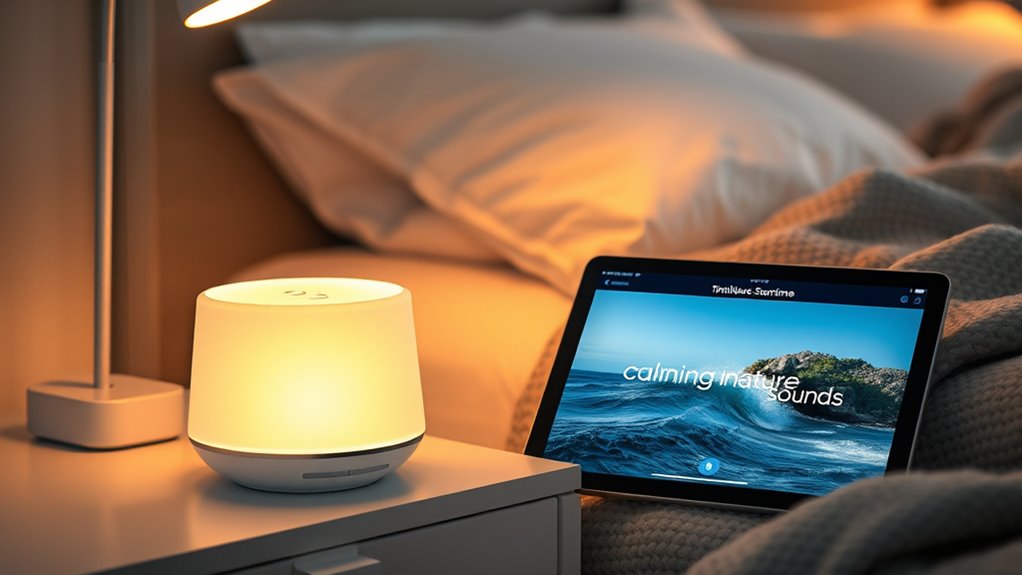
Using white noise and nature sounds can be highly effective for masking tinnitus and promoting restful sleep, but only if you select the right sounds and set them at appropriate levels. Focus on frequency masking by choosing sounds that cover the specific pitch of your tinnitus, making it less noticeable. Sound personalization is key; experiment with different types of noise and nature sounds to find what works best for you. Keep the volume low enough to mask your tinnitus without becoming a distraction. Avoid sudden changes in sound, which can disturb your sleep. Consistency helps; use the same sounds nightly to create a calming bedtime routine. With careful selection and volume control, white noise and nature sounds can markedly improve your sleep quality. Additionally, understanding sound masking techniques can help you optimize your auditory environment for better comfort.
Personalized Soundscapes for Tinnitus Relief
Since tinnitus varies greatly from person to person, personalized soundscapes offer a tailored approach that can be more effective than generic sounds. By using custom sound therapy, you can create personalized audio tracks designed to mask or reduce your specific tinnitus perception. Here’s how it works:
- You work with a professional to identify your tinnitus profile and preferences.
- Customized audio tracks are crafted to match your unique hearing and tinnitus characteristics.
- These tracks combine soothing sounds with your tinnitus frequency to promote habituation.
- Regular use helps retrain your brain to focus less on the ringing, providing relief over time.
Personalized soundscapes adapt to your needs, making them a powerful tool in managing tinnitus at bedtime effectively.
Incorporating Relaxation Techniques With Audio Aids

Combining relaxation techniques with audio aids can enhance the effectiveness of tinnitus management at bedtime. You might try guided meditation recordings designed to promote calmness and focus your attention away from the ringing. These recordings often guide you through visualizations or progressive muscle relaxation, helping your mind unwind. Pairing this with breathing exercises—such as slow, deep inhales and exhales—can further reduce stress and lower tinnitus awareness. Use audio aids that incorporate soothing sounds or gentle music alongside guided meditation and breathing prompts. This combination creates a calming environment, making it easier to relax and fall asleep. Consistent practice helps train your mind to associate these techniques with restful sleep, providing ongoing relief from tinnitus at bedtime.
Tips for Consistent and Comfortable Sleep Habits

Establishing consistent and comfortable sleep habits is essential for managing tinnitus at bedtime. Good sleep hygiene helps your body recognize bedtime cues and relax more easily. To improve your sleep, consider these tips:
- Stick to a regular sleep schedule, going to bed and waking up at the same time daily.
- Develop a calming meditation routine to quiet your mind before sleep.
- Avoid screens and caffeine close to bedtime, promoting better sleep hygiene.
- Create a relaxing environment by dimming lights and keeping your sleeping area quiet and comfortable.
Frequently Asked Questions
Can Specific Music Genres Help Reduce Tinnitus Symptoms at Bedtime?
Yes, certain music genres can help reduce your tinnitus symptoms at bedtime. Your music preferences and genre selection play a vital role; calming genres like classical, ambient, or nature sounds often provide soothing effects. Experiment with different styles to find what works best for you. Consistently listening to relaxing music can distract your mind from tinnitus, promote relaxation, and make it easier to fall asleep peacefully.
How Long Should I Use Sound Therapy Before Noticing Improvements?
Rome wasn’t built in a day, so give sound therapy some time. Generally, you should use it consistently for at least 4 to 6 weeks to see noticeable improvements. Duration guidelines suggest daily sessions of 30 minutes to an hour. Keep in mind, the effectiveness timeline varies from person to person. Patience and regular use are key; most people start noticing benefits within a few weeks.
Are There Any Risks Associated With Using Headphones or Earbuds Overnight?
Using headphones or earbuds overnight can pose risks if you’re not careful. Headphone safety is vital—you might experience ear discomfort or potential hearing damage from prolonged exposure. Earbud risks include increased chances of ear infections due to bacteria buildup. To stay safe, keep volume levels moderate, take breaks, and avoid sleeping with them in every night. Prioritizing proper hygiene and moderation helps prevent these issues while still enjoying audio therapy.
What Are the Best Ways to Mask Tinnitus Without Disrupting Sleep?
Mask your tinnitus like a gentle cloud passing by by using white noise or nature sounds. These audio options create a calming environment, helping you forget the ringing without disturbing your sleep. Keep the volume low and opt for a continuous loop to avoid sudden changes. Using a dedicated sound machine or a sleep app guarantees steady sound, making it easier to drift off peacefully while masking the tinnitus effectively.
How Can I Personalize Sound Choices for Different Tinnitus Severity Levels?
You can personalize sound choices by first conducting a tinnitus severity assessment to understand your specific needs. Then, opt for custom sound calibration, adjusting volume and frequency to match your tinnitus profile. Experiment with different sound therapies, gradually refining settings based on how your tinnitus responds. This tailored approach helps guarantee the sounds soothe your symptoms effectively, improving your sleep quality and overall comfort at bedtime.
Conclusion
Did you know that nearly 60% of people with tinnitus report sleep difficulties? By using calming sounds, creating a soothing environment, and incorporating relaxation techniques, you can substantially improve your bedtime experience. Consistency is key—finding what works for you and sticking to it can make a real difference. With the right audio strategies, you’ll not only quiet the ringing but also enjoy more restful, restorative sleep each night.