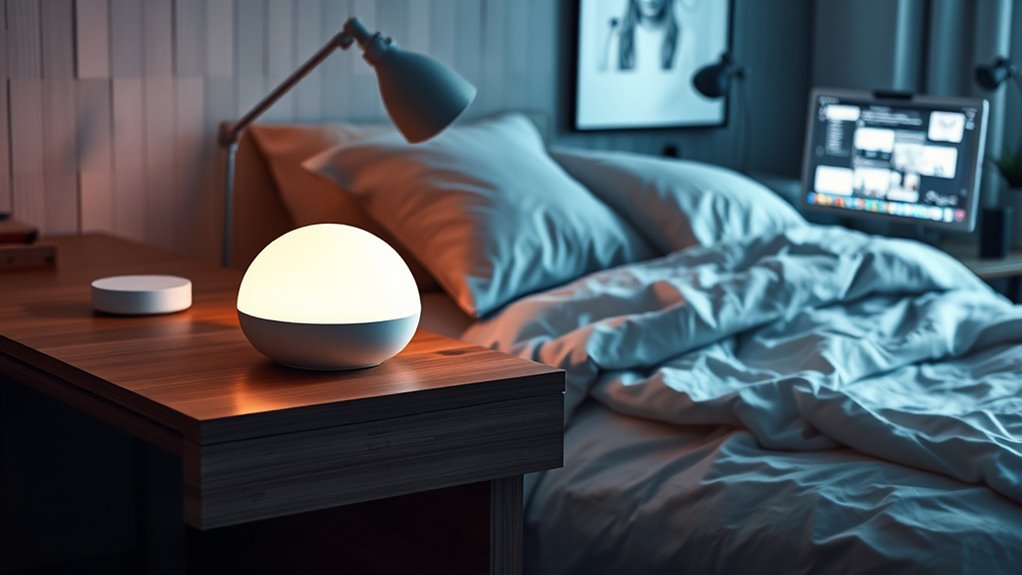

To optimize white noise for focus versus sleep, you should adjust the volume, tone, and soundscape accordingly. For focus, keep the sound softer and steady, like a gentle hiss, to mask distractions without becoming a nuisance. For sleep, increase the volume slightly and consider calming sounds like nature or gentle rain to promote relaxation and block out disruptive noises. Fine-tuning these settings helps create the ideal environment; discover more ways to customize your experience as you explore further.
Key Takeaways
- Use softer, steady white noise at moderate volume for focus, minimizing distractions without being intrusive.
- Increase volume slightly for sleep to effectively mask environmental sounds and promote relaxation.
- Choose calming soundscapes or gentle hiss for sleep to enhance comfort and reduce awakening risks.
- Adjust tone and complexity based on preference, favoring simple sounds for focus and soothing nature sounds for sleep.
- Tailor settings to individual needs, balancing volume and tone to optimize both concentration and restful sleep.
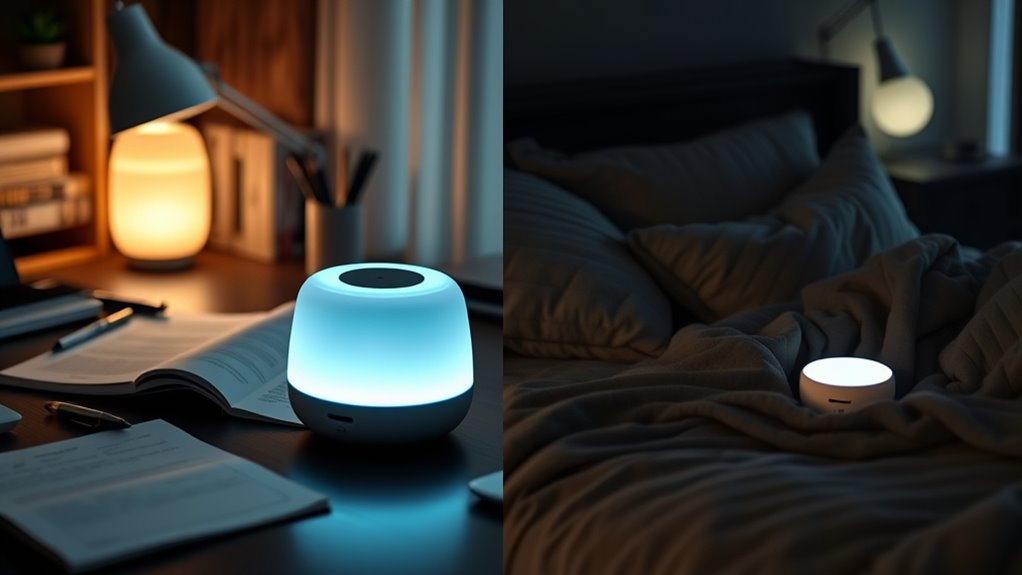
White noise is a versatile tool that many people turn to for different purposes, but its effectiveness can vary depending on whether you’re using it to enhance concentration or to promote sleep. When it comes to focus, white noise acts as a form of sound masking, drowning out distracting sounds in your surroundings. By providing a consistent ambient background, it helps to minimize sudden noises or conversations that can break your attention. This steady, uniform sound creates a barrier, allowing you to tune out external disruptions and maintain your focus on the task at hand. Many find that a gentle, unobtrusive ambient background helps them work more efficiently, especially in noisy or open-plan environments. The key is finding a sound that’s not too loud or intrusive, so it doesn’t become a distraction itself.
On the other hand, if you’re seeking sleep, white noise serves a different purpose. It still functions as sound masking, but here it’s about creating a calming ambient environment that encourages relaxation. The goal is to prevent sudden, jarring noises from waking you up, helping you drift into sleep more easily. In this context, white noise acts as a soothing ambient background, providing a consistent audio landscape that your brain can interpret as a stable, safe environment. Many sleep specialists recommend using white noise for this reason, as it can help habituate your mind to a predictable sound pattern, reducing the likelihood of awakening during the night. It’s important to adjust the volume so that it’s loud enough to mask disruptive noises but not so loud that it becomes a source of disturbance itself. Additionally, selecting the right white noise soundscape can enhance the calming effect and improve your overall sleep quality.
The settings you choose for white noise differ depending on whether you’re aiming to boost focus or sleep. For work or study, a softer, steady ambient background at a moderate volume often works best. For sleep, you might opt for a slightly louder setting that effectively masks environmental sounds without being disruptive. The tone and type of white noise can also matter; some prefer a more gentle, consistent hiss, while others find a more nature-inspired soundscape more relaxing. Ultimately, the key is to tailor the sound environment to your needs, ensuring it supports your focus during the day and promotes restful sleep at night. It’s all about creating the right balance and environment that helps you achieve your goals effectively.
Frequently Asked Questions
Can White Noise Improve Focus During Meditation Sessions?
Yes, white noise can improve your meditation concentration by providing a consistent sound environment, blocking out distractions. It acts as sound therapy, helping your mind stay focused and relaxed. When you use white noise during meditation, you create a calming atmosphere that enhances your ability to maintain attention, making your sessions more effective. Experiment with different settings to find the perfect balance for your personal meditation practice.
Are There Health Risks Associated With Long-Term White Noise Exposure?
Think of white noise as a double-edged sword—while it can boost focus, long-term exposure might pose health implications, especially if you’re noise-sensitive. Continuous loud noise can lead to hearing issues or increased stress levels. If you notice discomfort or heightened noise sensitivity, it’s best to limit exposure. Moderation is key; listening at safe volumes helps protect your hearing and overall well-being over time.
How Do Individual Preferences Affect White Noise Setting Choices?
Your personal preferences and noise intensity preferences considerably influence your white noise setting choices. You might prefer a softer, gentler sound for sleep, while a louder, more consistent noise helps you concentrate. Experimenting with different sound levels allows you to find what’s most comfortable and effective for you. Ultimately, tailoring the noise intensity to your individual liking enhances your focus or relaxation, making white noise more beneficial for your needs.
Is White Noise Effective for Sleep Disorders Beyond Insomnia?
White noise can help with sleep disorders beyond insomnia, acting like a calming wave that masks disruptive sounds. For example, my friend with tinnitus found white noise an effective alternative therapy, providing relief where noise cancellation alone couldn’t. While research shows promise, it’s essential to consult a healthcare professional. White noise creates a soothing environment, making it a valuable addition to your sleep routine, especially when combined with other therapies.
Can White Noise Settings Be Customized for Different Age Groups?
Yes, white noise settings can be customized for different age groups by considering age-specific customization and generational preferences. You can adjust volume levels, frequency ranges, and sound types to suit each group’s needs. For example, children may prefer softer, gentler sounds, while adults might favor more consistent, steady noises. Tailoring these settings helps optimize comfort and effectiveness, making white noise more suitable for everyone across generations.
Conclusion
So, next time you’re choosing between white noise for focus or sleep, remember it’s all about what suits you best. Some swear by the steady hum for concentration, while others find it helps them drift off effortlessly. Fascinatingly, studies suggest your mind might just adapt to the sound, making it feel more natural over time. Try both settings, trust your instincts, and see which one helps you relax or concentrate—your perfect soundscape is waiting.