To help your child with ADHD shift smoothly to bedtime, use calming tech cues like dimming screens gradually and playing soft sounds or white noise. Set visual schedules and timers to clearly signal upcoming routines, and keep devices out of sight to reduce overstimulation. Creating a consistent environment with gentle lighting and soothing sounds fosters relaxation. If you want practical tips on implementing these strategies effectively, keep exploring ways to support your child’s sleep routine.

Get wellness gear delivered free — and shop member deals
- Fast, free delivery on millions of items
- Access to Prime Big Deal Days deals on October 6–7
- Prime Video, Amazon Music and more included
Key Takeaways
- Use gradual screen brightness reduction and calming sounds as non-verbal cues to signal bedtime.
- Keep devices out of sight and limit screen time an hour before bed to reduce overstimulation.
- Implement visual schedules and timers to clearly communicate bedtime routines and expectations.
- Incorporate white noise or gentle melodies to create a soothing environment and promote relaxation.
- Monitor individual responses to tech cues and adjust routines for consistency and effectiveness.
Understanding How Tech Cues Influence Attention and Arousal in Children With ADHD

Since children with ADHD are often more sensitive to external stimuli, tech cues like notifications, bright screens, and interactive content can substantially impact their attention and arousal levels. Neurodevelopmental factors influence how their brains process sensory input, making them more reactive to visual and auditory stimuli. This heightened sensory processing can lead to increased alertness, difficulty focusing, and trouble calming down before bedtime. Bright screens emit blue light that further stimulates their brains, delaying melatonin production and making sleep harder to achieve. Additionally, the contrast ratio of screens can intensify visual stimulation, contributing to increased arousal. Understanding these sensory sensitivities helps caregivers implement effective strategies to reduce overstimulation. For example, the visual intensity of screens can significantly affect how much they stimulate the child’s nervous system, making moderation crucial. Moreover, the timing of screen use plays a key role in how these stimuli influence sleep patterns. Awareness of AI-driven content can help in selecting appropriate media that minimizes overstimulation. By understanding these neurodevelopmental sensitivities, you recognize that tech cues can either heighten arousal or cause distraction, complicating bedtime routines. Managing sensory input from devices is vital to helping children with ADHD transition smoothly toward sleep.
Using Light and Sound Cues to Signal Bedtime Transitions

Using light and sound cues can be an effective way to signal to children with ADHD that it’s time to shift from daytime activities to bedtime. Reducing screen brightness gradually helps create a calming environment, signaling that the day is ending. Keep devices out of reach and avoid placing screens directly in your child’s line of sight to minimize stimulation. Instead, use devices with adjustable brightness settings and set them to dim well before bedtime. Incorporate soft sounds or gentle chimes as signals, so your child associates these cues with winding down. Consistent device placement and lighting adjustments reinforce the changeover, making it easier for your child to recognize when bedtime is near. Establishing visual cues that are predictable and easy to interpret can further enhance their effectiveness. Incorporating connected fitness technology that offers customizable lighting and sound signals can support sleep routines and help create a predictable and soothing environment that promotes sleep readiness. Additionally, using adaptive technology can personalize cues to better suit your child’s specific needs and responses. Incorporating these tools can also help establish a consistent bedtime routine, which is crucial for children with ADHD to develop healthy sleep habits.
Implementing Visual Schedules and Digital Timers for Consistency
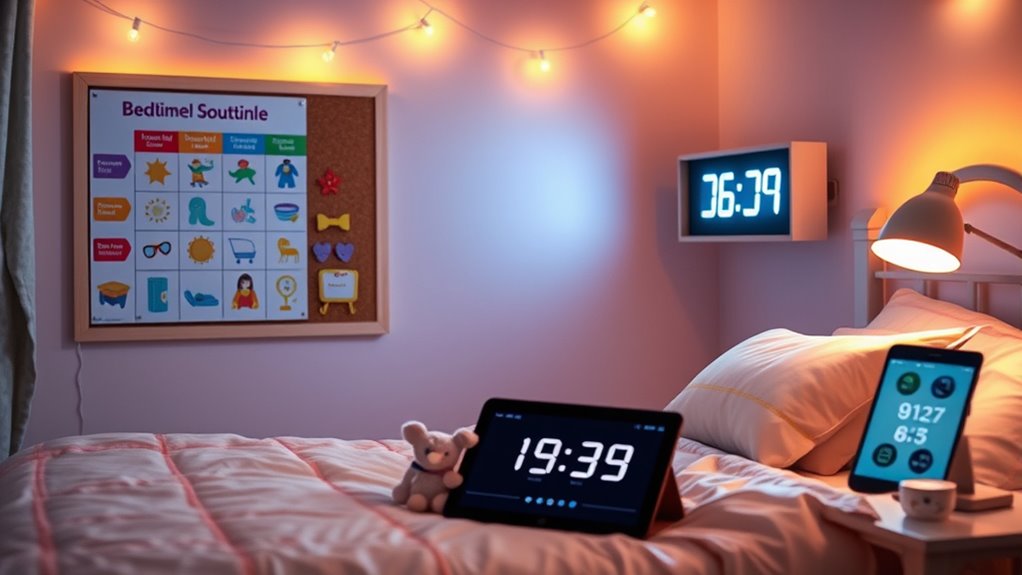
Implementing visual schedules and digital timers can markedly boost bedtime consistency for children with ADHD. A visual schedule provides a clear, step-by-step outline of the bedtime routine, helping your child understand what’s next and reducing resistance. Place the visual schedule in a visible spot, using images or icons that suit their comprehension level. Pair this with a digital timer to set specific limits for activities like brushing teeth or reading. As the timer counts down, your child receives a non-verbal cue that time is almost up, encouraging cooperation and smooth handovers. Consistently following this system trains your child to anticipate and accept bedtime routines, fostering independence and reducing bedtime struggles. These tools create predictable cues, making bedtime calmer and more structured. Incorporating local automation features can further customize these cues to suit your child’s needs and daily routines. Additionally, using safe and reliable timers and visual aids ensures the system remains effective and secure over time.
Creating a Calm Tech Environment to Promote Relaxation
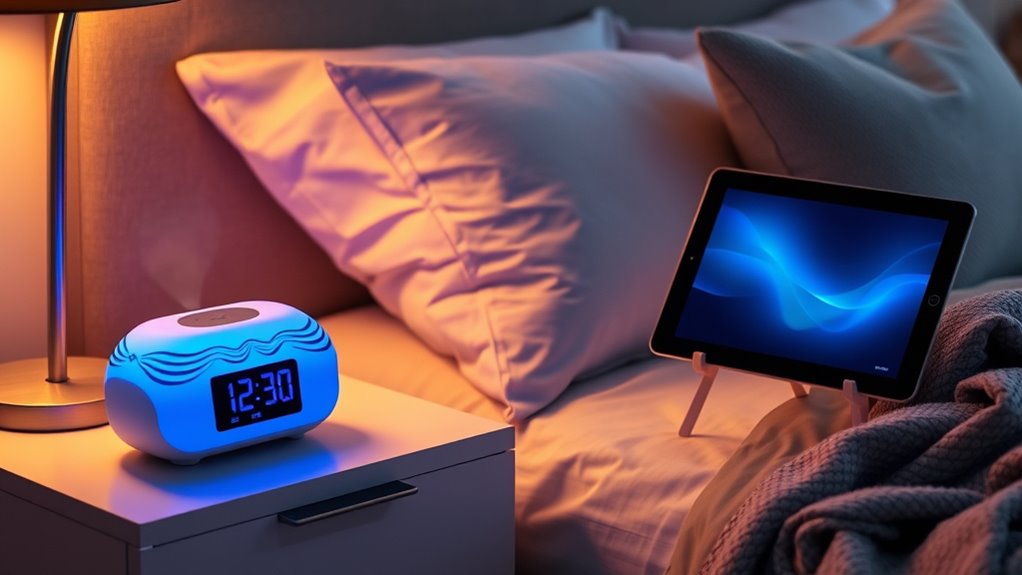
Creating a calm tech environment can considerably help children with ADHD relax and shift smoothly into bedtime. Limiting screen time in the hour before bed reduces digital distractions that can overstimulate their brains. Keep devices out of the bedroom or turn off notifications to minimize interruptions and reduce the urge to check screens. Use gentle lighting or dim screens to create a soothing atmosphere, signaling that it’s time to unwind. Removing digital distractions helps children transition from active screen use to a more relaxed state, making it easier to settle down. Establishing a tech-free zone and setting consistent boundaries encourages calmer behaviors and promotes better sleep. Setting clear boundaries around device use is essential for creating a calm and controlled tech environment that sets the stage for a peaceful bedtime routine. Incorporating modern technology features like timers and parental controls can further support a consistent and relaxing bedtime routine. Implementing digital management tools can also help in maintaining these boundaries effectively. Utilizing digital well-being features can assist in monitoring and limiting screen time, reinforcing healthy habits. Additionally, understanding how behavioral cues influence children’s responses can help tailor the environment to support relaxation.
Utilizing Gentle White Noise and Soothing Sounds as Bedtime Cues
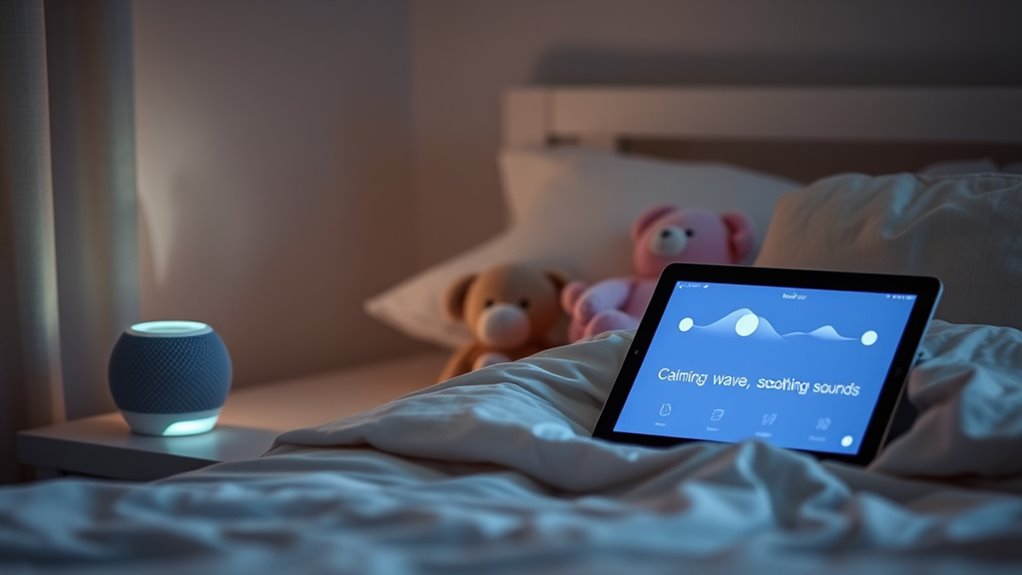
Using consistent sound patterns can help signal to your child that bedtime is near, creating a reliable cue for relaxation. Choosing calming sounds, like gentle white noise or soft nature sounds, can soothe restless minds and promote sleep. By sticking to these soothing cues, you establish a calming bedtime routine that supports your child’s needs. Incorporating air quality considerations such as a clean environment with purified air can further enhance sleep quality and overall well-being. Proper sound device placement can also ensure the soothing sounds are effective without causing disruption. Additionally, maintaining good sleep environment hygiene can help reinforce the calming effect of these cues and improve sleep quality. Ensuring a comfortable and quiet sleep environment helps maximize the benefits of these consistent sounds for your child’s rest. Being mindful of sound levels can prevent the sounds from becoming disruptive or too loud, ensuring a peaceful sleep setting.
Consistent Sound Patterns
Establishing a consistent sound pattern can be a powerful way to signal to your child that it’s time to wind down. Using familiar, gentle sounds creates a calming environment that promotes sensory integration and prepares them for sleep. Over time, your child will associate these sounds with bedtime, helping reduce bedtime resistance. Consider incorporating soothing white noise or soft music therapy sessions to reinforce this cue. The consistent auditory environment helps minimize distractions and overstimulation, making it easier for your child to shift from wakefulness to sleep. To create this routine, you might:
- Play the same gentle white noise every night
- Use calming nature sounds consistently
- Incorporate soft instrumental music during bedtime
- Maintain a steady sound level to foster familiarity and comfort
Calming Sound Choices
Choosing calming sounds for bedtime can markedly ease your child’s shift to sleep. Using sound therapy, such as gentle white noise or soothing melodies, creates a consistent cue that signals bedtime. Music therapy can also be effective by playing soft, calming tunes that your child associates with winding down. These sounds help drown out distractions and reduce anxiety, making it easier for your child to relax. Consistent sound choices strengthen the bedtime routine and provide a predictable environment, especially for children with ADHD. Keep the volume low and choose sounds that are gentle and repetitive. Over time, your child will come to associate these calming sounds with sleep, easing bedtime resistance and promoting a smoother transition to rest. Incorporating sound therapy tools like white noise machines or calming sound apps can further enhance this routine. Utilizing navigation and mapping principles, devices like white noise machines can be placed strategically to create an optimal sound environment, ensuring consistent and effective cues for sleep.
Incorporating Interactive Apps and Games to Ease the Transition

Interactive apps and games can make the bedtime routine more engaging and less stressful for children with ADHD. By using tools like interactive storytelling, you capture their attention and turn bedtime into a fun activity rather than a struggle. Digital reward systems motivate children to complete calming tasks and follow routines, reinforcing positive behavior. These apps often include visual cues and sounds that signal winding down time, helping children recognize when it’s time to sleep. As they progress through stories or games, they associate relaxation with tech cues rather than stimulation. You might see your child excitedly anticipate bedtime, ready to access new stories or earn rewards. This approach makes the shift smoother and helps establish a positive bedtime environment.
Establishing Tech Routines That Reinforce Sleep Cues

How can you create a tech routine that consistently signals to your child with ADHD that bedtime is approaching? Start by establishing clear tech etiquette, such as turning off devices at a set time each evening. Use visual or auditory cues from devices—like dimming screens or gentle sounds—to reinforce that bedtime is near. Keep device limitations in mind by limiting the duration of screen time before sleep, ensuring your child isn’t overstimulated. Consistency is key: stick to the routine daily so your child’s brain associates these cues with bedtime. Avoid unpredictable or inconsistent signals, which can confuse or frustrate your child. By establishing a predictable tech routine, you help reinforce sleep cues and create a calming transition from activity to rest.
Monitoring and Adjusting Tech Cues for Individual Needs
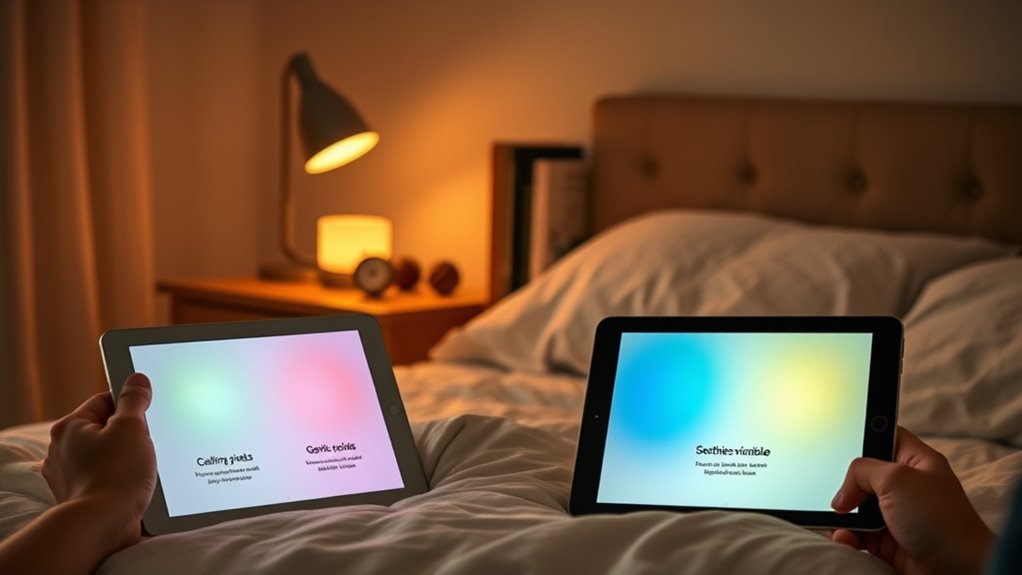
Since every child with ADHD responds differently to tech cues, it’s important to monitor how your child reacts to the signals you use and make adjustments as needed. Pay attention to their behavior during screen time and observe if they respond positively or seem overwhelmed. Regularly review your device management strategies to assure cues still work effectively. You might find that some children need longer or shorter warning periods, while others respond better to visual versus auditory signals. Keep track of their sleep patterns and adjust cues accordingly to support better bedtime routines. Flexibility is key, so don’t hesitate to tweak the tech cues based on your child’s evolving needs. Consistently monitor and modify your approach for the best results.
Monitor your child’s reactions and adjust tech cues for better sleep routines and screen time management.
- Adjust screen time limits based on responsiveness
- Change the timing or type of device management cues
- Notice if visual or auditory signals work better
- Fine-tune cues to align with your child’s sleep progress
Frequently Asked Questions
How Do Tech Cues Differ for Children With Different ADHD Subtypes?
You should customize tech cues based on ADHD subtype differences, as each child’s needs vary. For hyperactive-impulsive kids, use quick, engaging alarms or visual timers to signal bedtime. For inattentive children, set simple, clear prompts that grab attention without overwhelming. By tailoring cues, you help your child shift smoothly, ensuring the cues are effective and keeping bedtime routines consistent. These custom tech cues make a real difference for different ADHD subtypes.
Are There Specific Apps Recommended for Calming Bedtime Routines?
Like a gentle tide easing onto the shore, certain apps help soothe your child to sleep. You might try meditation apps like Calm or Headspace, which guide relaxation techniques, or play calming music through platforms like Spotify or YouTube Kids. These tools create a peaceful environment, signaling that bedtime’s near. Consistent use helps your child associate these cues with winding down, making the shift to sleep smoother and more predictable.
How Can Parents Measure the Effectiveness of Tech Cues Over Time?
You can measure the effectiveness of tech cues by tracking sleep patterns over time and gathering parental feedback. Keep a sleep journal or use sleep-tracking apps to monitor changes in your child’s sleep quality and duration. Regularly ask for parental feedback on how your child responds to cues, noting any improvements in bedtime behavior. Combining data and feedback helps you see if your tech strategies are truly making a difference.
What Are Signs That a Tech Cue Is Not Working for a Child?
If your child shows increased bedtime resistance or tech cue fatigue, the cue isn’t working. You might notice they ignore or dismiss the cues, become more resistant to bedtime, or take longer to settle down. They may also seem more irritable or distracted when it’s time to wind down. These signs indicate it’s time to adjust or try new cues, ensuring bedtime routines stay effective and engaging for your child.
How Do Tech Cues Integrate With Traditional Bedtime Routines for ADHD?
You can integrate tech cues with traditional bedtime routines by combining calming music therapy with sensory integration activities. Use devices to play soothing sounds or gentle visuals that signal bedtime, helping your child shift seamlessly. Incorporate tactile toys or weighted blankets alongside tech cues to enhance relaxation. This blended approach creates a consistent, calming environment that supports your child’s needs, making bedtime more predictable and less stressful.
Conclusion
Remember, a stitch in time saves nine. By thoughtfully using tech cues like lights, sounds, and schedules, you can make bedtime smoother for your child with ADHD. Consistency and patience help reinforce these cues, creating a calming environment that signals it’s time to wind down. With the right approach, you’ll find bedtime becomes less of a struggle and more of a peaceful shift, setting the stage for better sleep and brighter days ahead.
Fall Picks
fall essentials
As an affiliate, we earn on qualifying purchases.