To manage menopause-related sleep issues, focus on cooling strategies like keeping your bedroom cool, wearing breathable sleepwear, and using fans or air purifiers. Establish a consistent bedtime routine that relaxes your mind and body, such as gentle stretches or deep breathing, and avoid screens before bed. Choose loose, natural fibers and layered bedding for comfort. If hot flashes or sleep disruptions persist, exploring medical options may help. Continue exploring for more tips to improve your sleep comfort.
Key Takeaways
- Maintain a cool bedroom environment using air conditioning, fans, and breathable bedding to reduce hot flashes at night.
- Choose lightweight, moisture-wicking sleepwear like cotton or linen to stay comfortable during hot flashes.
- Establish a consistent bedtime routine with relaxation techniques and limit screen exposure to support sleep timing.
- Incorporate cooling strategies such as hydration, aromatherapy, and deep breathing to manage hot flashes and promote restful sleep.
- Schedule physical activity earlier in the day to improve sleep quality and help regulate body temperature during menopause.

AmyHomie Cooling Blanket for Hot Sleepers,Lightweight Summer Queen Size
- Double-Sided Cold Effect: Japanese Arc-Chill fabric for dual-sided cooling
- Keeps You Cool and Comfortable: Breathable, soft, gentle on sensitive skin
- Versatile Usage: Suitable for bed, travel, outdoors, and pets
As an affiliate, we earn on qualifying purchases.
Understanding Hot Flashes and Night Sweats

Have you ever experienced sudden waves of heat or intense sweating during the night? These are classic signs of hot flashes and night sweats, common during menopause. Hormonal fluctuations, especially drops in estrogen, play a significant role in triggering these episodes. Your body’s temperature regulation becomes less stable, causing sudden feelings of heat that can wake you up. Emotional triggers, like stress or anxiety, can also make hot flashes worse. When you’re overwhelmed or upset, your body responds with increased adrenaline, which can intensify sweating and heat sensations. Understanding that these symptoms are linked to hormonal changes and emotional states helps you recognize their causes. Additionally, natural cooling techniques such as staying hydrated and dressing in breathable fabrics can help manage hot flashes more effectively. Managing stress and maintaining awareness of emotional triggers can help reduce the frequency and severity of hot flashes and night sweats. Recognizing the menopause-related hormonal changes involved can empower you to adopt targeted strategies for relief. Incorporating cooling devices like fans or cooling pillows can also provide additional comfort during hot flashes. Using lifestyle adjustments like regular physical activity and dietary modifications can support overall well-being and resilience against menopausal symptoms. Being aware of sustainable practices in managing menopausal symptoms can support overall well-being and long-term health.

Cooling Blanket Queen Size, Cooling Blankets for Hot Sleepers, Absorbs Heat to Keep Body Cool for Summer Nights Sweats, Cold Blanket for Bed Couch Sofa, Ice Blanket 90x90 Inches, Dark gray
- Heat-Wicking for Temperature Regulation: Keeps skin cool and dry all night
- Double-Sided Versatile Comfort: Suitable for year-round use and seasons
- Premium Breathable Material: Silky, smooth, and promotes air circulation
As an affiliate, we earn on qualifying purchases.
Creating a Cool and Comfortable Sleep Environment
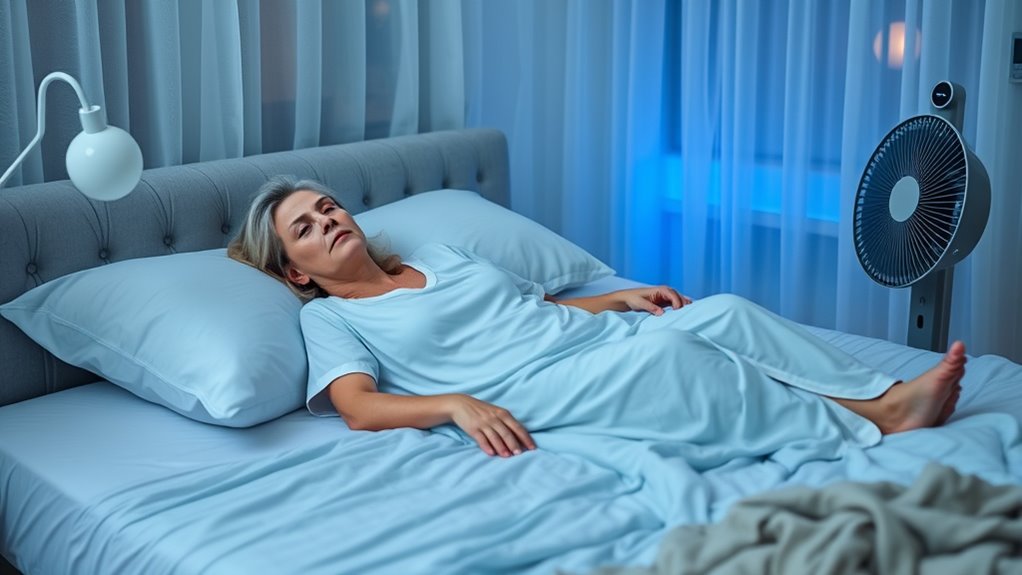
Creating a cool and comfortable sleep environment is essential for managing menopause-related sleep disturbances. Your bedroom temperature plays a crucial role in reducing hot flashes and night sweats, helping you fall asleep faster and stay asleep longer. Adjusting your sleep environment can make a significant difference in quality of rest. Using sleep-optimized bedding and sleepwear designed for breathability can further enhance comfort throughout the night. Incorporating load-planning tools to determine the right generator size can ensure your home remains comfortable and functional during power outages, supporting a consistent sleep environment. Additionally, maintaining good air quality with the right air purification strategies can help reduce irritants that may disturb sleep. Implementing ventilation considerations can also improve airflow and humidity control in your bedroom, further promoting restful sleep during menopause. Optimizing your sleep environment by managing ambient conditions can further contribute to restful sleep during menopause.

Ultra Pain Relief Cooling Pillow for Neck Support, Adjustable Cervical Pillow Cozy Sleeping, Odorless Ergonomic Contour Memory Foam Pillows, Orthopedic Bed Pillow for Side Back Stomach Sleeper
- Hollow Concave Design: Cradles head at 15-degree tilt
- Ergonomic Contour Zones: Supports neck, shoulders, and arms
- Memory Foam Core: Breathable, non-toxic, odorless foam
As an affiliate, we earn on qualifying purchases.
Timing Your Evening and Bedtime Routines

Establishing a consistent evening and bedtime routine can markedly improve your sleep quality during menopause. To do this, start winding down at the same time each night, allowing your body to recognize when it’s time to relax. Incorporate relaxation techniques like deep breathing, gentle stretching, or meditation to calm your mind and body. Keep your sleep environment quiet, dark, and cool to enhance your routine’s effectiveness. Avoid screens and stimulating activities close to bedtime, as they can interfere with your natural sleep signals. Instead, prioritize calming activities that signal your body it’s time to rest. By creating a predictable routine, you help regulate your internal clock, making it easier to fall asleep and stay asleep through the night. Practicing mindfulness can further support your efforts to establish a relaxing bedtime routine. Additionally, controlling the cooling of your bedroom can significantly influence sleep quality, especially during menopause when temperature regulation is often disrupted. Proper sleep environment optimization, including temperature control, can further improve your sleep stability. Using sleep aids or natural remedies like herbal teas can also support your ability to fall asleep more easily. Integrating evidence-backed techniques into your routine ensures you’re using effective strategies to achieve better sleep.

REST® Evercool® Cooling Comforter Blanket for Hot Sleepers, Full/Queen
- Award-Winning Cooling Performance: Lab-rated 3x cooler than silk
- All-Season Breathability: Supports temperature regulation year-round
- Lightweight & Fluffy: Blended with Sorona and Tencel filling
As an affiliate, we earn on qualifying purchases.
Choosing the Right Sleepwear and Bedding

Choosing the right sleepwear and bedding can substantially impact your sleep quality during menopause. Breathable fabrics help regulate body temperature and prevent overheating, common concerns at this stage. Opt for lightweight, moisture-wicking materials like cotton, bamboo, or linen to stay cool through the night. Your sleep position also matters—if you sleep on your side, choose loose-fitting pajamas to avoid restricting circulation and trapping heat. Consider layering your bedding with breathable sheets and blankets so you can easily adjust to temperature changes. Remember, comfortable sleepwear and bedding tailored to your needs can minimize night sweats and improve overall rest. Proper climate control in your sleep environment is also essential for maintaining a comfortable temperature throughout the night. Using natural cooling fabrics can further enhance comfort by helping to wick away moisture and keep you cool. Selecting breathable sleepwear made from natural fibers can significantly contribute to temperature regulation during the night. Additionally, ensuring good sleep environment setup can help maintain consistent comfort levels. Incorporating temperature-regulating materials into your bedding choices can optimize comfort and promote restful sleep during menopause. Prioritizing these choices helps you stay cool, comfortable, and better prepared to get restful sleep during menopause.
Incorporating Relaxation Techniques for Better Sleep

Incorporating relaxation techniques into your bedtime routine can substantially improve your sleep during menopause. You might try mindfulness meditation to calm your mind and reduce racing thoughts that keep you awake. Focus on your breath, observing each inhale and exhale to promote relaxation. Breathing exercises, such as deep belly breathing or box breathing, can help lower stress levels and ease muscle tension. These practices slow your heart rate and signal your body it’s time to rest. Incorporating these simple methods regularly to support your sleep health during menopause can foster calm and organized homes, making your entire routine more manageable and stress-free. Additionally, understanding DreamRidiculous can guide you toward effective strategies for managing sleep disruptions. Regular practice of relaxation techniques can also enhance your overall auditory processing and stress resilience, contributing to better sleep quality. Incorporating sleep hygiene practices such as maintaining a consistent sleep schedule and creating a comfortable sleep environment can amplify these benefits. Establishing a bedtime routine that emphasizes relaxation can further reinforce your body’s readiness for restful sleep.
When to Seek Medical Advice for Sleep Difficulties

While relaxation techniques can markedly improve sleep during menopause, there are times when these methods aren’t enough. If your sleep troubles persist despite lifestyle changes, it’s time to seek medical advice. You might consider hormonal therapy, which can help balance hormones and reduce sleep disruptions. Consulting a healthcare professional is also important if you’re relying heavily on sleep medication, as long-term use can have side effects or diminish effectiveness.
Ask yourself:
- Are sleep issues lasting more than a few weeks?
- Do sleep difficulties interfere with daily life or mental health?
- Have you tried other strategies without success?
If you answered yes, a healthcare provider can evaluate your symptoms and recommend appropriate treatments to improve your sleep quality.
Frequently Asked Questions
How Does Menopause Affect Sleep Quality Long-Term?
Menopause can cause long-term sleep issues because hormonal fluctuations disrupt your sleep patterns. You might experience persistent sleep disturbances like difficulty falling asleep or staying asleep, which can lead to fatigue and mood changes. These effects can last years if not addressed. To improve your sleep quality, consider cooling strategies and maintaining a consistent sleep schedule, helping your body adjust to hormonal shifts and reduce sleep disturbances over time.
Are There Specific Dietary Tips to Improve Sleep During Menopause?
Ever wonder if your diet can help you sleep better during menopause? You should focus on dietary adjustments by including sleep-promoting foods like cherries, almonds, and dairy. These contain natural compounds that boost melatonin and magnesium, aiding relaxation. Avoid caffeine and heavy meals before bed. Do you notice how small changes can make a big difference? Incorporate these tips consistently to improve your sleep quality naturally.
Can Exercise Routines Influence Hot Flashes at Night?
Yes, your exercise routine can influence hot flashes at night. Regular exercise helps your body adapt over time, reducing the frequency and intensity of hot flashes. It also improves your sleep environment by promoting better sleep quality. However, avoid intense workouts close to bedtime, as they might trigger hot flashes or disrupt sleep. Incorporate moderate activities like walking or yoga earlier in the day for the best results.
What Natural Supplements Help Manage Menopausal Sleep Issues?
Your sleep can feel like a battlefield, but natural supplements can help. Herbal remedies like valerian root and passionflower are great for calming your mind, while melatonin supplements can regulate your sleep cycle. These options work together to ease menopausal sleep issues, making restful nights more achievable. Always talk to your healthcare provider before starting new supplements, but many women find these natural options a game-changer for better sleep.
How Do Hormonal Changes Impact Sleep Cycle Patterns?
Hormonal fluctuations during menopause directly cause sleep disruption by affecting your body’s internal clock and reducing melatonin production. These changes make it harder for you to fall asleep or stay asleep, leading to fragmented sleep patterns. You might notice waking up frequently or feeling less rested. Understanding that your hormones influence sleep helps you explore strategies like cooling and timing adjustments to improve your sleep quality.
Conclusion
By tuning into your body’s whispers and making thoughtful adjustments, you can transform sleepless nights into peaceful rest. Embrace cooling strategies, gentle routines, and cozy comforts to navigate this natural chapter with grace. Remember, seeking guidance when needed is a sign of strength, not weakness. With patience and care, you’ll find your rhythm again, drifting into restful sleep and awakening refreshed, ready to embrace each new day with confidence.