At night, particles like dust mites, pet dander, bacteria, VOCs, and fine particulate matter can influence your sleep quality. These airborne pollutants can trigger allergies, irritate your airways, and cause breathing issues that wake you or reduce restfulness. Selecting an air purifier with a HEPA filter helps capture these tiny particles, especially ultrafine ones like bacteria and smoke. If you want to guarantee a truly peaceful night, understanding which particles matter most will help you make better choices.
Key Takeaways
- PM2.5 and ultrafine particles like bacteria and smoke can penetrate deep into lungs and bloodstream, disrupting sleep.
- Dust mites, pet dander, and allergens in bedding and carpets trigger respiratory issues and allergies at night.
- VOCs from household products can cause headaches and irritation, affecting sleep quality.
- HEPA filters effectively capture small particles, including bacteria and dust, improving indoor air for restful sleep.
- Regular maintenance of air purifiers and proper ventilation help maintain clean air and enhance sleep hygiene.

14,000 BTU Portable Air Conditioners, Cools Large Room Up to 700 Sq.Ft, 3-in-1 AC Unit with Dehumidifier & Fan, Remote Control, Quiet Sleep Mode, Energy Efficient for Home Office Garage
- Powerful 14,000 BTU for Large Rooms: Cools up to 700 sq.ft.
- High-Efficiency Dehumidifier: Removes 90 pints of moisture daily
- Remote Control & Programmable Timer: Adjusts settings remotely with 24-hour scheduling
As an affiliate, we earn on qualifying purchases.
Common Particles Found Indoors During Sleep

Many common particles can linger indoors while you sleep, affecting your air quality and overall health. Airborne bacteria often float in the air, especially in poorly ventilated spaces, increasing your risk of respiratory issues or infections. Pet dander is another common indoor particle, shed by cats, dogs, and other animals, which can trigger allergies or asthma symptoms. These particles stay suspended in the air, making it easy for you to inhale them during the night. Even if you don’t have pets, airborne bacteria can originate from damp surfaces or contaminated air. Both airborne bacteria and pet dander contribute to poor air quality, which can disturb your sleep and impact your overall well-being. Understanding these particles is key to improving your indoor environment. Expert tips on maintaining proper ventilation can further reduce these indoor particles and promote healthier sleep conditions. Additionally, ear wax odor and other subtle particles can sometimes be present in the environment, influencing air quality in ways that are less obvious but still impactful. Recognizing the role of indoor air quality is essential for creating a safe and healthy sleeping space. Incorporating air purifiers equipped with HEPA filters can significantly reduce airborne particles, improving sleep quality and health. Furthermore, selecting the right air purifier technology can optimize particle removal efficiency for your specific indoor environment.

TECXERLLON 15,000 BTU Portable Air Conditioner for Large Room up to 800 Sq. Ft., Quiet 48dB 4-in-1 AC Unit with Dehumidifier, Self-Evaporating, Sleep Mode, Remote & Window Kit
- Cooling Capacity: 15,000 BTU for large rooms up to 800 sq. ft.
- Multi-Function 4-in-1: Cooling, dehumidifying, fan, sleep modes
- High Dehumidification: Removes up to 100 pints of moisture daily
As an affiliate, we earn on qualifying purchases.
How Particulate Matter Affects Your Rest

Particulate matter in your indoor air can considerably disrupt your sleep quality. When these tiny particles settle in your lungs, they trigger inflammation and irritation, making it harder to fall asleep or stay asleep through the night. Poor air quality can also worsen breathing issues, causing snoring or sleep apnea symptoms to intensify. To combat this, proper air purifier maintenance is essential; replacing filters regularly guarantees excellent performance. This helps reduce airborne particles, creating a healthier sleep environment. Regular air purifier maintenance ensures optimal filtration efficiency and prolongs device lifespan. Additionally, choosing the right filter replacement schedule based on your usage can significantly improve air purification. By enhancing your sleep environment, you lower the risk of waking up feeling unrested or congested. Moreover, maintaining good indoor air quality can reduce allergen buildup that might disturb your sleep cycle. A well-maintained filtration system also minimizes particulate matter buildup in your home, further supporting restful sleep. Ultimately, controlling particulate matter not only improves your sleep quality but also supports overall health and well-being, making your nights more restful and restorative. Ensuring your air quality remains high is a crucial step toward better sleep hygiene.

BLACK+DECKER Smart Portable Air Conditioner, 14,000 BTU, BPACT14WT, White
- Multi-Function 3-in-1 Unit: Cooling, dehumidifying, and fan modes
- Portable Design: Fits rooms up to 700 sq. ft.
- Smart Voice Control: Compatible with Alexa and Google Assistant
As an affiliate, we earn on qualifying purchases.
The Role of Allergens and Dust Mites at Night

Since allergens and dust mites thrive in indoor environments, they often become more active at night when temperatures drop and airflow slows down. This increased activity can lead to higher concentrations of airborne bacteria, pet dander, and other allergens in your sleeping space. These particles can trigger allergic reactions, asthma symptoms, or disrupt your sleep quality. Dust mites feed on skin flakes and thrive in bedding, pillows, and carpets, releasing allergens into the air. Pet dander from your furry friends can also accumulate during the night, aggravating sensitivities. Using an air purifier with a HEPA filter can help reduce these allergens and airborne bacteria, creating a cleaner, healthier environment that promotes better sleep and minimizes allergy symptoms. Additionally, air purification technology can effectively target and remove a wide range of microscopic particles, further improving indoor air quality. Incorporating proper ventilation can also help prevent the buildup of these particles and maintain a healthier sleeping environment. Regularly cleaning bedding and ensuring good airflow can further reduce allergen accumulation and improve sleep quality. Proper filter maintenance is essential to ensure your air purifier continues to operate at peak efficiency, effectively removing airborne particles. Implementing air quality monitoring devices can help track allergen levels and optimize your purification strategies.

DREO Portable Air Conditioner 318S, 8000 BTU ASHRAE (5000 BTU DOE) Smart AC Unit for Bedroom with Drainage-free Cooling, Fan&Dehumidifier 3 in 1, APP/Voice/Remote, Quiet Standing AC for Room Indoors
- Powerful Cooling Coverage: Cools up to 14 ft away with 8000 BTU
- Versatile 3-in-1 Functionality: Cooling, Fan, and Dry modes with multiple controls
- Quiet Operation: Operates at just 45dB for peaceful use
As an affiliate, we earn on qualifying purchases.
Importance of Particle Size in Air Purification

Understanding particle size helps you choose an air purifier that effectively removes harmful pollutants. Fine particles like PM2.5 pose serious health risks, even if they’re invisible to the naked eye. Recognizing the differences between coarse and ultrafine particles guarantees you get better filtration and cleaner air while you sleep. Additionally, being aware of energy efficiency can help you select devices that operate effectively without increasing energy consumption. Knowing the performance of an air purifier ensures it can handle the specific particle sizes prevalent in your environment, leading to healthier indoor air quality. Incorporating AI-driven analysis can further optimize your choice by identifying the most effective filtration technologies for your needs. For instance, understanding the net worth of individuals involved in related fields can sometimes influence the availability or development of advanced air purification technologies. Moreover, particle size distribution plays a crucial role in determining the effectiveness of filtration systems tailored for different indoor environments.
Fine Particle Filtration Efficiency
The effectiveness of an air purifier often depends on its ability to filter out particles of various sizes, especially the tiny ones that can penetrate deep into your lungs. Fine particle filtration efficiency is vital for removing these small pollutants, such as dust, pollen, and smoke. Look for filters rated to capture particles as small as 0.3 microns, which are most challenging to filter. Regular air purifier maintenance guarantees the filters stay effective, maintaining ideal performance and improving sleep hygiene. When filters become clogged, the purifier’s ability to trap fine particles diminishes, reducing air quality during the night. Investing in a device with high fine particle filtration efficiency helps you breathe cleaner air and supports healthier sleep patterns by minimizing nighttime irritants. Additionally, understanding filter media guides can help you select the most effective filtration options for your needs. Understanding particle sizes can further assist in choosing the right filter to target specific pollutants.
PM2.5 and Health Risks
While high-efficiency filters can capture tiny particles, it’s important to recognize which particles pose the greatest health risks. PM2.5 particles, measuring 2.5 micrometers or smaller, are particularly dangerous because they can penetrate deep into your lungs and even enter your bloodstream. These microscopic particles often originate from vehicle emissions, industrial processes, and burning fuels. Poor air quality caused by PM2.5 can lead to respiratory issues, cardiovascular problems, and inflammation, affecting your overall health and sleep hygiene. To visualize their impact, consider particles that:
- Float invisibly in the air around you
- Penetrate your lungs with every breath
- Trigger coughing or wheezing during sleep
- Contribute to long-term health risks
- Disrupt restful, quality sleep
- Are governed by standards such as those set for air quality regulations to ensure safety and health. Additionally, understanding the particle size distribution can help you better assess the effectiveness of your air purification system. Recognizing the sources of PM2.5 can also guide you in reducing exposure and improving indoor air quality.
Coarse vs. Ultrafine Particles
Have you ever wondered why some air purifiers target certain particles better than others? The key lies in particle size. Coarse particles, like dust and pollen, are larger and easier to filter, but they settle quickly. Ultrafine particles, such as airborne bacteria and smoke particles, are much smaller and stay suspended longer. These tiny particles can penetrate deep into your lungs and even enter your bloodstream, making them particularly harmful at night. High-efficiency filters like HEPA are designed to capture ultrafine particles effectively, reducing health risks. Understanding the difference helps you choose the right purifier for your needs, especially if you’re concerned about airborne bacteria or smoke particles that can disrupt sleep or impact your health.
Pollutants From Indoor Sources That Can Disrupt Sleep
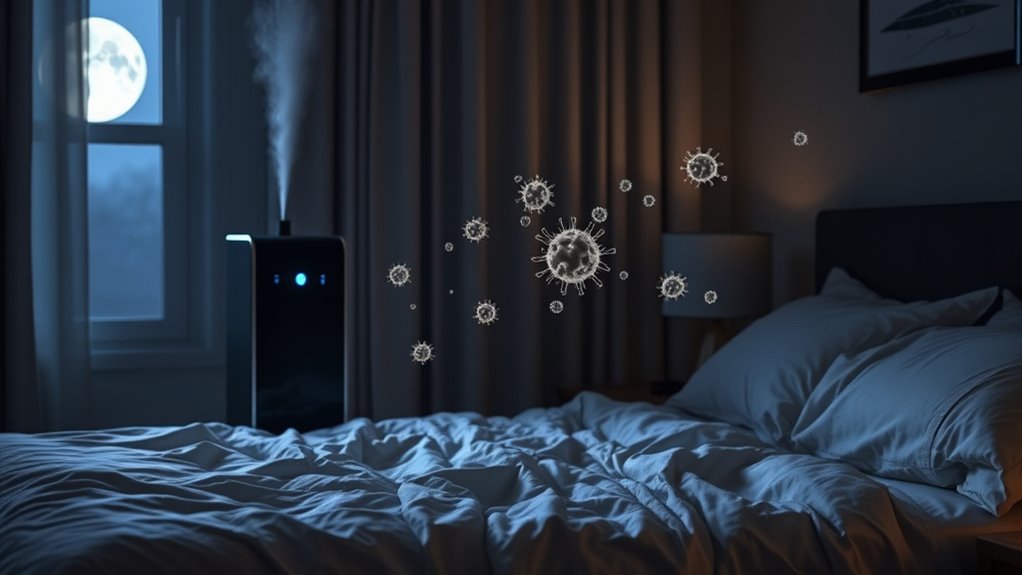
Indoor pollutants like VOCs, mold spores, and dust mite allergens can interfere with your sleep quality. These pollutants often come from everyday sources such as cleaning products, damp areas, and bedding. Understanding how they affect you is key to creating a healthier sleep environment.
Volatile Organic Compounds (VOCs)
Volatile Organic Compounds (VOCs) are common pollutants released from everyday household items such as paints, cleaning products, and furniture. These chemicals can linger in your indoor air, negatively impacting your indoor air quality and sleep environment. When VOC levels are high, you might notice headaches, irritation, or difficulty falling asleep. To visualize, imagine:
- Freshly painted walls emitting fumes
- Scented cleaning sprays filling the room
- New furniture off-gassing chemicals
- Air fresheners releasing artificial fragrances
- Carpet adhesives releasing fumes
Reducing VOCs helps create a healthier sleep environment by minimizing airborne irritants. Using air purifiers equipped with activated carbon filters can effectively trap these compounds, improving your indoor air quality and supporting better sleep at night.
Mold and Mildew Spores
Mold and mildew spores can easily thrive in damp, poorly ventilated areas of your home, especially after cleaning or during humid weather. These mold spores and mildew particles become airborne, making it easy for you to inhale them while sleeping. Exposure to these particles can cause allergic reactions, respiratory issues, and worsen asthma symptoms, disrupting your rest. Air purifiers equipped with HEPA filters help capture and remove mold spores and mildew particles from the air, reducing their concentration in your bedroom. Keeping humidity levels low, fixing leaks, and improving ventilation also limit mold growth. By effectively removing mold and mildew spores from your environment, you create a healthier sleeping space and support better sleep quality.
Dust Mite Allergens
Dust mite allergens are a common trigger for allergy symptoms that can severely disrupt your sleep. These tiny creatures thrive in bedding, pillows, and mattress seams, releasing allergens that irritate your airways overnight. To effectively combat them, regular air purifier maintenance is essential, ensuring it filters out these microscopic particles. Visualize a clean sleep environment, free from sneezing fits and nasal congestion caused by dust mites. Imagine your bed surrounded by a purified, allergen-free atmosphere, helping you breathe easier. To optimize your sleep environment, wash bedding weekly in hot water, use allergen-proof covers, and keep humidity low. An air purifier equipped with HEPA filters dramatically reduces dust mite allergens, making for a more restful night. Sleep soundly knowing you’ve minimized indoor allergen exposure.
The Impact of Volatile Organic Compounds (VOCs) While Sleeping

Have you ever wondered how the air you breathe during sleep might affect your health? Volatile Organic Compounds (VOCs) are airborne chemicals released by household products, paints, and cleaning supplies, and they can linger in your sleep environment. These compounds can cause headaches, respiratory irritation, and even long-term health issues if inhaled over time. Modern air purifier technology helps reduce VOC levels by filtering out these harmful particles, creating a safer sleep environment. Using an air purifier with activated carbon filters is especially effective at capturing VOCs. By improving your sleep environment in this way, you minimize exposure to airborne chemicals, supporting better health and more restful sleep. Protecting yourself from VOCs is a simple step toward healthier nights.
Features in Air Purifiers to Target Nighttime Particles

To effectively reduce nighttime airborne particles, modern air purifiers are equipped with specialized features designed for quiet, continuous operation. These features ensure you sleep undisturbed while maintaining ideal air quality. Look for units with advanced noise reduction technology, so the purifier operates softly in the background. Many models include energy-efficient modes that lower power consumption during nighttime use, saving you money. Some purifiers have adjustable fan speeds, allowing you to set a gentle, low-noise setting. Others feature smart sensors that automatically adjust performance based on air quality, reducing unnecessary energy use. Visualize a sleek device quietly humming in the corner, with soft LED indicators and whisper-quiet fans working tirelessly to keep your sleep environment clean.
Tips for Choosing an Effective Nighttime Air Purifier

When choosing a nighttime air purifier, prioritize models that operate quietly and efficiently to avoid disturbing your sleep. Look for units with noise reduction features, such as whisper-quiet fans or sleep modes, to keep sound levels minimal. Consider ease of air purifier maintenance; filters that are simple to replace or clean save time and guarantee ideal performance. An effective nighttime purifier should have a suitable CADR rating for your room size, ensuring it filters airborne particles efficiently. Check for energy-efficient settings so it can run all night without high electricity costs. By selecting a device with these features, you’ll maintain clean air effortlessly while enjoying restful sleep without the distraction of excessive noise or complicated upkeep.
Maintaining Clean Air for Restful Sleep

Maintaining clean air in your bedroom is key to ensuring restful sleep, especially after choosing a quiet and efficient air purifier. Using air quality sensors helps you monitor airborne particles, ensuring ideal conditions throughout the night. Incorporate sleep hygiene routines like regular cleaning, avoiding smoke, and minimizing dust to support cleaner air. To create a healthy sleep environment, imagine:
Keep your bedroom air clean with quality purifiers, sensors, and habits for restful sleep.
- Soft, diffused lighting that relaxes your senses
- Fresh sheets and pillowcases free of dust mites
- Proper ventilation to refresh the air
- A clutter-free space to reduce allergens
- Temperatures that promote comfort and deep sleep
Frequently Asked Questions
How Do Air Purifiers Improve Sleep Quality Overall?
Air purifiers improve your sleep quality by enhancing your sleep environment and air quality. They remove allergens, dust, and pollutants that can cause respiratory irritation or discomfort, helping you breathe easier. With cleaner air, you experience fewer disruptions and wake up feeling more rested. By maintaining ideal air quality, you create a healthier sleep environment, making it easier to fall asleep and stay asleep throughout the night.
Can Air Purifiers Eliminate All Indoor Particles at Night?
You wonder if air purifiers can eliminate all indoor particles at night, like dust mites and pet dander. While they considerably reduce many allergens, they can’t remove every tiny particle completely. Imagine a cloud of microscopic dust and pet dander swirling in your room—an air purifier fights to clear it, but some traces may still linger. So, while they improve air quality, complete elimination isn’t guaranteed.
Are There Specific Filters Best for Nighttime Air Purification?
Yes, there are specific filters best for nighttime air purification. HEPA filters are your best option, as they efficiently trap tiny airborne particles like allergens, dust, and pet dander, helping you breathe easier while sleeping. Additionally, activated carbon filters absorb odors and volatile organic compounds (VOCs), creating a fresher, more comfortable environment. Selecting an air purifier with both HEPA and activated carbon filters guarantees cleaner, healthier air throughout the night.
How Often Should I Replace Filters for Optimal Nighttime Use?
Imagine your air purifier as a vigilant guardian, constantly battling particles. To keep it effective at night, you should replace filters based on their lifespan, typically every 3 to 6 months, depending on usage and air quality. Following a regular replacement schedule guarantees it continues to trap allergens and pollutants efficiently, maintaining fresh, clean air while you sleep. Don’t wait too long—timely replacements keep your nighttime environment safe and breathable.
Do Air Purifiers Reduce Health Risks Associated With Indoor Pollution?
Yes, air purifiers reduce health risks linked to indoor pollution by filtering out allergens, dust, and other harmful particles. They also offer allergy relief and odor elimination, making your environment healthier and more comfortable. By continuously cleaning the air, you lower your exposure to toxins, which can improve your overall well-being. Regular filter replacements guarantee peak performance, so you get the best protection during your sleep and daily activities.
Conclusion
To guarantee your nights are peaceful and your sleep deepens like a gentle tide, choose an air purifier that targets the particles that whisper and dart through your air. Let it be your silent guardian, clearing dust, allergens, and VOCs like a soothing breeze. With clean air cradling your rest, you’ll drift into dreams unburdened, waking refreshed and ready to face tomorrow’s sun. Breathe easy, knowing your sanctuary is truly yours.