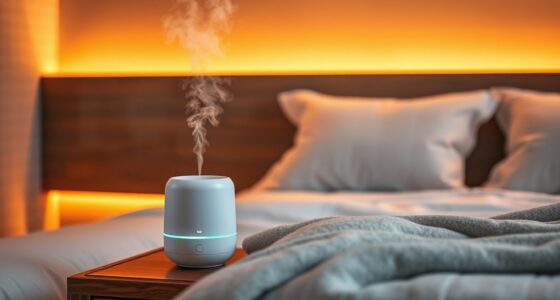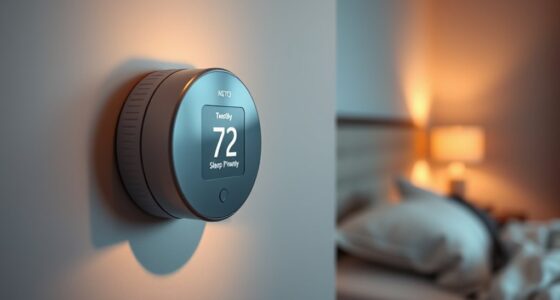

If you’re concerned about CO2 buildup overnight, cracking a window can be a simple way to improve air quality. Ventilation helps dilute the CO2 that your body produces while you sleep, preventing it from reaching uncomfortable levels. However, this depends on outdoor conditions—extreme weather or pollution may make this less ideal. Smart solutions and sensors can also optimize ventilation options, leading to a healthier sleep environment—learn more about how these options work.
Key Takeaways
- Cracking a window can effectively reduce indoor CO2 levels overnight, improving sleep quality.
- Consider outdoor air quality and weather conditions before opening windows to avoid pollution or drafts.
- Modern ventilation systems and sensors can maintain low CO2 levels without manual window opening.
- Manual window opening is simple but less practical during extreme weather or high outdoor pollution.
- Using automated ventilation solutions provides consistent indoor air quality without the need to manually crack windows.
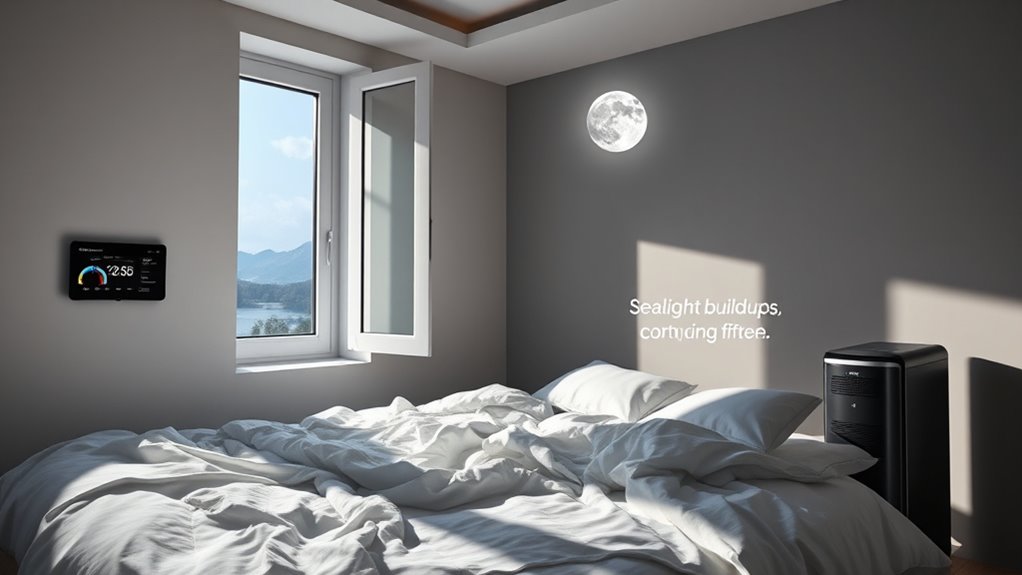
Have you ever wondered what happens to carbon dioxide levels in your home overnight? As you sleep, your body’s processes continue to produce CO2, and without proper ventilation, those levels can rise. This buildup can affect your sleep quality and overall health. To manage this, understanding effective ventilation strategies becomes essential. One option is to crack a window, allowing fresh air to circulate and dilute the accumulated CO2. But is this always the best approach? It depends on your home’s design, outdoor air quality, and your specific needs.
Modern homes often incorporate ventilation strategies such as exhaust fans, air exchange systems, or energy recovery ventilators. These systems work continuously or intermittently to bring in fresh air and remove stale indoor air, helping regulate CO2 levels without sacrificing energy efficiency. If you don’t have such systems, manually opening a window can be a simple and effective method. However, it’s not always practical, especially during extreme weather conditions or in areas with high outdoor pollution or allergens. That’s where air quality sensors come into play. These devices monitor indoor CO2 concentrations in real-time, alerting you when levels reach a threshold that might impact your health or sleep quality. With air quality sensors, you can make informed decisions about when to open windows or activate ventilation systems, guaranteeing ideal indoor air conditions overnight.
Using air quality sensors also helps you avoid unnecessary drafts or energy loss. Instead of guessing whether you should crack a window, you get precise data indicating if CO2 levels are rising beyond safe limits. This targeted approach allows you to maintain a comfortable indoor environment without over-ventilating or wasting energy. Additionally, some advanced sensors integrate with home automation systems, automatically opening windows or turning on ventilation when CO2 exceeds a preset level. This automation takes the guesswork out of managing indoor air quality and guarantees you’re sleeping in a healthier environment. Incorporating smart home technology such as connected sensors and automation can further optimize your ventilation practices and indoor air quality management.
Frequently Asked Questions
Can Plants Help Reduce CO2 Buildup Overnight?
Plants can help reduce CO2 buildup overnight by improving indoor air quality through plant absorption. As you place more plants in your space, they take in CO2 and release oxygen, enhancing air freshness. While they won’t eliminate all CO2, adding plants is a natural way to support better air quality. Keep in mind, for significant reduction, proper ventilation is still important alongside plant absorption.
Does CO2 Buildup Differ Between Sleeping Alone or With Others?
Imagine your sleep environment as a quiet pond—when more people sleep in it, the water gets murkier. When you sleep alone, CO2 buildup is minimal, but with others, it increases faster. Your ventilation strategies matter; opening a window can refresh the air. So, sleeping with others accelerates CO2 accumulation, making proper ventilation essential for a healthy sleep environment. Keep fresh air flowing for better rest.
How Does Humidity Affect CO2 Levels Indoors?
Humidity levels directly impact indoor air quality and CO2 buildup. High humidity can diminish air circulation, trapping CO2 and making the space feel stuffy. To prevent this, use humidity control devices like dehumidifiers and open windows to improve air circulation. Keeping humidity balanced helps your home stay comfortable, reduces CO2 accumulation, and ensures fresh, healthy air for you and others indoors.
Are There Safe Ways to Measure Indoor CO2 Concentration?
Yes, there are safe ways to measure indoor CO2 concentration. You can use reliable carbon dioxide sensors to monitor indoor air quality directly. These sensors are easy to operate, provide real-time data, and help you identify when ventilation is needed. By regularly checking your CO2 levels with these devices, you guarantee a healthier environment, reduce discomfort, and maintain good air quality indoors.
What Are Signs of CO2 Poisoning From Buildup Overnight?
Did you know that CO2 levels above 1,000 ppm can cause headaches and fatigue? If you notice symptoms like dizziness, difficulty breathing, or confusion, it might be from CO2 buildup overnight. Poor air quality and inadequate ventilation strategies allow CO2 to accumulate, increasing health risks. To prevent this, make certain proper ventilation and monitor indoor air quality regularly, especially if sleeping in a sealed room.
Conclusion
So, when the night whispers its quiet secrets, consider gently opening a window. It’s like giving your space a subtle, invigorating breath of life, allowing fresh air to weave through the stillness. While the world outside dreams, your room can quietly let in a touch of nature’s delicate balance. Often, a simple act of kindness to your environment can keep the air just right, ensuring your rest remains peaceful and undisturbed.