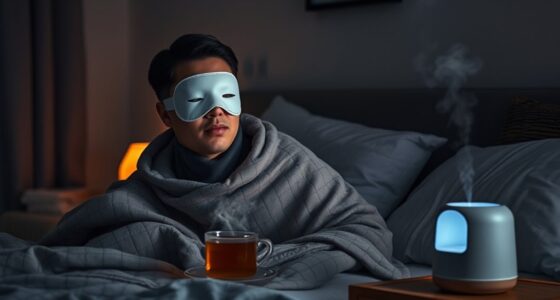

To lower the load of dust mites causing nighttime itch, you should use an air purifier with HEPA filters to trap allergens and maintain a humidity level below 50% with a dehumidifier. Regularly wash your bedding, curtains, and plush toys in hot water and cover your mattress and pillows with allergen-proof cases. Incorporating these strategies can make a significant difference, and exploring more tips can help you sleep better and stay comfortable through the night.
Key Takeaways
- Use allergen-proof bedding covers and wash bedding weekly in hot water to reduce dust mite populations.
- Employ HEPA air purifiers to capture airborne dust mites and allergens, improving bedroom air quality.
- Maintain indoor humidity below 50% with a dehumidifier to inhibit dust mite growth.
- Regularly vacuum with a HEPA-filter vacuum cleaner and clean curtains and plush toys frequently.
- Consistently implement environmental controls and cleaning routines to minimize dust mite presence and nighttime itch.
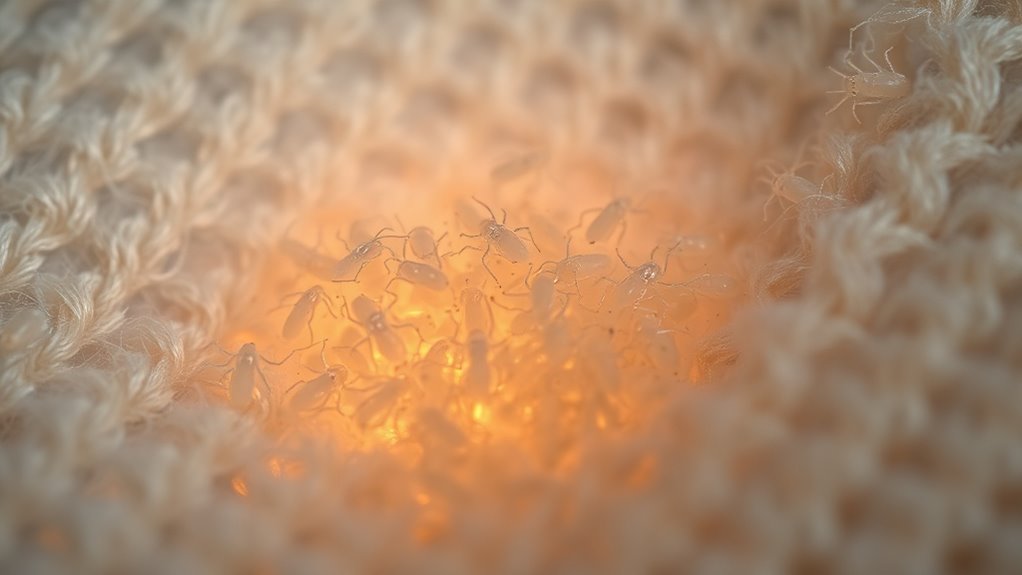
Dust mites are tiny creatures that thrive in household dust and are often invisible to the naked eye. They feed on dead skin cells and flourish in warm, humid environments, especially in your bedding and upholstery. Their presence can trigger allergies and worsen nighttime itching, making restful sleep difficult. To reduce your exposure, incorporating an air purifier benefits your overall air quality, capturing airborne dust mites, pollen, and other allergens that contribute to nighttime discomfort. An air purifier with a HEPA filter can trap even the smallest particles, considerably lowering the allergen load in your bedroom. When used consistently, it creates a cleaner environment where dust mites have fewer opportunities to thrive, helping you breathe easier and sleep more peacefully.
In addition to an air purifier, covering your bedding with bedding allergy covers can make a notable difference. These specially designed covers act as a barrier, preventing dust mites from penetrating your mattress and pillows. They are tightly woven and allergen-proof, which means dust mites can’t colonize your bedding or escape into the air when you move around during the night. Using bedding allergy covers is a straightforward, effective step toward reducing nighttime itching caused by dust mite allergies. Pairing these covers with frequent washing—ideally weekly—in hot water further diminishes dust mite populations on your bedding. These practices, combined with your regular cleaning routine, help create a less hospitable environment for dust mites and reduce the allergens that trigger your nighttime symptoms.
You might also consider lowering the humidity in your bedroom, as dust mites thrive in humid conditions. Using a dehumidifier can help keep relative humidity below 50%, making it less inviting for these tiny creatures. Regularly vacuuming your bedroom with a HEPA-filter vacuum cleaner removes dust and mites from carpets, rugs, and upholstery, further reducing allergen levels. Don’t forget to wash curtains and plush toys regularly, as they can harbor dust mites too. Maintaining proper humidity levels is essential for controlling dust mite populations and minimizing allergy symptoms. These small but consistent efforts can considerably lessen your nighttime itch, leading to more restful sleep.
Ultimately, controlling dust mites requires a combination of strategies. An air purifier benefits your overall allergy management, while bedding allergy covers provide targeted protection where you sleep. By implementing these measures and maintaining a clean, dry environment, you can lower the dust mite load in your home and decrease the nighttime itching that disrupts your rest. It’s about creating a healthier sleeping environment so you wake up feeling more refreshed and less affected by allergy symptoms.
Frequently Asked Questions
Can Dust Mite Allergens Cause Asthma Attacks at Night?
Yes, dust mite allergens can trigger asthma attacks at night. When you’re exposed to dust mite allergens, they act as asthma triggers, causing your airways to tighten and making it harder to breathe. Since dust mites thrive in bedding and mattresses, lying down increases your exposure. To reduce nighttime asthma attacks, you should minimize dust mite allergens by washing bedding regularly, using allergen-proof covers, and keeping your sleeping area clean.
Are There Natural Remedies to Reduce Dust Mite Exposure?
Yes, natural remedies can help reduce dust mite exposure. You should regularly wash bedding in hot water, use allergen-proof covers, and keep humidity low with dehumidifiers. Dust mite prevention also includes vacuuming with a HEPA filter and removing clutter from your bedroom. Consider natural air purifiers like houseplants or essential oils such as eucalyptus. These steps make your environment less inviting to dust mites, easing your allergy symptoms.
How Do Dust Mites Survive in Humid Environments?
Humidity helps dust mites thrive by providing a moist environment they need for survival. You might notice mites flourish when humidity levels are high because they use survival strategies like absorbing water from the air and multiplying rapidly. To control this, reduce humidity with dehumidifiers or ventilation, making your space less inviting. Keeping humidity low disrupts mite survival strategies, helping you keep dust mite populations in check and reducing nighttime itch.
Are Certain Bedding Materials More Resistant to Dust Mites?
Certain bedding materials offer better mite resistance, helping you reduce dust mite buildup. Look for hypoallergenic options like tightly woven cotton or silk, which prevent mites from settling and thriving. Avoid plush or down-filled bedding, as they provide a cozy environment for mites. By choosing mite-resistant bedding materials, you can minimize nighttime itch and create a healthier sleep environment. Regular washing also boosts their effectiveness.
Can Pets Contribute to Dust Mite Populations in the Home?
You might not realize it, but pets can contribute to dust mite populations in your home. As they shed pet dander, it can carry allergen transfer to bedding and furniture, creating a cozy environment for dust mites to thrive. The coincidence of pet dander and dust mites increases your exposure, especially at night. Regular cleaning and managing pet dander help reduce this allergen transfer, lowering dust mite levels and easing nighttime itch.
Conclusion
Reducing dust mite exposure can markedly improve your sleep quality. Did you know that the average mattress hosts over 10,000 dust mites? By taking simple steps like washing bedding weekly and using allergen-proof covers, you can lower your mite load and lessen nighttime itch. Don’t let tiny pests disrupt your rest—small changes make a big difference in creating a more comfortable, itch-free night. Sleep better tonight, and every night.