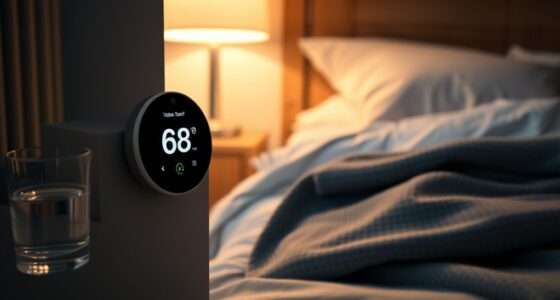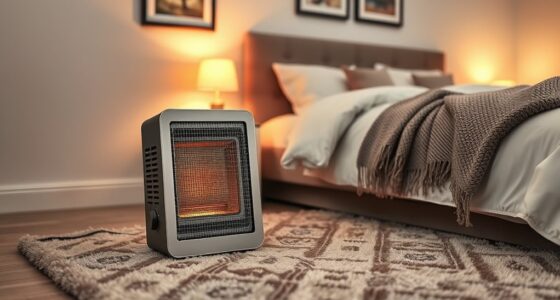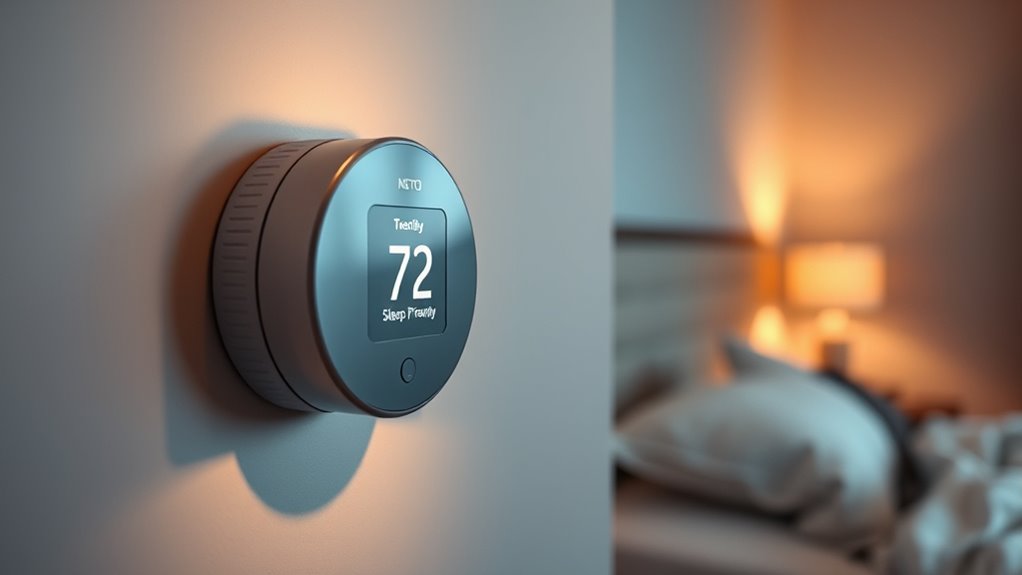

When a thermostat label says “sleep friendly,” it means the device is designed to automatically adjust your home’s temperature to support restful sleep. It maintains a ideal range, typically around 60-67°F, to help you fall asleep faster and stay asleep longer. These thermostats often include features like sleep modes or scheduled temperature changes, ensuring a cozy environment throughout the night. Want to discover how these settings can improve your sleep even more?
Key Takeaways
- “Sleep Friendly” indicates the thermostat is optimized to maintain temperatures ideal for restful sleep, typically between 60-67°F.
- It may feature sleep modes or scheduled adjustments to automatically create a comfortable sleeping environment.
- The label suggests the thermostat helps stabilize temperature fluctuations that can disrupt sleep cycles.
- “Sleep Friendly” often means the device supports consistent, controlled temperatures to promote deep, restorative sleep.
- Such thermostats are designed to enhance sleep quality by aligning with scientific recommendations for sleep-conducive environments.
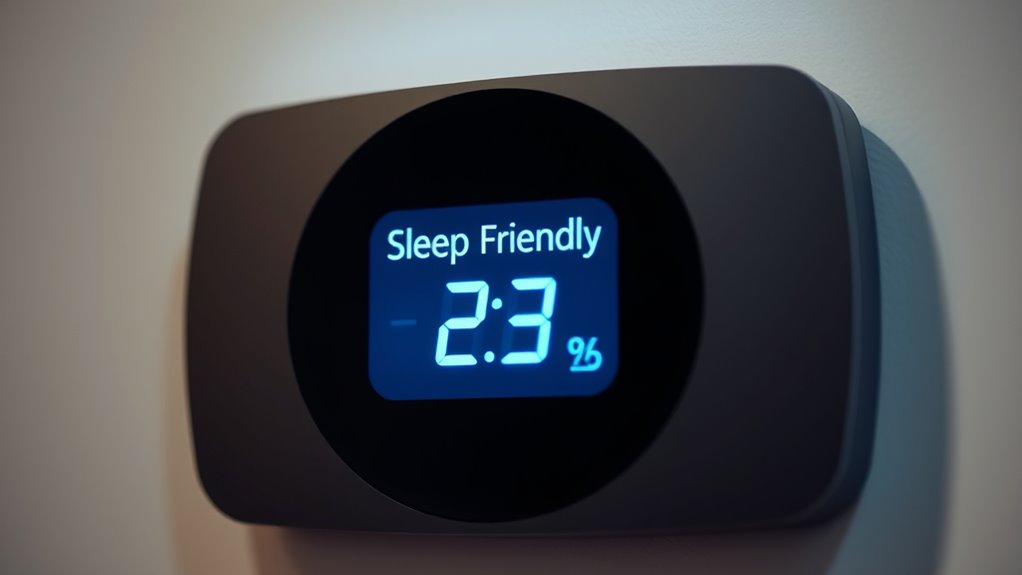
Getting a good night’s sleep can depend on many factors, and your thermostat setting plays a surprisingly vital role. When you set your thermostat to a sleep-friendly temperature, you’re actively influencing your sleep quality. The concept of a “sleep-friendly” label on thermostats isn’t just marketing; it’s based on science that shows how specific nighttime temperatures help you rest better. The ideal nighttime temperature usually falls between 60 and 67 degrees Fahrenheit. If your bedroom is too warm or too cold, it can disrupt your sleep cycles, making it harder to fall asleep and stay asleep through the night. By paying attention to this temperature range, you create an environment that encourages deep, restorative sleep.
Maintaining a bedroom temperature between 60-67°F promotes better, more restorative sleep.
When a thermostat is labeled as “sleep-friendly,” it often means it’s designed to help you maintain a consistent, prime nighttime temperature automatically. Many of these thermostats come with features like sleep modes or scheduled temperature adjustments, ensuring your room remains in that sweet spot without requiring you to constantly tweak the settings. This is especially helpful if you tend to wake up feeling unrested or have trouble falling asleep because of temperature fluctuations. You’ll find that setting your thermostat to a sleep-friendly mode can considerably improve your overall sleep quality, allowing you to wake up feeling more refreshed.
The reason nighttime temperature impacts sleep quality so much is that your body naturally lowers its core temperature during sleep. When your room is too warm, your body struggles to cool down, making it more difficult to fall asleep and stay in deep sleep stages. Conversely, if it’s too cold, you may find yourself waking up frequently or feeling uncomfortable. A sleep-friendly thermostat helps strike the right balance, maintaining a temperature that supports your body’s natural sleep rhythms. Many models even learn your preferences over time and adjust accordingly, ensuring that your environment remains conducive to restful sleep. Understanding the connection between connected home technology and sleep can also allow you to optimize your sleep environment more effectively.
Ultimately, understanding what “sleep-friendly” means on thermostat labels can help you take control of your sleep environment. By setting your thermostat correctly and utilizing features designed for better sleep, you can improve your overall sleep quality. The right nighttime temperature isn’t just a small detail—it’s a vital factor that influences how rested and alert you feel during the day. Paying attention to this aspect of your sleep environment can make a noteworthy difference, helping you wake up more energized and ready to face whatever lies ahead.
Frequently Asked Questions
How Do Sleep-Friendly Settings Affect Energy Bills?
Sleep-friendly settings can lower your energy bills by reducing energy consumption during the night. When you activate these settings, your thermostat becomes more efficient by maintaining a comfortable temperature without overworking your HVAC system. This not only saves you money but also extends your thermostat’s lifespan. You’ll notice a decrease in energy use, which translates into lower bills, all while keeping your sleeping environment cozy and consistent.
Can I Customize Sleep Modes on My Thermostat?
Ever wish you could tailor your sleep environment? Yes, you can customize sleep modes on your thermostat. By adjusting temperature settings to align with your bedtime routines, you optimize your sleep cycle and create a cozy atmosphere. Most smart thermostats allow you to set specific schedules or even control settings remotely. This way, you’re in charge of your sleep comfort, making your nights more restful and energy-efficient.
Are Sleep-Friendly Labels Universal Across Brands?
Sleep-friendly labels aren’t universal across brands due to varying brand consistency and differing label standards. You’ll find that each manufacturer might use different symbols, wording, or features for sleep modes. It’s essential to read your thermostat’s manual or explore specific brand guidelines to understand what the label indicates. Don’t assume all sleep-friendly labels mean the same; always verify the settings and features for your particular thermostat model.
Do Sleep Modes Impact Air Quality or Humidity?
Imagine setting your thermostat to sleep mode; it typically won’t directly impact air quality, but it can influence humidity control. For example, if your system reduces airflow, humidity might increase, possibly affecting air quality. Sleep modes mainly focus on temperature comfort, but if your HVAC system also manages humidity, it can help maintain ideal air quality and moisture levels, ensuring better sleep and a healthier environment.
How Quickly Does the Thermostat Adjust During Sleep Mode?
During sleep mode, your thermostat adjusts temperature quickly, typically within a few minutes, to guarantee temperature consistency and maintain your comfort. It responds promptly to changes in your desired settings, creating a stable environment that promotes restful sleep. This quick adjustment helps you avoid temperature fluctuations, so you stay comfortable throughout the night. Rest assured, sleep mode is designed to optimize your comfort without long delays in temperature regulation.
Conclusion
By choosing a “sleep-friendly” thermostat label, you’re setting the stage for peaceful nights and restful dreams. Think of it as planting a gentle lullaby in your home, where the temperature softly cradles you into slumber, shielding you from disruptive chills or sweltering heat. Embrace these labels as your nighttime guardians, ensuring every sleep feels like a quiet, cozy sanctuary—where comfort whispers softly, and restful nights become your everyday reality.