

To keep your sleep data yours, start by understanding who can access it and reviewing privacy policies regularly. Choose devices that prioritize user control and have transparent data-sharing practices. Manage app permissions, enable encryption, and secure your accounts with strong authentication. Be mindful of how third-party apps handle your info, and stay aware of your legal rights to access, modify, or delete your data. Keep your privacy practices current—there’s more to explore for full control.
Key Takeaways
- Review privacy policies to understand data ownership, sharing practices, and control options for your sleep data.
- Manage app permissions regularly to restrict third-party access and ensure data sharing aligns with your preferences.
- Use encryption protocols like HTTPS and enable secure login methods to protect sleep data during transmission and storage.
- Opt for devices with transparent privacy policies and minimal data sharing, maintaining control over your sleep information.
- Stay informed about regional privacy laws (GDPR, CCPA) and utilize privacy tools to enhance your data control and security.
Understanding Who Has Access to Your Sleep Data

When it comes to your sleep data, knowing who can access it is crucial for protecting your privacy. You need to understand the concepts of data ownership and access control. Data ownership means you hold the rights to your sleep information, but many companies may claim ownership once you share your data. Access control determines who can view or use that data. Some apps or devices might share your information with third parties, such as advertisers or researchers, unless you set strict permissions. Always review privacy policies to see who has access and how they use your data. Being aware of these factors helps you make informed decisions about sharing your sleep information and maintaining control over your private health details. Additionally, understanding the home technology involved in sleep data collection can help you better evaluate the security measures in place. Recognizing the importance of user privacy controls allows you to customize your data sharing preferences and safeguard your personal information. Knowing how vetted data practices are implemented can further reassure you that your sleep data is handled responsibly. Furthermore, familiarizing yourself with data encryption protocols used during data transmission can enhance your confidence in the security of your information.
Choosing Sleep Trackers With Privacy in Mind
Choosing a sleep tracker that respects your privacy starts with understanding how different devices handle your data. Look for devices that clearly define data ownership in their privacy policies, so you know who controls your sleep information. Some trackers share data with third parties, while others keep it strictly yours. To help you compare, here’s a quick overview:
| Feature | Privacy Focused Devices |
|---|---|
| Data Ownership | You retain control |
| Privacy Policies | Transparent and clear |
| Data Sharing | Minimal or none |
| Third-Party Access | Explicit consent needed |
Prioritize trackers with transparent privacy policies, ensuring your sleep data stays yours. Additionally, considering electric power generation with bike generators can be a sustainable way to charge your devices while maintaining your privacy. Being aware of data security practices can also help you protect your information from unauthorized access. Implementing privacy settings can further customize your data sharing preferences and enhance your control over sensitive information. Regularly reviewing your device’s privacy controls can help you stay informed about any updates or changes that might affect your data security. Being knowledgeable about privacy regulations can empower you to better understand your rights and options. By doing so, you minimize risks and keep your sleep insights private and secure.
Managing Permissions and Data Sharing Settings
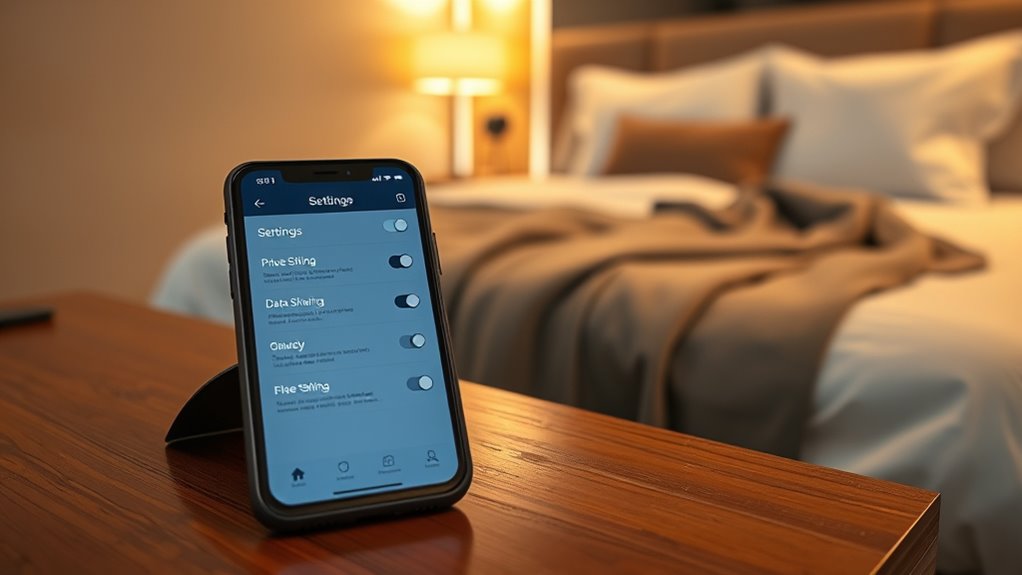
Managing permissions and data sharing settings is essential to keeping your sleep information private. You should review app permissions regularly, guaranteeing only necessary data is accessible. Enable consent management features so you control what you share and with whom. Look for options that support data anonymization, which helps protect your identity when sharing information for research or improvements. Limit sharing settings to your comfort level, turning off automatic data transfers or integrations with third parties if you prefer. By actively managing permissions, you reduce the risk of unintended data exposure. Always read privacy policies and update permissions as needed. Taking these steps ensures you maintain control over your sleep data, keeping it secure and private at all times. Additionally, understanding Floating on Water concepts can help you recognize how data flows and is stored in cloud-based health platforms, further aiding your privacy efforts. Being aware of data flow mechanisms and encryption practices can also help you identify potential vulnerabilities in your data management, such as data encryption and secure storage practices. Regularly checking permission settings can further reinforce your control over sensitive information.
Recognizing Data Encryption and Security Features
When you review a website or app’s security, look for the encryption protocols it uses to protect your data. Confirm that it transmits information securely through HTTPS or other secure channels. Don’t forget to check the privacy settings options, which let you control how your data is shared and protected.
Encryption Protocols Used
How can you identify the encryption protocols that protect your data? Start by checking if your device or app uses end-to-end encryption, which keeps your sleep data secure from start to finish. This method guarantees only you and authorized parties can access the information. Also, look for signs that SSL/TLS protocols are in place; these secure the connection between your device and the server, preventing eavesdropping during data transmission. Many apps display security badges or mention encryption standards in their privacy policies. When in doubt, visit the app’s settings or support pages to verify the security measures. Recognizing these encryption protocols helps you ensure your sleep data remains private and protected against unauthorized access. Understanding encryption standards can further enhance your ability to assess data security. Additionally, being aware of security features in your device or app can help you make informed choices about your privacy. Knowing how data encryption operates empowers you to better safeguard your sensitive health information. Furthermore, staying informed about emerging security protocols can prepare you for future updates in data protection.
Secure Data Transmission
Most digital devices and apps rely on specific encryption features to secure your data during transmission. These features help prevent data breaches by making it difficult for hackers to intercept or decipher your information. When you use a secure login, encryption ensures your credentials stay private, protecting your account from unauthorized access. Look for apps that use protocols like HTTPS or TLS, which encrypt data packets between your device and the server. This encryption not only safeguards sensitive details but also maintains data integrity during transfer. Always verify that your sleep tracking app employs strong encryption methods to prevent potential vulnerabilities. Additionally, understanding data encryption protocols can help you choose apps with the most robust security measures. Implementing end-to-end encryption further ensures that your sleep data remains confidential from the point of collection to storage. Recognizing the types of encryption used can also help you assess the overall security of your device and apps. Staying informed about encryption standards supports better protection of your personal information. By prioritizing secure data transmission, you reduce the risk of your sleep data being compromised or accessed without your permission.
Privacy Settings Options
Have you ever checked your app’s privacy settings to see how it protects your data? Many sleep apps offer options like data anonymization, which helps keep your personal details private by removing identifiable information. These settings often include security features such as encryption, ensuring your sleep data stays secure during transfer and storage. To make the most of these options, you should also understand the app’s privacy policy, which explains how your data is used and protected. Recognizing the presence of data encryption and security features empowers you to keep your sleep data private and understand the safeguards in place to protect your personal information. Additionally, choosing apps that use decentralized data storage can further enhance your privacy by reducing reliance on centralized servers.
Regularly Reviewing and Updating Privacy Settings
To keep your information secure, it’s important to schedule regular privacy checks on your accounts. As apps and platforms update, your privacy settings might need adjustments to stay effective. Make it a habit to review and tweak your settings as needed to maintain control over your data.
Schedule Routine Privacy Checks
Regularly reviewing and updating your privacy settings guarantees you’re in control of what information you share online. Consistent checks help prevent data breaches by ensuring your privacy preferences stay current and secure. Take time to understand the privacy policies of your sleep tracking apps and devices, so you know how your data is collected and used. This comprehension allows you to make informed decisions about sharing sensitive information and adjust permissions if needed. By scheduling routine privacy reviews, you stay proactive in protecting your sleep data from unauthorized access or misuse. It also reinforces good digital habits, keeping your information safe and your privacy preferences aligned with your comfort level. Staying vigilant with these checks is key to maintaining your privacy integrity.
Adjust Settings as Needed
As your online privacy needs evolve, it’s important to review and update your settings to make sure they still reflect your preferences. Regularly adjusting your privacy controls guarantees your sleep data remains protected and aligned with your comfort level. Consider toggling settings related to data anonymization, which masks your personal details, and reassessing user consent options to control who accesses your information. Visualize your privacy choices like this:
| Privacy Feature | Effect |
|---|---|
| Data Anonymization | Keeps your sleep data private |
| User Consent | Grants or revokes access |
| Settings Adjustment | Tailors privacy to your needs |
| Data Sharing | Controls who sees your data |
Stay proactive so your privacy stays in your hands.
Protecting Your Account With Strong Authentication

Strong authentication is essential for keeping your accounts secure, especially as cyber threats become more sophisticated. Using biometric authentication, such as fingerprint or facial recognition, adds a layer of protection that’s both convenient and hard to bypass. Multi-factor verification requires you to provide two or more forms of identification, making it markedly more difficult for hackers to access your sleep data. Enable these features wherever possible, especially on your sleep tracking app and related accounts. Avoid relying solely on passwords; instead, combine biometric methods with multi-factor verification for maximum security. Regularly review your account settings to ensure these protections are active. By taking these steps, you considerably reduce the risk of unauthorized access and keep your sleep information private.
Being Mindful of Data Use in Third-Party Apps

When you grant third-party apps access to your sleep data, it’s important to understand how they use and share that information. Many apps employ data anonymization techniques to protect your identity, stripping personal details before sharing insights with third parties. However, it’s also essential to manage your consent carefully; review app permissions regularly and ensure you’re comfortable with how your data is being used. Consent management tools can help you control what information you share, giving you more control over your privacy. Always read privacy policies to see if your sleep data might be shared or sold. Being mindful of these practices helps you keep your sleep data secure and guarantees you’re making informed decisions about your privacy.
Understanding Your Rights and How to Exercise Them
Understanding your rights regarding your personal data is essential to maintaining control over your privacy. You have legal protections that support your data ownership, meaning you own your sleep data and can decide how it’s used. Familiarize yourself with laws like the GDPR or CCPA, which give you rights such as accessing, correcting, or deleting your information. To exercise these rights, contact your sleep app or device provider directly, submit formal requests, or use built-in privacy tools. Keep records of your communications. Remember, these legal protections are there to empower you, so don’t hesitate to assert your rights if you believe your data is being mishandled. Staying informed ensures you maintain control over your sleep data and privacy.
Tips for Securing Your Overall Digital Privacy
Having control over your sleep data is an important step, but safeguarding your overall digital privacy requires a broader approach. Understanding data ownership is key—know who owns the information you share online and what rights you have to control it. Stay informed about privacy legislation in your region, as laws like GDPR or CCPA set rules for how companies handle your data. Use strong, unique passwords for your accounts and enable two-factor authentication whenever possible. Regularly review privacy settings on social media and apps to limit data sharing. Be cautious when granting app permissions, and consider using privacy-focused tools or VPNs to protect your online activity. By staying proactive and informed, you can better defend your digital privacy across all platforms.
Frequently Asked Questions
Can Sleep Data Be Used for Targeted Advertising Without My Consent?
Yes, sleep data can be used for targeted advertising without your consent, which is a form of sleep data misuse. Companies may track your sleep patterns and utilize that information to serve personalized ads, often without informing you. To protect yourself, review privacy policies and control app permissions. Staying vigilant helps ensure your sleep data stays private and isn’t exploited for targeted advertising without your approval.
Are There Legal Protections for Sleep Data in Different Countries?
Yes, there are legal protections for your sleep data across different countries. Sleep data legislation and privacy regulations, like the GDPR in Europe and CCPA in California, aim to safeguard your personal information. These laws require companies to obtain your consent before collecting or sharing your sleep data and give you rights to access or delete it. Always stay informed about local privacy regulations to guarantee your sleep data remains protected.
How Long Do Sleep Tracking Companies Typically Retain User Data?
Think of your sleep data as a treasure chest—you control how long it stays open. Most sleep tracking companies retain your user data for periods outlined in their data retention policies, which can range from a few months to several years. You have the power to influence this retention, often through account settings or data deletion options, ensuring you maintain control over your personal sleep insights.
What Are the Risks of Sharing Sleep Data With Healthcare Providers?
Sharing your sleep data with healthcare providers can expose you to risks like data breaches and unauthorized access. If your information isn’t properly safeguarded, hackers or malicious insiders could access sensitive details, risking your privacy. Always guarantee your healthcare provider follows strict data security protocols. Be cautious about the information you share, and ask how your data will be stored and protected to minimize potential risks.
Can I Delete My Sleep Data Permanently From All Platforms?
You can delete your sleep data permanently from platforms, but it depends on each platform’s policies. Check if they offer data deletion options, and verify your user consent is clear. Data encryption keeps your information secure during this process. Act now to request deletion, review their privacy settings, and confirm that your data is fully erased, giving you peace of mind and control over your private sleep information.
Conclusion
By taking control of your sleep data, you’re building a fortress of privacy around your personal night’s journey. Think of your data as a delicate flame—protect it from gusts of third-party sharing and careless permissions. When you stay vigilant and lock down your settings, you become the guardian of your digital sleep sanctuary. With each mindful step, you ensure your dreams stay yours—safe, private, and beautifully undisturbed in the quiet of the night.