
When it comes to sleep, tracking metrics like respiratory rate, HRV, and sleep stages can give you key insights into your rest quality. A steady, relaxed breathing pattern promotes better sleep, while higher HRV signals deeper relaxation and recovery. Monitoring sleep stages reveals how restorative your sleep is, and combining these data points helps you understand your overall sleep health. Keep exploring, and you’ll discover more ways to optimize your sleep environment and habits.
Key Takeaways
- Respiratory rate indicates breathing stability; consistent, relaxed breathing promotes better sleep quality.
- Heart rate variability (HRV) reflects parasympathetic activity, with higher HRV indicating restorative sleep.
- HRV fluctuations during sleep reveal recovery patterns and sleep stage transitions.
- Monitoring oxygen saturation helps identify breathing disruptions like sleep apnea that affect sleep health.
- Sleep stage metrics, including duration and cycle patterns, assess overall sleep depth and restorative quality.
Understanding Respiratory Rate and Its Role in Sleep Quality

Your respiratory rate—the number of breaths you take per minute—plays a crucial role in determining sleep quality. When your breathing patterns are consistent and relaxed, your body enters a state conducive to restorative sleep. Rapid or irregular breathing can disrupt this process, leading to fragmented sleep. Using effective breathing techniques, like diaphragmatic or slow, deep breaths, can help regulate your respiratory rate, promoting calmness and stability. Controlled breathing encourages your nervous system to shift toward relaxation, making it easier to fall asleep and stay asleep. Monitoring and adjusting your respiratory patterns during the night can markedly improve sleep quality. Incorporating breathing exercises can further enhance your respiratory stability during sleep. Proper sleep environment conditions, such as optimal temperature and reduced noise, also support steady breathing patterns. Additionally, understanding the impact of heart rate variability on sleep can help tailor relaxation techniques to improve your rest. Regularly practicing mindfulness or meditation can also enhance your respiratory control and overall sleep quality. Remember, steady, deep breaths not only support better rest but also set the foundation for overall health and well-being.
Heart Rate Variability: What It Reveals About Restorative Sleep

Heart rate variability (HRV) reflects your parasympathetic activity, indicating how well your body relaxes during sleep. You’ll notice HRV fluctuates throughout the night, signaling different sleep stages and recovery processes. Higher HRV generally means your sleep is more restorative, helping you wake up refreshed. Regular automotive maintenance can help ensure your sleep environment remains comfortable and conducive to restful sleep. Monitoring your HRV can also provide insights into your overall wellness and stress levels, guiding you to make lifestyle adjustments for better rest. Understanding air fryer technology can offer additional strategies for creating a healthier sleep setting by minimizing exposure to harmful cooking fumes.
HRV and Parasympathetic Activity
Have you ever wondered what your heart rate variability (HRV) reveals about your body’s ability to rest and recover? HRV is a key indicator of parasympathetic activity, reflecting your parasympathetic balance. When your vagal tone is strong, it signals your body is in a relaxed state, promoting restorative sleep. Higher HRV indicates your nervous system is effectively managing stress and supporting recovery. Conversely, low HRV suggests reduced parasympathetic influence, possibly leading to disrupted sleep and less restorative rest. Monitoring HRV helps you understand how well your body is activating the relaxation response. By increasing vagal tone through relaxation techniques, you can improve parasympathetic activity, fostering better sleep quality and overall health. Modern technology like wearable devices can now help track HRV conveniently and accurately, providing insights into your autonomic nervous system. Additionally, understanding the role of parasympathetic activity can guide lifestyle changes to enhance your sleep and recovery process.
HRV Fluctuations During Sleep
During sleep, HRV naturally fluctuates, providing valuable insights into your body’s restorative processes. These variations can reflect how well your sleep environment supports relaxation and recovery. In quiet, dark, and comfortable settings, HRV tends to increase, indicating parasympathetic dominance and deep restorative sleep stages. Conversely, disruptions like noise or light can cause HRV to dip, signaling stress or lighter sleep. Additionally, HRV fluctuations can be linked to dream analysis, as vivid or stressful dreams often correspond with shifts in autonomic nervous system activity. Monitoring these patterns helps you understand how external factors and sleep quality influence your body’s ability to recover. Recognizing these HRV fluctuations allows you to optimize your sleep environment, ultimately promoting more restorative, high-quality sleep. Regularly assessing auditory processing can also help identify sensitivities that may impact sleep quality. Understanding autonomic nervous system activity during sleep offers deeper insights into your overall health and recovery processes.
HRV as Restorative Indicator
When your body enters restorative sleep, HRV levels tend to rise, signaling that your nervous system is in a state of relaxation and recovery. A healthy sleep environment—dark, quiet, and cool—supports higher HRV, promoting deeper restorative phases. Elevated HRV indicates your body is effectively repairing and restoring itself, which can also enhance dream recall. When HRV is high, it suggests your parasympathetic nervous system is dominant, helping you achieve more restful sleep. Conversely, lower HRV may point to stress or disruptions in your sleep environment. Tracking these changes can help you understand how well you’re recovering each night. Monitoring HRV with at-home devices can provide valuable insights into your sleep quality. Additionally, understanding heart rate variability can help you tailor your sleep habits to optimize recovery. Creating an optimal sleep environment by managing factors like temperature, noise, and light can further influence HRV and overall sleep quality. Recognizing the importance of sleep quality can motivate you to adopt better sleep hygiene practices that support your health and well-being.
The Significance of Sleep Stages and Their Monitoring Metrics
Understanding sleep stages and their monitoring metrics helps you gauge the quality of your rest. By tracking key indicators like sleep cycle patterns and duration, you can spot areas for improvement. These metrics give you valuable insights into how restorative your sleep truly is.
Sleep Stage Indicators
Sleep stage indicators are essential tools that provide insights into the quality and structure of your sleep. By monitoring these stages, you can better understand how restful your sleep truly is. For example, deeper sleep stages often correlate with improved dream recall, helping you remember your dreams more vividly. Your sleep environment plays a pivotal role in achieving balanced sleep stages—factors like room temperature, light, and noise can influence shifts between light, deep, and REM sleep. Recognizing these indicators allows you to identify patterns, optimize your sleep habits, and create a more conducive environment. Additionally, understanding the reliance on cloud services can highlight the importance of contingency planning in maintaining data integrity and operational continuity. These cloud solutions are designed to support data security and reliability, which can be analogized to maintaining consistent sleep quality through environmental adjustments. Incorporating sleep tracking devices that utilize cloud technology can help monitor your sleep patterns more accurately and conveniently. By integrating smart home technology into your sleep environment, you can automate environmental adjustments to support optimal sleep stages. Ultimately, understanding your sleep stages empowers you to enhance overall sleep quality, leading to better health, mood, and cognitive function.
Monitoring Key Metrics
Monitoring key metrics like sleep stages provides essential insights into your sleep quality and overall health. By tracking these stages, you can identify disruptions caused by your sleep environment, such as noise or temperature, and make adjustments for better rest. Sleep stage monitoring also offers valuable data for dream analysis, revealing patterns in REM sleep that influence emotional well-being and cognitive function. Understanding fluctuations in your sleep architecture helps you optimize your bedtime routine and improve recovery. Additionally, these metrics can highlight issues like sleep apnea or restless nights, prompting timely intervention. Keeping a close eye on your sleep stages empowers you to create a healthier sleep environment and achieve more restorative sleep every night.
Tracking Breathing Patterns for Better Sleep Insights

Tracking your breathing patterns during sleep can reveal important insights into your overall sleep quality. By monitoring how your breath fluctuates, you can identify irregularities that may affect restfulness. Incorporating breathing exercises before bed can promote more regular, calming breathing, improving sleep stability. Devices that measure oxygen saturation provide additional context, showing how well your body is exchanging gases during the night. Low oxygen saturation levels can indicate breathing disruptions like sleep apnea, which often go unnoticed without proper tracking. Understanding these patterns can help you recognize breathing-related issues early and take steps to address them. Consistent monitoring enables you to fine-tune your sleep environment and habits, ultimately leading to more restful and restorative sleep. Additionally, understanding the significance of respiratory metrics can enhance your ability to detect potential health concerns early. Recognizing typical breathing patterns and deviations can also help in identifying sleep disturbances, which may impact your overall health and well-being. Monitoring these vital signs regularly can empower you to make informed decisions about your sleep health.
How Resting Heart Rate Indicates Sleep Efficiency and Recovery

Your resting heart rate (RHR) offers valuable insights into how well your body recovers and how efficiently you’re sleeping. When your RHR is lower, it suggests greater cardiac coherence, indicating your autonomic nervous system is balanced and your body is in a state of relaxation. This state promotes better sleep quality and quicker recovery. Conversely, elevated RHR can signal lingering sleep inertia or stress, impairing restorative processes. Monitoring RHR helps you gauge your sleep efficiency, as consistent, ideal rates reflect restorative sleep cycles. By paying attention to these patterns, you can identify when your body is truly recovering or if fatigue and sleep inertia are affecting your rest. Maintaining cardiac coherence through relaxation techniques may enhance your sleep and recovery outcomes.
The Impact of Autonomic Nervous System Activity on Sleep Metrics
The autonomic nervous system (ANS) plays a crucial role in regulating sleep by balancing its two branches: the sympathetic (“fight or flight”) and parasympathetic (“rest and digest”) systems. During restful sleep, parasympathetic activity predominates, promoting relaxation and recovery. However, autonomic modulation can vary, affecting sleep quality and metrics. When sympathetic dominance occurs, your body stays alert, making it harder to reach deep sleep stages. Elevated sympathetic activity often results in higher heart rate variability (HRV) and respiratory rate, indicating stress or arousal. Conversely, increased parasympathetic tone supports restorative sleep by calming the nervous system. Monitoring these shifts helps you understand how your autonomic activity influences sleep quality, recovery, and overall health. Recognizing the balance between sympathetic and parasympathetic activity is key to optimizing sleep metrics.
Combining Multiple Data Points for a Holistic View of Sleep Health
To get a clear picture of your sleep health, you need to combine various metrics like respiratory rate, HRV, and more. Balancing quantitative data with your personal experiences helps create a complete profile. This integrated approach offers deeper insights and guides better sleep improvements.
Integrating Diverse Metrics
Combining multiple sleep metrics provides a more exhaustive understanding of your overall sleep health. By integrating data like respiratory rate, HRV, and sleep stages, you gain a clearer picture of your sleep quality. This holistic view supports better sleep education, helping you identify patterns and triggers that affect your rest. It also emphasizes the importance of optimizing your sleep environment—dark, quiet, and comfortable spaces—since different metrics can reveal how external factors influence your sleep. Using a variety of data points lets you see beyond surface-level sleep duration, uncovering insights about your recovery and stress levels. Ultimately, this approach empowers you to make informed adjustments, leading to healthier sleep habits and improved overall well-being.
Balancing Quantitative and Qualitative
While quantitative data like sleep duration, respiratory rate, and HRV provide valuable insights, integrating qualitative feedback enriches your understanding of sleep quality. Your subjective impressions—how rested you feel, ease of falling asleep, or nighttime awakenings—offer context that numbers alone miss. Consider your sleep environment: noise, light, and temperature profoundly influence both your feelings and measurable metrics. Combining these perspectives helps you identify patterns and triggers that impact your sleep health. By balancing objective data with personal observations, you gain a holistic view, enabling more targeted adjustments. This approach ensures you’re not just chasing numbers but understanding the story behind them, leading to more meaningful improvements in your sleep quality and overall well-being.
Building a Complete Sleep Profile
Building a complete sleep profile involves integrating various data points to gain a thorough understanding of your sleep health. By considering factors beyond just sleep duration, you get a clearer picture of your overall well-being. Focus on aspects like your sleep environment—lighting, temperature, and noise—that influence sleep quality. Incorporate dream analysis to identify patterns or disruptions that might signal deeper issues. Tracking heart rate variability (HRV), respiratory rate, and movement provides insight into sleep stages and restfulness. To build this holistic view, consider:
- Monitoring your sleep environment for improvements
- Analyzing dreams for emotional or physical cues
- Combining quantitative data with subjective sleep quality notes
- Using insights to optimize your sleep habits proactively
Together, these elements form a well-rounded, actionable sleep profile.
Limitations of Common Sleep Metrics and What They Might Miss

Despite their widespread use, common sleep metrics often fall short of capturing the full complexity of your sleep quality. They might tell you how long you slept or how many times you woke up, but they miss critical details like your sleep environment’s impact or how well you recall dreams. For example, a quiet, dark room can improve sleep quality but isn’t reflected in basic data. Similarly, dream recall can indicate REM sleep quality, yet most metrics overlook this aspect. Relying solely on standard measures can lead you to miss subtler signals of unrest or restorative sleep. To truly understand your sleep, you need to look beyond surface-level data and consider factors that influence your overall rest, which common metrics might overlook.
Practical Ways to Use Sleep Data to Improve Rest Quality
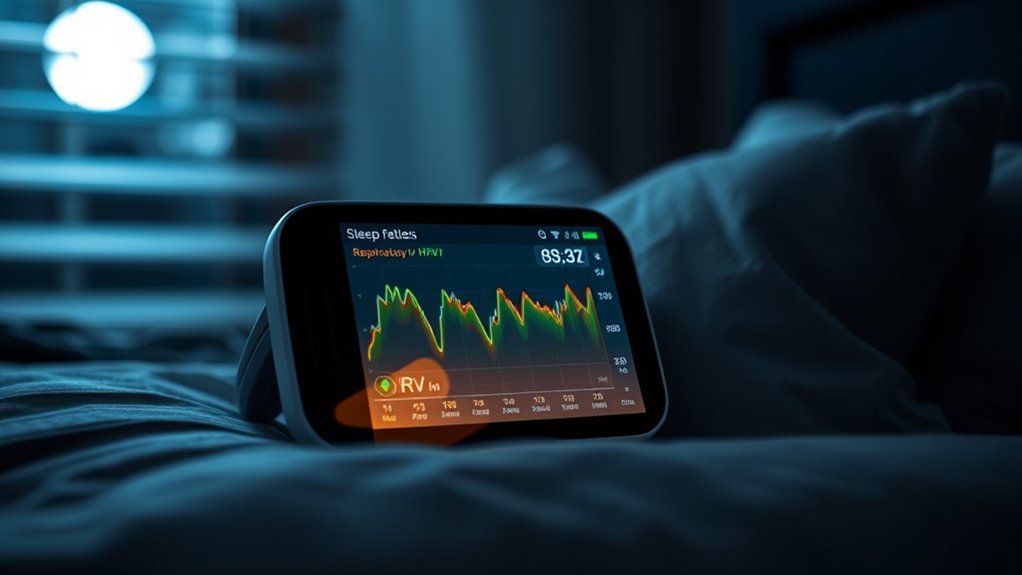
Using your sleep data proactively can make a real difference in improving your rest quality. By tracking metrics like respiratory rate and HRV, you can identify patterns and adjust accordingly. For example, keep a dream journal to note recurring themes or disruptions, helping you connect emotional states with sleep quality. Improving your sleep environment—such as reducing noise, adjusting lighting, or maintaining a comfortable temperature—can also enhance rest. Consider these practical steps:
Track your sleep metrics and keep a dream journal to identify patterns and improve rest quality.
- Use sleep data to pinpoint nights with poor rest and analyze contributing factors
- Incorporate dream journaling to recognize emotional or psychological influences
- Optimize your sleep environment based on data insights
- Adjust bedtime routines or activities to promote more restorative sleep
These methods make your sleep data actionable, leading to better rest over time.
Emerging Technologies and Future Directions in Sleep Monitoring

Emerging technologies are revolutionizing sleep monitoring by providing more accurate, real-time insights into your sleep patterns. Advances like biofeedback techniques enable you to actively influence your sleep quality through immediate feedback, helping you identify and adjust habits. Wearable devices and smart sensors are now capable of tracking respiratory rate, HRV, and other essential metrics without disrupting your rest. Additionally, future innovations focus on optimizing your sleep environment—adjusting lighting, temperature, or sound levels automatically to enhance sleep quality. These technologies aim to empower you with personalized data, making it easier to develop effective strategies for better sleep. As research progresses, expect even more sophisticated tools that seamlessly integrate into your daily routine, offering deeper understanding and improved sleep health.
Frequently Asked Questions
How Can I Interpret Fluctuations in My Respiratory Rate During Sleep?
You can interpret fluctuations in your respiratory rate during sleep by noting changes associated with snoring patterns and breathing irregularities. An increase might signal disrupted sleep or potential breathing issues, while a steady rate suggests restful breathing. Pay attention to irregularities or pauses, as they could indicate sleep disturbances like apnea. Tracking these fluctuations helps you identify sleep quality and may prompt you to consult a healthcare professional if consistent issues arise.
What Is the Ideal Range for Heart Rate Variability Overnight?
Think of your heart rate variability (HRV) like a gentle tide, ebbing and flowing naturally. Ideally, overnight HRV should range from 20 to 100 milliseconds, indicating good autonomic balance. To optimize this, maintain a calm sleep environment and try breathing exercises before bed. These habits help your body relax, support higher HRV levels, and promote restorative sleep, making your nights more restful and revitalizing.
Do Sleep Stages Influence Heart Rate and Breathing Patterns?
Yes, sleep stages influence your heart rate and breathing patterns. During deep sleep and REM, your sleep architecture shifts, affecting autonomic balance. In deep sleep, your heart rate slows, and breathing becomes more regular, promoting restorative processes. During REM, your autonomic nervous system becomes more active, causing fluctuations in heart rate and breathing. Recognizing these patterns helps you understand how different sleep stages impact overall sleep quality and health.
How Reliable Are Wearable Devices for Tracking These Sleep Metrics?
You might find yourself checking your wearable device, but keep in mind that device accuracy varies. While many track sleep metrics like respiratory rate and HRV, they aren’t foolproof. Trusting them too much could compromise your data privacy, so choose reputable brands. Remember, these devices provide helpful insights, but they shouldn’t replace professional sleep assessments. Be cautious and prioritize your privacy while making the most of your sleep data.
Can Lifestyle Changes Improve My Sleep-Related Respiratory and HRV Metrics?
Yes, lifestyle changes can improve your sleep-related respiratory and HRV metrics. Incorporate breathing exercises to enhance your breathing patterns and reduce stress, which positively impacts HRV. Additionally, pay attention to dietary impacts—reducing caffeine and heavy meals before bed can lead to better respiratory health during sleep. Consistently making these adjustments helps optimize your sleep quality and supports healthier essential signs overnight.
Conclusion
While metrics like respiratory rate and HRV offer valuable insights into your sleep, they’re just pieces of a larger puzzle. Focusing solely on numbers might miss the nuanced moments your body needs to recover. By combining these data points with your daily habits and awareness, you gain a fuller picture. Ultimately, understanding sleep’s complexity helps you prioritize rest, even when metrics seem contradictory—reminding you that true sleep health is about more than just numbers.