Smart blood pressure monitors pair at-home readings with apps or connected displays, making it easier to track results and share them with a clinician. I name the OMRON Evolv my best overall pick for its compact, all-in-one design, while the Withings BPM Connect stands out for Wi-Fi syncing and the OMRON Platinum for added AFib screening features. The main tradeoffs are whether you want simple Bluetooth logging or more hands-off syncing, and whether advanced features justify extra setup and complexity. Cuff fit, app usability, and clear reading history matter as much as the number of connected features. Read on for how all 15 options compare and which one fits your needs.

Get wellness gear delivered free with Prime
- Fast, free delivery on millions of items
- Prime Video, Amazon Music and more included
- Member-only deals all year
Key Takeaways
- OMRON Evolv leads for straightforward portability: its integrated design reduces loose parts, while buyers who want Wi-Fi syncing may prefer the Withings BPM Connect.
- Connected does not always mean hands-off: Bluetooth models generally depend on a phone nearby, whereas Wi-Fi connectivity can reduce syncing steps.
- Extra screening features are a specific-use advantage, not a substitute for diagnosis: the OMRON Platinum’s AFib feature may appeal to buyers seeking added alerts, but readings still need clinical interpretation.
- Cuff fit is a major differentiator across this lineup: Andesfit includes two cuffs, making it a stronger candidate for households with varied arm sizes than models with a single cuff.
- Brand and app familiarity can matter more than feature count: OMRON, iHealth, and Withings offer distinct connected-monitor approaches, while lesser-known options may suit buyers prioritizing basic app logging.
| OMRON Evolv Wireless Upper Arm Blood Pressure Monitor |  | Best for a Portable All-in-One Design | Monitor type: Wireless upper-arm blood pressure monitor | Cuff fit: 9–17 inches | On-device storage: Up to 100 readings | VIEW LATEST PRICE | See Our Full Breakdown |
| iProven Bluetooth Blood Pressure Monitor with App Integration |  | Best for Simple App-Optional Use | Measurement type: Upper-arm blood pressure and pulse | Connectivity: Bluetooth | App compatibility: MedM app for iOS and Android; Apple Health | VIEW LATEST PRICE | See Our Full Breakdown |
| iHealth Track Pro Upper Arm Blood Pressure Monitor |  | Best for On-Device History and Flexible Power | Display: Wide-angle LED with red, yellow, and green indicators | Operation: One-touch automatic | Detection: Body movement, cuff wrap, and irregular heartbeats | VIEW LATEST PRICE | See Our Full Breakdown |
| Garmin Index BPM Smart Blood Pressure Monitor |  | Best for Multi-User Households | Device type: Upper-arm blood pressure monitor | Measurements: Systolic and diastolic blood pressure, and heart rate | Cuff fit: 9–17 inches (22–42 cm) | VIEW LATEST PRICE | See Our Full Breakdown |
| Withings BPM Connect Wi-Fi and Bluetooth Blood Pressure Monitor |  | Best for Rechargeable, App-Connected Tracking | Model: BPM Connect (WPM05) | Measurements: Blood pressure and heart rate | Connectivity: Wi-Fi and Bluetooth | VIEW LATEST PRICE | See Our Full Breakdown |
| iHealth ACCU Smart Upper Arm Blood Pressure Monitor |  | Best for Two-User Tracking | Measurement accuracy: ±3 mmHg | Cuff size: 8.7–16.5 in (22–42 cm) | Memory: Up to 240 readings for 2 users | VIEW LATEST PRICE | See Our Full Breakdown |
| RunStar Smart Upper Arm Blood Pressure Monitor with App |  | Best for Easy-to-Read Results | Model: BP-206 | Cuff size: 8.6–16.5 inches | Display: 5-inch, three-color backlit LED | VIEW LATEST PRICE | See Our Full Breakdown |
| Greater Goods Bluetooth Upper Arm Blood Pressure Monitor |  | Best for App Reports and Travel | Measurements: Systolic and diastolic blood pressure, pulse rate | Irregular heartbeat detection: Yes | Cuff size: 8.7–16.5 in (22–42 cm) | VIEW LATEST PRICE | See Our Full Breakdown |
| Smart Upper Arm Blood Pressure Monitor with App |  | Best for Caregiver Sharing | Type: Automatic upper arm blood pressure monitor | Arm circumference: 8.7–15.7 inches | User profiles: 3 | VIEW LATEST PRICE | See Our Full Breakdown |
| Etekcity Bluetooth Upper Arm Blood Pressure Monitor |  | Best for Apple Health Users | Type: Upper arm blood pressure monitor | Connectivity: Bluetooth | Cuff range: 8.6–16.5 in (22–42 cm) | VIEW LATEST PRICE | See Our Full Breakdown |
| Alcedo Bluetooth Upper Arm Blood Pressure Monitor |  | Best for Shared Tracking | Measurement type: Upper arm blood pressure | Connectivity: Bluetooth | Display: 5.7-inch extra-large backlit screen | VIEW LATEST PRICE | See Our Full Breakdown |
| iHealth Track Smart Upper Arm Blood Pressure Monitor |  | Best for Simple Readings | Measurement standards: Meets ESH 2010 performance standards | Cuff fit: Upper arm circumference of 8.7–16.5 inches (22–42 cm) | On-device memory: Up to 99 readings | VIEW LATEST PRICE | See Our Full Breakdown |
| OMRON Platinum Upper Arm Blood Pressure Monitor with AFib Detection |  | Best for AFib Screening | Measurement type: Upper arm blood pressure | AFib detection: Screens for atrial fibrillation with each measurement | Memory: Up to 100 readings each for two users | VIEW LATEST PRICE | See Our Full Breakdown |
| iHealth Neo Wireless Upper Arm Blood Pressure Monitor |  | Best Compact Rechargeable Pick | Type: Upper arm blood pressure monitor | Operation: One-button | Measurement time: 30 to 60 seconds | VIEW LATEST PRICE | See Our Full Breakdown |
| Andesfit Upper Arm Blood Pressure Monitor with Bluetooth and Two Cuffs |  | Best for Larger Arms | Cuff sizes: 17 inches and 21 inches | Arm circumference range: 9–17 inches | Display: 6-inch color LED | VIEW LATEST PRICE | See Our Full Breakdown |
| smart blood pressure monitor | Connectivity | App compatibility | Power |
|---|---|---|---|
| OMRON Evolv Wireless Upper Arm | Bluetooth | OMRON Connect, Apple Health, and Google Fit | Four AAA batteries included |
| iProven Bluetooth Blood Pressu | Bluetooth | MedM app for iOS and Android; Apple Health | — |
| iHealth Track Pro Upper Arm Bl | — | — | Three AA batteries or USB-C |
| Garmin Index BPM Smart Blood P | Wi-Fi with optional Garmin Connect syncing | — | — |
| Withings BPM Connect Wi-Fi and | Wi-Fi and Bluetooth | — | — |
| iHealth ACCU Smart Upper Arm B | Bluetooth 4.0 or later | iOS 12.0 or later; Android 9.0 or later | 4 AA batteries; power cable included |
| RunStar Smart Upper Arm Blood | — | iOS and Android | — |
| Greater Goods Bluetooth Upper | Bluetooth | Balance Health app on iOS and Android; Apple Health integration | Four AAA batteries or AC adapter |
| Smart Upper Arm Blood Pressure | — | iOS and Android | USB-C plug-in or 4 AA batteries |
| Etekcity Bluetooth Upper Arm B | Bluetooth | — | — |
| Alcedo Bluetooth Upper Arm Blo | Bluetooth | — | — |
| iHealth Track Smart Upper Arm | Bluetooth 4.0 or later | iOS 12.0 or later; Android 9.0 or later | 4 AAA batteries |
| OMRON Platinum Upper Arm Blood | Bluetooth | OMRON connect; Apple Health and Google Fit | AC adapter or four AA batteries |
| iHealth Neo Wireless Upper Arm | Bluetooth 4.0 | — | — |
| Andesfit Upper Arm Blood Press | Bluetooth | Apple Health and Google Fit | Batteries or USB-C cable; USB-C provides power and does not charge the device |
More Details on Our Top Picks
OMRON Evolv Wireless Upper Arm Blood Pressure Monitor
The OMRON Evolv is the pick for buyers who want a compact upper-arm monitor without a separate display unit and dangling tube. Its attached ComFit cuff and onboard controls make home measurements and packing it for travel simpler than with the more conventional iProven Bluetooth monitor. Bluetooth adds OMRON Connect tracking, with options to view trends and share reports, while the device itself holds up to 100 readings if you do not open the app right away. It also detects irregular heartbeats during measurements. The tradeoff is its 9–17-inch cuff range, which may not suit smaller or larger arms, and long-term recordkeeping depends on the app because onboard storage is limited. Choose it for portability; choose the iHealth Track Pro if more local storage and USB-C power matter more.
Pros:- One-piece design keeps the cuff and monitor together for easier storage and travel.
- Bluetooth syncs readings with OMRON Connect, Apple Health, and Google Fit.
- Detects irregular heartbeats during measurements.
- Stores up to 100 readings on the device before app syncing.
Cons:- The 9–17-inch cuff range excludes some arm sizes.
- App use is needed for unlimited reading storage and long-term tracking.
Best for: Adults who want a travel-friendly upper-arm monitor with a built-in cuff and app-based trend tracking.
Not ideal for: People whose upper arms fall outside the 9–17-inch cuff range or who want extensive reading history without using an app.
- Monitor type:Wireless upper-arm blood pressure monitor
- Cuff fit:9–17 inches
- On-device storage:Up to 100 readings
- Connectivity:Bluetooth
- App compatibility:OMRON Connect, Apple Health, and Google Fit
- Irregular heartbeat detection:Yes
- Power:Four AAA batteries included
Our verdict“Choose the Evolv if a portable, integrated monitor matters more than broad cuff sizing or app-free long-term records.”
iProven Bluetooth Blood Pressure Monitor with App Integration
The iProven Bluetooth monitor suits buyers who want app syncing available but do not want a phone involved in every measurement. Its one-touch operation and large backlit display keep systolic, diastolic, and pulse readings easy to check on the device, a more straightforward routine than relying on the Withings BPM Connect’s Health Mate app for viewing and tracking synced data. When you do want a record, it syncs with the MedM app and Apple Health, and customizable reminders can help establish a measurement schedule. Movement detection adds a useful prompt to check your setup. The tradeoff is that app features require a compatible smartphone, and the cuff’s 8¾–16½-inch range is not universal. Compared with the Evolv, it is less compact but offers a more conventional display-led experience.
Pros:- Large backlit display makes readings easier to see in dim rooms.
- Can be used without the app for taking and viewing measurements.
- Syncs with the MedM app and Apple Health.
- Customizable reminders and movement detection support a consistent routine.
Cons:- A compatible smartphone is required for app-based features.
- The 8¾–16½-inch cuff range may not fit some users.
Best for: Home users who want readable on-device results, optional app tracking, and reminders without making a smartphone necessary for each reading.
Not ideal for: People with arms outside the 8¾–16½-inch range or buyers who want app features without a compatible smartphone.
- Measurement type:Upper-arm blood pressure and pulse
- Connectivity:Bluetooth
- App compatibility:MedM app for iOS and Android; Apple Health
- Cuff fit:8¾–16½ inches
- Display:Large backlit display
- Features:One-touch operation, movement detection, and customizable reminders
- Included:Batteries, instructions, and app setup guidance
Our verdict“Pick the iProven if you want clear, phone-free readings with app syncing as an optional extra.”
iHealth Track Pro Upper Arm Blood Pressure Monitor
For buyers who want readings saved on the monitor itself, the iHealth Track Pro offers a useful middle ground between basic display models and app-centered options. Its memory holds up to 120 readings, more than the OMRON Evolv’s 100, so a user can build a record before syncing to the iHealth MyVitals app. The red, yellow, and green indicators make the result easier to interpret at a glance, while sensors flag movement, cuff-wrap issues, and irregular heartbeats. Its choice of three AA batteries or USB-C power also gives it a flexibility the battery-only Evolv lacks. Those extra prompts do not replace careful technique: the manual still matters for accurate measurements. App syncing also takes setup, and its 8.7–16.5-inch cuff range is similar to the iProven’s rather than unusually broad.
Pros:- Stores up to 120 readings on the device.
- Color indicators make results easier to scan at a glance.
- Detects movement, cuff-wrap issues, and irregular heartbeats.
- Can run on three AA batteries or USB-C power.
Cons:- Accurate results depend on following the instructions and using proper measurement technique.
- App syncing requires a compatible device and setup.
- The 8.7–16.5-inch cuff range will not fit every arm.
Best for: People who want a color-guided display, a sizable on-device reading history, and the option to power the monitor by USB-C.
Not ideal for: Users who prefer a monitor that needs little setup or who need a cuff outside the 8.7–16.5-inch range.
- Display:Wide-angle LED with red, yellow, and green indicators
- Operation:One-touch automatic
- Detection:Body movement, cuff wrap, and irregular heartbeats
- On-device storage:Up to 120 readings
- App:iHealth MyVitals
- Power:Three AA batteries or USB-C
- Cuff fit:8.7–16.5 inches (22–42 cm)
- Warranty:12 months
Our verdict“Choose the Track Pro if you value built-in reading history and flexible power more than the Evolv’s compact one-piece design.”
Garmin Index BPM Smart Blood Pressure Monitor
The Garmin Index BPM is the strongest fit here for a household sharing one monitor: it supports up to 16 users, well beyond the single-user emphasis of the OMRON Evolv. Its built-in display shows blood pressure and heart-rate readings on the device, while optional Wi-Fi syncing sends trends to Garmin Connect; PDF reports can be shared with a health care provider. That combination makes it more suited to organized household tracking than the iProven, which focuses on a simpler one-touch, app-optional routine. The cuff fits arms from 9–17 inches, and four replaceable AAA batteries can last up to nine months. The tradeoffs are its Garmin account and compatible smartphone requirement for Wi-Fi syncing, plus regional availability that may limit access.
Pros:- Supports up to 16 users for shared household use.
- Built-in display shows measurements without needing to open an app.
- Optional Garmin Connect syncing and PDF report exports support trend sharing.
- Replaceable AAA batteries offer up to nine months of battery life.
Cons:- Wi-Fi syncing requires a compatible smartphone and Garmin Connect account.
- Availability varies by region.
- The 9–17-inch cuff range may not fit all users.
Best for: Adult households with several people who want individual profiles and shareable reports through Garmin Connect.
Not ideal for: Single users seeking a compact, app-independent monitor, or buyers who cannot use Garmin Connect or find the model in their region.
- Device type:Upper-arm blood pressure monitor
- Measurements:Systolic and diastolic blood pressure, and heart rate
- Cuff fit:9–17 inches (22–42 cm)
- Connectivity:Wi-Fi with optional Garmin Connect syncing
- Users:Up to 16
- Battery life:Up to 9 months
- Batteries:Four user-replaceable AAA batteries
- Age range:Adults 18 years and older
- Clearance:FDA-cleared
Our verdict“Choose the Garmin Index BPM for a multi-person household that will use Garmin Connect; solo buyers may prefer the simpler iProven.”
Withings BPM Connect Wi-Fi and Bluetooth Blood Pressure Monitor
The Withings BPM Connect is a good match for buyers who want wireless syncing without having to choose between Wi-Fi and Bluetooth. Its color-coded LED display gives feedback on the monitor, while readings can sync to Health Mate over either connection. That is more flexible for wireless transfer than the OMRON Evolv’s Bluetooth-only connection, and its rechargeable battery can run for up to six months per charge. At 12.8 ounces and 6.1 inches long, it remains a compact upper-arm option. The main compromise is its reliance on the Health Mate app to view and track synced data, unlike the iProven, which can be used without its app for basic readings. Its 22–42 cm band fit is broad, but buyers who avoid app-based records should look elsewhere.
Pros:- Wi-Fi and Bluetooth offer two ways to sync readings.
- Color-coded display provides on-device feedback.
- Rechargeable battery lasts up to six months per charge.
- FDA-cleared and covered by a two-year manufacturer warranty.
Cons:- Health Mate is required to view and track synced data.
- Rechargeable power may not suit users who prefer swapping standard batteries.
Best for: Adults who want rechargeable power, Wi-Fi or Bluetooth syncing, and color-coded feedback in a compact monitor.
Not ideal for: People who want synced reading history without the Health Mate app or prefer replaceable batteries.
- Model:BPM Connect (WPM05)
- Measurements:Blood pressure and heart rate
- Connectivity:Wi-Fi and Bluetooth
- Display:Color-coded LED display
- Battery life:Up to 6 months per charge
- Band size:22–42 cm
- Weight:12.8 ounces
- Dimensions:6.1 × 2.36 × 2.16 inches
- Warranty:2 years
Our verdict“Choose the BPM Connect if rechargeable power and dual wireless syncing suit your routine, but pick the iProven for more app-independent record viewing.”
iHealth ACCU Smart Upper Arm Blood Pressure Monitor
The iHealth ACCU is a practical choice for two adults who want separate measurement histories without relying solely on a phone. Its onboard memory holds up to 240 readings for two users, while Bluetooth can send results to the MyVitals app for longer-term tracking. Compared with the Greater Goods monitor, which keeps up to 60 readings per user, the ACCU offers more device-side history; the tradeoff is that app syncing depends on a compatible phone and Bluetooth. Its cuff-fit and movement feedback can help flag setup problems before a reading is recorded, alongside an irregular-heartbeat alert. The broad cuff range also suits many adult arms. I would skip it if you want the simplest setup possible: the instructions call for careful positioning, and the 12-month warranty is relatively short.
Pros:- Stores up to 240 readings across two user profiles
- Bluetooth syncing with the iHealth MyVitals app
- Cuff-fit, movement, and irregular-heartbeat alerts
- Cuff fits adult arms from 8.7 to 16.5 inches
Cons:- App features require compatible phone software and Bluetooth
- Instructions call for careful setup to support accurate readings
- 12-month warranty is relatively short
Best for: Two-adult households that want substantial on-device history plus optional app tracking.
Not ideal for: Buyers who want a no-setup, phone-independent experience or need a warranty longer than 12 months.
- Measurement accuracy:±3 mmHg
- Cuff size:8.7–16.5 in (22–42 cm)
- Memory:Up to 240 readings for 2 users
- Connectivity:Bluetooth 4.0 or later
- App compatibility:iOS 12.0 or later; Android 9.0 or later
- Power:4 AA batteries; power cable included
- Warranty:12 months
Our verdict“Choose the iHealth ACCU if two users want generous on-device storage and optional app tracking in one monitor.”
RunStar Smart Upper Arm Blood Pressure Monitor with App
RunStar puts visibility and straightforward operation ahead of extensive on-device record keeping. Its 5-inch, three-color backlit display makes results easier to read at a glance than the more conventional display on the iHealth ACCU, while one-touch operation keeps the measurement routine simple. Voice announcements in five languages add another way to hear readings, which can be useful for people who find small screens difficult. App syncing supports tracking on iOS and Android, but the supplied details do not specify onboard reading capacity, so I would not pick it over the ACCU for a large local history. The rechargeable battery avoids routine battery replacement, though its stated life is based on twice-daily use and may differ with actual use. Buyers who do not need the large screen or spoken results may prefer a less feature-focused monitor.
Pros:- Large 5-inch, three-color backlit display
- One-touch operation
- Voice announcements available in five languages
- Rechargeable battery and cuff-fit alerts
Cons:- App tracking requires a compatible smartphone
- Battery-life estimate is based on twice-daily use
- On-device reading capacity is not specified in the supplied product details
Best for: People who want oversized, color-coded readings and spoken results alongside app-based tracking.
Not ideal for: Buyers who prioritize a documented, large onboard history or want to avoid dependence on app tracking.
- Model:BP-206
- Cuff size:8.6–16.5 inches
- Display:5-inch, three-color backlit LED
- App compatibility:iOS and Android
- Voice languages:5
- Charging time:1.5 hours
- Battery life:Up to 5 months based on twice-daily use
- Operation:One-touch
Our verdict“Pick RunStar if a large, color-coded screen and voice announcements matter more to you than a stated onboard memory capacity.”
Greater Goods Bluetooth Upper Arm Blood Pressure Monitor
The Greater Goods monitor is a strong fit for buyers who want to share a record with a clinician or caregiver and still take readings away from home. Its Balance Health app supports report export and sharing, with Apple Health integration for people who keep health data in that ecosystem. The included travel case, batteries, and AC adapter make it more travel-ready out of the box than the iHealth ACCU, and it can store readings without Bluetooth. The main compromise is capacity: 60 readings per user is less than the ACCU’s 240 readings across two users, so frequent users may need to sync regularly. Its backlit display and one-touch operation keep routine checks uncomplicated. The included cuff fits a broad adult range, but anyone outside it must contact support about another size.
Pros:- Balance Health app supports trend tracking, report export, and sharing
- Apple Health integration
- Stores readings without a Bluetooth connection
- Includes a travel case, four AAA batteries, and AC adapter
Cons:- Stores only 60 readings per user on the device
- Included cuff fits arms from 8.7 to 16.5 inches; other sizes require contacting support
Best for: People who want shareable app reports, Apple Health integration, and a monitor with travel accessories included.
Not ideal for: Frequent users who want a deep onboard history or buyers whose arm circumference falls outside the included cuff range.
- Measurements:Systolic and diastolic blood pressure, pulse rate
- Irregular heartbeat detection:Yes
- Cuff size:8.7–16.5 in (22–42 cm)
- Memory:Up to 60 readings per user; 120 total
- Connectivity:Bluetooth
- App compatibility:Balance Health app on iOS and Android; Apple Health integration
- Display:Large backlit display
- Power:Four AAA batteries or AC adapter
- Included accessories:Travel case, upper arm cuff, four AAA batteries, AC adapter
Our verdict“Choose Greater Goods if shareable app reports and ready-to-pack accessories matter more than a large onboard reading archive.”
Smart Upper Arm Blood Pressure Monitor with App
This monitor’s clearest distinction is its caregiver email alert for abnormal readings, paired with three user profiles. That makes it more relevant to households coordinating health tracking than the RunStar, whose standout features focus on screen visibility and voice prompts. Each profile can keep up to 199 readings on the device, so users can review recent measurements even without opening the app; the app adds trend tracking and unlimited data storage. Power is less convenient than on the rechargeable RunStar: this model is not rechargeable, and its USB-C connection supplies plug-in power only. The cuff also has a narrower upper limit than the 16.5-inch range on the iHealth ACCU and Greater Goods monitors. I’d choose it for shared monitoring and notifications, not for people who want a rechargeable unit or a wider cuff range.
Pros:- Three separate user profiles
- Stores up to 199 readings per user on the device
- App supports trend tracking and unlimited data storage
- Can email caregivers when readings are abnormal
Cons:- Not rechargeable; uses four AA batteries or USB-C plug-in power
- USB-C cable supplies power but does not recharge the monitor
- Cuff range ends at 15.7 inches, narrower than several alternatives in this roundup
Best for: Families or caregivers coordinating readings for up to three people and wanting email alerts for abnormal results.
Not ideal for: Buyers who need a rechargeable monitor or a cuff that fits arms larger than 15.7 inches.
- Type:Automatic upper arm blood pressure monitor
- Arm circumference:8.7–15.7 inches
- User profiles:3
- On-device storage:199 readings per user
- App compatibility:iOS and Android
- Power:USB-C plug-in or 4 AA batteries
- Battery life:Up to around 300 measurements under normal conditions
- Rechargeable:No
- Measurements:Systolic, diastolic, and pulse
Our verdict“Choose this model if three users need separate records and caregiver emails, and you are comfortable with battery or plug-in power.”
Etekcity Bluetooth Upper Arm Blood Pressure Monitor
Etekcity makes the most sense for buyers who want Bluetooth tracking without giving up a useful on-device record. It stores 90 readings per user, then syncs to VeSync for unlimited app storage and Apple Health sharing. That local buffer is more generous than Greater Goods’ 60 readings per user, though the iHealth ACCU offers more total storage for a two-person household. A color-coded LCD gives a quick visual cue, and the cuff fits arms from 8.6 to 16.5 inches. The monitor also provides irregular-heartbeat alerts, but the app features depend on a compatible phone, so it is a weaker fit for someone who wants connected tracking without a smartphone. The stated accuracy is specified for pressure and pulse, but readings can still vary with activity and other conditions; consistent measurement habits matter.
Pros:- VeSync app supports unlimited storage and Apple Health syncing
- Stores up to 90 readings per user on the device
- Wide 8.6–16.5-inch cuff range
- Color-coded LCD and irregular-heartbeat alerts
Cons:- App features require a compatible phone
- Readings may vary with activity, emotions, and other conditions
Best for: Apple Health users who want Bluetooth syncing, color-coded readings, and a moderate per-user device history.
Not ideal for: People who do not use a compatible smartphone or who want a much larger onboard archive for two users.
- Type:Upper arm blood pressure monitor
- Connectivity:Bluetooth
- Cuff range:8.6–16.5 in (22–42 cm)
- Measurement accuracy:Pressure: ±3 mmHg / 0.4 kPa; pulse: ±5%
- Readings storage:Up to 90 readings per user on the device; unlimited in the VeSync app
- Compatibility:iOS and Android; Apple Health sync
- Certifications:FDA-cleared and FCC-certified
- Water resistance:IP21
Our verdict“Pick Etekcity if Apple Health integration and color-coded results are priorities, with enough onboard storage for a moderate reading history.”
Alcedo Bluetooth Upper Arm Blood Pressure Monitor
The Alcedo suits households that want more than a simple reading log: it averages three measurements, flags cuff-positioning and movement issues, and keeps separate records for two users plus a guest. Those checks can help users spot a poor setup before relying on the result, while the large backlit screen and voice readings make the display easier to use. Its app adds trend tracking and CSV export for sharing records. Compared with the iHealth Track, Alcedo offers more on-device memory per user and a three-reading average, but the iHealth’s color-coded display is a simpler way to interpret a reading at a glance. The tradeoff is app dependence for connected records, and its wide cuff range still may not fit every arm.
Pros:- Automatically averages three readings and detects movement and cuff-positioning issues
- Stores 250 readings per user, with two-user and guest modes
- App tracks trends and exports records as CSV
- Large backlit screen and voice readings support easier viewing and listening
Cons:- Bluetooth tracking and record export require a compatible app
- Cuff fits arms only from 8.7 to 16.5 inches
- Its many display and app features may be more than a single-user reader needs
Best for: Two-person households that want separate measurement histories, guest readings, and records they can export for a clinician.
Not ideal for: People who do not use a compatible smartphone or need an extra-small or extra-large cuff beyond the listed range.
- Measurement type:Upper arm blood pressure
- Connectivity:Bluetooth
- Display:5.7-inch extra-large backlit screen
- Reading average:Automatically averages 3 readings
- Memory:250 readings per user
- User modes:Two users and guest mode
- Cuff fit:Arms 8.7–16.5 inches in circumference
- App features:Health trend tracking and CSV record export
- Additional features:Cuff-positioning and movement detection, voice readings, and 7-day blood pressure trend
Our verdict“Choose the Alcedo if shared histories, measurement prompts, and exportable trends matter more than app-free simplicity.”
iHealth Track Smart Upper Arm Blood Pressure Monitor
The iHealth Track keeps the routine straightforward with two-button operation and a large, color-coded backlit display that makes a reading easier to scan without opening an app. It saves 99 readings on the device and can sync them to iHealth apps for longer-term tracking; it also flags possible heart rhythm disturbances. Compared with the Alcedo, it has less on-device memory and lacks the three-reading average and cuff-position prompts, but its simple display and controls may suit someone who wants fewer features to learn. The wide-range cuff fits arms from 8.7 to 16.5 inches. App history depends on a compatible phone and Bluetooth, and the product guidance calls for careful reading of the instructions before use.
Pros:- Large color-coded backlit display is easy to scan
- Two-button operation keeps the measurement routine simple
- Stores up to 99 readings on the device and syncs with iOS and Android apps
- Detects possible heart rhythm disturbances and includes a wide-range cuff
Cons:- App tracking requires a compatible smartphone and Bluetooth
- On-device memory is more limited than the Alcedo’s per-user storage
- Instructions recommend careful reading before first use for accurate measurements
Best for: First-time home monitor buyers who want clear, color-coded readings, simple controls, and optional phone syncing.
Not ideal for: People who need extensive on-device history, multi-user profiles, or a monitor with prompts for movement and cuff positioning.
- Measurement standards:Meets ESH 2010 performance standards
- Cuff fit:Upper arm circumference of 8.7–16.5 inches (22–42 cm)
- On-device memory:Up to 99 readings
- App compatibility:iOS 12.0 or later; Android 9.0 or later
- Connectivity:Bluetooth 4.0 or later
- Power:4 AAA batteries
- Display and controls:Large color-coded backlit display; two-button operation
- Additional detection:Alerts users to possible heart rhythm disturbances
Our verdict“Pick the iHealth Track if you value an uncomplicated display and controls over deeper onboard tracking features.”
OMRON Platinum Upper Arm Blood Pressure Monitor with AFib Detection
The OMRON Platinum is the most focused choice here for buyers who want an added heart-rhythm screening feature: it screens for atrial fibrillation with each measurement and tracks morning blood pressure averages. Bluetooth links readings to the OMRON connect app for trends and reports that can be shared with a doctor. That makes it more specialized than the iHealth Track, which alerts to possible heart rhythm disturbances but does not specify AFib screening with every reading. The OMRON also stores 100 readings for each of two users and includes an AC adapter, batteries, and a case. Its cuff range is narrower at 9–17 inches, and connected reporting depends on a compatible smartphone, so this is not the most flexible fit or app-free pick.
Pros:- Screens for atrial fibrillation with each measurement
- Tracks morning blood pressure averages
- Stores up to 100 readings for each of two users
- Includes an AC adapter, batteries, D-ring cuff, and storage case
Cons:- Cuff fits arms only from 9 to 17 inches
- App tracking and report sharing require a compatible smartphone
- AFib screening features make it a more specialized pick than the simpler iHealth Track
Best for: People who want an upper-arm monitor with AFib screening at each measurement, morning averages, and separate records for two users.
Not ideal for: Buyers whose arm circumference falls outside 9–17 inches or who want connected reports without using a smartphone.
- Measurement type:Upper arm blood pressure
- AFib detection:Screens for atrial fibrillation with each measurement
- Memory:Up to 100 readings each for two users
- Connectivity:Bluetooth
- Cuff size:Fits arms 9–17 inches
- Power:AC adapter or four AA batteries
- App compatibility:OMRON connect; Apple Health and Google Fit
- Included accessories:D-ring cuff, AC adapter, storage case, instruction manual, quick start guide, and four AA batteries
Our verdict“Choose the OMRON Platinum if AFib screening and shareable two-user records are your priorities and the cuff range fits.”
iHealth Neo Wireless Upper Arm Blood Pressure Monitor
The iHealth Neo is the clearest fit for buyers who want a slim, rechargeable monitor and a short, one-button routine. It displays a result in 30 to 60 seconds, uses gentle inflation, and supports up to 130 measurements per charge, avoiding a steady supply of disposable batteries. MyVitals handles storage, sharing, and exports in CSV, XLS, or PDF formats. Compared with the OMRON Platinum, the Neo puts portability and rechargeable power ahead of features such as AFib screening and separate two-user memory. That is a meaningful tradeoff for anyone who wants health screening built into each reading. Connected data management also depends on the MyVitals app, so the Neo is less appealing to people who prefer to keep records entirely on the monitor.
Pros:- One-button operation and gentle inflation simplify the measurement routine
- Rechargeable battery supports up to 130 measurements per charge
- Slim design is easier to store or carry than a bulkier home setup
- MyVitals supports data storage, sharing, and CSV, XLS, and PDF exports
Cons:- Connected data management requires the MyVitals app
- Does not list AFib screening or separate user memories like the OMRON Platinum
- Measurement time is listed as 30 to 60 seconds rather than a single fixed duration
Best for: People who want a slim upper-arm monitor for home or travel, rechargeable power, and straightforward app-based record exports.
Not ideal for: Buyers who want AFib screening, specified multi-user memory, or connected data management without an app.
- Type:Upper arm blood pressure monitor
- Operation:One-button
- Measurement time:30 to 60 seconds
- Connectivity:Bluetooth 4.0
- App:MyVitals
- Battery:950 mAh rechargeable lithium
- Measurements per charge:Up to 130
- Data export formats:CSV, XLS, and PDF
Our verdict“Pick the iHealth Neo if compact rechargeable convenience matters more to you than built-in screening or multi-user storage.”
Andesfit Upper Arm Blood Pressure Monitor with Bluetooth and Two Cuffs
The Andesfit stands apart from the other picks with its standard and extra-large cuffs, a useful pairing for households where one cuff size may not work for everyone. Its six-inch color display and one-touch operation keep the reading process visible and simple, while Bluetooth supports syncing with Apple Health and Google Fit. It stores 199 readings on the device and supports two users, giving it more onboard capacity than the iHealth Track. Compared with the Alcedo, however, its listed arm circumference range is narrower and it does not specify three-reading averaging or movement detection. The USB-C connection powers the monitor but does not recharge it, so buyers should not mistake the port for a rechargeable battery.
Pros:- Includes standard and extra-large cuffs
- Six-inch color LED display and one-touch operation make readings easier to view and start
- Supports two user profiles and stores up to 199 readings on the monitor
- Bluetooth syncing supports Apple Health, Google Fit, and app-based reports
Cons:- USB-C supplies power but does not charge the device
- App storage and unlimited records depend on a smartphone
- Listed arm circumference range is 9–17 inches, narrower than the Alcedo’s range
Best for: Households that need the included standard and extra-large cuffs, two user profiles, and a large display with phone syncing.
Not ideal for: People seeking a rechargeable monitor or a cuff fit outside the listed 9–17-inch arm circumference range.
- Cuff sizes:17 inches and 21 inches
- Arm circumference range:9–17 inches
- Display:6-inch color LED
- Connectivity:Bluetooth
- App compatibility:Apple Health and Google Fit
- User profiles:2
- On-device memory:199 readings
- Power:Batteries or USB-C cable; USB-C provides power and does not charge the device
- Regulatory status:FDA-cleared, according to the product description
Our verdict“Choose the Andesfit if its two cuff sizes and large display suit your household, but skip it if you expect USB-C charging.”
How We Picked
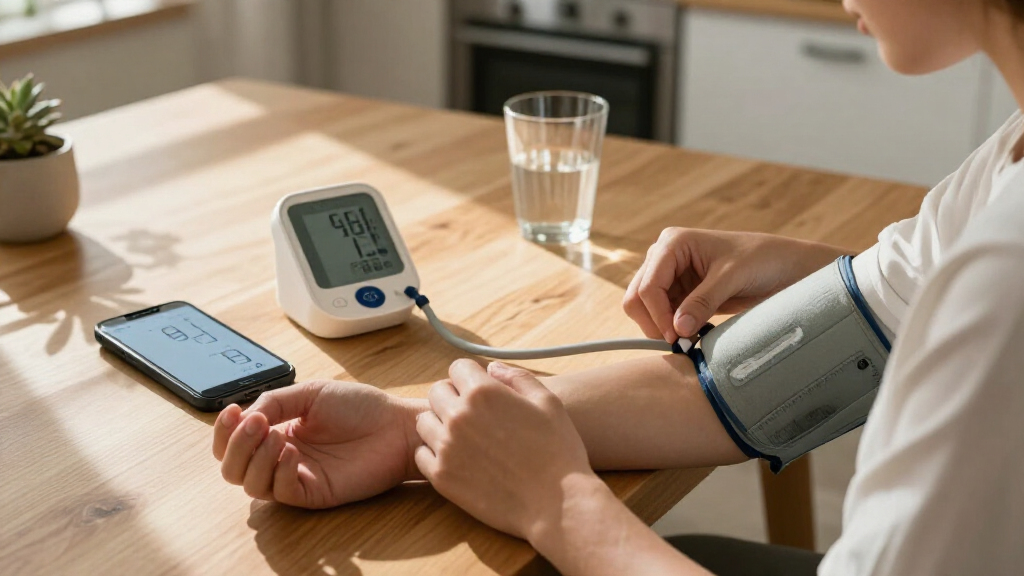
I ranked these smart blood pressure monitors by how well their connected features support a repeatable home-measurement routine, rather than by the number of app features alone. I weighed cuff design and stated fit range, clarity of the display and controls, the convenience of Bluetooth or Wi-Fi syncing, and whether the product offers useful reading history or sharing options. I also considered practical details such as portability, household suitability, and how much setup the device appears to ask of its owner.
The order gives priority to dependable everyday usability and a clear reason to choose each model. Monitors with distinctive strengths—such as an integrated design, Wi-Fi syncing, AFib screening, or multiple cuffs—rank ahead when those strengths solve a real buyer need. A higher position does not mean a product is right for every person: app preferences, cuff fit, phone compatibility, and intended use can change the best choice. I treat connected features as tracking aids, not proof that a device can diagnose a condition.
| smart blood pressure monitor | Connectivity |
|---|---|
| OMRON Evolv Wireless Upper Arm | Bluetooth |
| iProven Bluetooth Blood Pressu | Bluetooth |
| iHealth Track Pro Upper Arm Bl | — |
| Garmin Index BPM Smart Blood P | Wi-Fi with optional Garmin Connect syncing |
| Withings BPM Connect Wi-Fi and | Wi-Fi and Bluetooth |
| iHealth ACCU Smart Upper Arm B | Bluetooth 4.0 or later |
| RunStar Smart Upper Arm Blood | — |
| Greater Goods Bluetooth Upper | Bluetooth |
| Smart Upper Arm Blood Pressure | — |
| Etekcity Bluetooth Upper Arm B | Bluetooth |
| Alcedo Bluetooth Upper Arm Blo | Bluetooth |
| iHealth Track Smart Upper Arm | Bluetooth 4.0 or later |
| OMRON Platinum Upper Arm Blood | Bluetooth |
| iHealth Neo Wireless Upper Arm | Bluetooth 4.0 |
| Andesfit Upper Arm Blood Press | Bluetooth |
Factors to Consider When Choosing Smart Blood Pressure Monitors
Before choosing a connected monitor, I would start with the routine you can sustain: where you will measure, how you want to review results, and who needs access to them. These broader decisions can matter more than choosing the model with the longest feature list.
Match the cuff to the person who will use it
A cuff that does not fit correctly can make an otherwise capable monitor a poor choice. Measure the upper arm and compare that measurement with the manufacturer’s stated cuff range before buying; do not rely on a general label such as “adult.” For a shared household, check whether everyone falls within the supplied cuff range or whether compatible sizes are available. A two-cuff package, such as the Andesfit option in this lineup, can address different arm sizes, but confirm that each cuff is intended for the specific monitor. Buyers with limited dexterity may also want to check how easy the cuff is to position and fasten without help. If the fit range is uncertain, ask a clinician or pharmacist to help confirm the correct size.
Choose connectivity that fits your daily routine
Bluetooth is a practical choice when you normally take readings near your phone and are comfortable opening an app to sync. Wi-Fi can make updates feel more automatic, but it adds reliance on network setup and may be unnecessary if you only review results occasionally. Before choosing, check whether the app supports your phone, whether it requires an account, and how readings can be exported or shared. A smart display can still be useful when a phone is not nearby, so app dependence should not be the only way to view a measurement. Avoid buying on connectivity labels alone: the important question is whether your preferred routine will actually get readings recorded. If you are buying for someone who dislikes smartphones, prioritize a readable monitor and simple controls.
Look for a useful record, not just a stream of readings
App charts can help reveal patterns over time, but a large history is only useful if you can understand and share it. Check whether the app clearly dates readings, distinguishes users, and makes it easy to show results to a health professional. If two people will share a device, confirm that the monitor or app can keep their records separate; otherwise, mixed data can confuse the picture. Consider whether you need simple averages, export options, or just a basic log before paying for features you may never use. Do not treat app-generated interpretations as a diagnosis. For changes to medication or care, use the readings in a conversation with a clinician.
Pay more only for features tied to a real need
Extra alerts, richer app tools, and wireless options can be worthwhile when they solve a recurring problem, such as keeping a household log or reducing manual syncing. AFib screening, as offered by the OMRON Platinum, is an added screening feature rather than a replacement for medical testing or a diagnosis. If you need routine blood pressure tracking, a simpler monitor may be easier to operate and maintain. Before choosing an advanced model, ask whether the feature will change how you measure, record, or share results. Also check whether the app’s core functions remain available without a subscription or a specific phone ecosystem. Spend on a feature you will use consistently, not a longer list of capabilities.
Build a repeatable measuring routine
A connected monitor cannot correct inconsistent measuring habits. Follow the device instructions and your clinician’s guidance, and take readings under similar conditions so comparisons are more meaningful. Sit quietly before measuring, position your arm as directed, and avoid talking during the measurement. Take the number of readings and use the schedule recommended by your health professional rather than reacting to one isolated result. A monitor with a comfortable cuff and easy-to-read results may help you keep that routine more reliably than one with more app functions. If readings are unexpectedly high, low, or accompanied by concerning symptoms, follow medical advice rather than relying on the app alone.
Frequently Asked Questions
Do I need Wi-Fi, or is Bluetooth enough for a smart blood pressure monitor?
Bluetooth is usually enough if you measure near your phone and do not mind syncing through an app. Wi-Fi can be more convenient for automatic uploads, as with the Withings BPM Connect, but it brings extra network setup and may not add much if you check readings infrequently. Ask whether you need results to appear without opening the app or whether a manual sync fits your routine. Also check phone compatibility and how the app handles stored readings if the connection drops. Choose the connection method you are most likely to use consistently.
Can two people share one smart blood pressure monitor?
Some monitors and apps support separate user records, but the details vary, so verify this before sharing a device. Separate profiles help prevent one person’s readings from being mixed into another person’s history. Both users also need a cuff that fits their arm; one included cuff may not suit everyone in a household. If the app does not make profile switching clear, separate devices or another record-keeping method may reduce confusion. Keep each person’s results clearly identified when sharing them with a clinician.
Is an AFib feature enough to tell me whether I have atrial fibrillation?
No. An AFib feature, such as the screening function on the OMRON Platinum, can flag a possible irregular rhythm during a measurement, but it does not diagnose atrial fibrillation. A normal result also cannot rule out a rhythm problem. If you receive a concerning alert or have symptoms such as fainting, chest discomfort, or shortness of breath, seek medical guidance. Do not change treatment based only on a monitor notification. Ask your clinician how to interpret alerts alongside your symptoms and health history.
What should I do if the monitor’s cuff range is close to my arm measurement?
Measure your upper arm carefully using the method provided by the manufacturer, then compare it with the exact cuff range listed for that model. If your measurement sits at the edge of the range, check whether the maker offers a different compatible cuff rather than assuming the included one will fit well. A loose or overly tight cuff can make positioning difficult and may affect the reading. For households with different arm sizes, a package with multiple cuffs, such as the Andesfit model, may be more practical if those cuffs match each user. When in doubt, ask a clinician or pharmacist to check the fit.
Can I use app readings instead of the log my clinician asked me to keep?
Often, an app can make a log easier to maintain, but confirm that it records dates, times, and the readings your clinician requested. Ask whether your clinician can accept an app view, a shared report, or an exported record; not every clinic uses the same format. Keep a backup method if the app loses data, changes access, or is difficult to open during an appointment. Follow the schedule your clinician gave you, since a collection of unplanned readings may not answer the same question. The monitor’s app supports record keeping, but it does not replace medical advice.
Conclusion
For most buyers, I would start with the OMRON Evolv as best overall: its compact integrated design puts everyday usability ahead of a long feature list. The Greater Goods Bluetooth monitor is my best-value direction for someone who wants app-connected tracking without making Wi-Fi or advanced screening the priority, while the Withings BPM Connect is the best premium fit for buyers who value Wi-Fi syncing. For beginners, I would favor a straightforward upper-arm model such as the iHealth Track Pro, with a clear display and a familiar measurement routine. The OMRON Platinum is the specific-needs pick for buyers interested in an added AFib screening feature, and Andesfit deserves a look for households that need two cuff sizes. Confirm cuff fit and app compatibility before deciding; those details can outweigh the ranking.