Breathing improvement gadgets range from simple flow trainers to adjustable resistance devices and flutter valves, so the right choice depends on what you want to practice. My best overall pick is The Breather for its dedicated breathing-training design, while the Sonmol Digital Breathing Exercise Device stands out for app-connected feedback and the three-ball trainer offers a straightforward visual cue. The main tradeoffs are guided feedback versus simplicity, adjustable resistance versus ease of use, and portability versus cleaning demands. These devices are exercise aids, not substitutes for medical care or prescribed respiratory treatment. Read on for my full comparison and a guide to choosing a device that fits your needs.

Get wellness gear delivered free with Prime
- Fast, free delivery on millions of items
- Prime Video, Amazon Music and more included
- Member-only deals all year
Key Takeaways
- The Breather leads the lineup for structured breathing practice: its purpose-built trainer design gives it a clearer role than basic ball-and-flow devices.
- Digital feedback separates Sonmol from the simpler options: app connectivity may suit people who want tracked practice, but adds setup and device dependence.
- Flutter valves serve a different purpose from resistance trainers: their oscillating exhalation is aimed at airway-clearing routines, so they are not interchangeable with general breathing exercisers.
- Simple designs can be the better entry point: the one-ball and three-ball trainers offer visible airflow cues without the learning curve of app-linked or adjustable systems.
- Adjustability matters most when the setting is usable: resistance models such as Expand-A-Lung and the portable adjustable trainers offer progression, but a complex device is a poor match for someone who wants basic guided practice.
| The Breather Natural Breathing Exerciser Trainer for Drug-Free Respiratory Therapy | 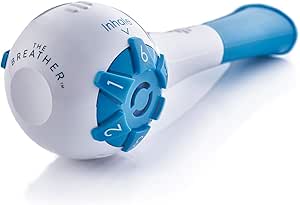 | Best for Guided Practice | Training guidance: Mobile app with self-paced video protocols | Exercise focus: Inhalation and exhalation muscle training | Breathing approach: Promotes diaphragmatic breathing | VIEW ON AMAZON | See Our Full Breakdown |
| Breathing Exercise Device for Lungs, 3-Ball Breathing Trainer for Recovery & Wellness |  | Best for Simple Visual Feedback | Design: Three-ball visual feedback system | Material: Lightweight, flexible tube and mouthpiece | Adjustability: Adjustable tube and mouthpiece | VIEW ON AMAZON | See Our Full Breakdown |
| Breathing Trainer Flutter Valve Device for Lungs, Adjustable Resistance, Portable Respiratory Exerciser |  | Best for Portable Resistance Training | Resistance adjustment: Adjustable | Material: Medical-grade PC | Portability: Portable | VIEW ON AMAZON | See Our Full Breakdown |
| Breathing Trainer with Display |  | Best for Basic Progress Tracking | Weight: 28.8 g (1 oz) | Power: Rechargeable | Mouthpieces: Detachable | VIEW ON AMAZON | See Our Full Breakdown |
| Sonmol Digital Breathing Exercise Device for Lungs with App & Bluetooth |  | Best for Data-Led Training | Dimensions: 3 x 2.1 x 6 inches | Weight: 4 ounces | Resistance levels: 6 | VIEW ON AMAZON | See Our Full Breakdown |
| Inhale Lung Trainer – Adjustable Breathing Exercise Device with Medical Grade Silicone Mouthpiece and Carrying Case |  | Best for Two-Way Resistance | Brand: Inhale | Model number: 1040913521 | Resistance levels: 2 | VIEW ON AMAZON | See Our Full Breakdown |
| Flutter Valve Breathing Exercise Device for Lungs |  | Best Compact Flutter Valve | Device type: Flutter valve breathing exercise device | Resistance adjustment: Three steel balls | Material: Medical-grade PC | VIEW ON AMAZON | See Our Full Breakdown |
| Flutter Valve Breathing Exercise Device for Lungs, Portable Lung Exerciser & Mucus Clearance Device, Adjustable Resistance |  | Best for Portable Mucus-Clearance Practice | Device type: Portable lung exerciser and mucus-clearance device | Resistance: Adjustable with three steel balls | Material: Medical-grade PC | VIEW ON AMAZON | See Our Full Breakdown |
| Breathing Exercise Device for Lungs – One-Ball Design for Gentle Breathing Training & Recovery Support, Easy to Clean |  | Best for Gentle Beginner Practice | Design: One-ball visual feedback | Tube: Flexible | Mouthpiece: Adjustable | VIEW ON AMAZON | See Our Full Breakdown |
| Breathing Exercise Device for Lungs, Deep Breathing Trainer with Flow, Gentle Breathing Support |  | Best for Simple Three-Ball Visual Practice | Design: Three-ball | Material: Flexible tube and mouthpiece | Visual feedback: Ball movement indicates progress | VIEW ON AMAZON | See Our Full Breakdown |
| Adjustable Resistance Portable Lung Breathing Trainer – Premium Food-Grade Silicone Device for Athletes and Home Fitness |  | Best for Travel | Dimensions: 3.94 x 1.97 x 1.18 inches | Materials: Food-grade silicone and ABS plastic components | Resistance: Multiple adjustable levels via flow-control valve | VIEW ON AMAZON | See Our Full Breakdown |
| MILLSTEPS Breathing Exercise Device for Lungs, Flutter Valve, Expiratory Breathing Exerciser – Clear Mucus from Airways Naturally & Build Stronger Lungs (Blue) |  | Best for Mucus-Clearance Practice | Type: Flutter-valve expiratory breathing exerciser | Color: Blue | Included resistance components: 16 mm, 18 mm, and 20 mm steel balls | VIEW ON AMAZON | See Our Full Breakdown |
| Expand-A-Lung Breathing Exercise Fitness Trainer |  | Best for Simple, Knob-Controlled Training | Material: Food-grade silicone | Length: 4 inches | Resistance adjustment: Manual knob | VIEW ON AMAZON | See Our Full Breakdown |
| Giyosk Breathing Exercise Device for Lungs (Green) |  | Best Accessory Bundle | Material: Food-grade PP | Temperature resistance: 130°C | Included resistance components: 3 stainless steel balls | VIEW ON AMAZON | See Our Full Breakdown |
| Breathing Trainer with Adjustable Resistance – Portable Lung Trainer for Athletes and Active Users |  | Best for Multi-Sport Routines | Resistance: Adjustable | Portability: Compact and lightweight | Intended users: Athletes, runners, swimmers, cyclists, and active users | VIEW ON AMAZON | See Our Full Breakdown |
| breathing improvement gadget | Material |
|---|---|
| The Breather Natural Breathing | — |
| Breathing Exercise Device for | Lightweight, flexible tube and mouthpiece |
| Breathing Trainer Flutter Valv | Medical-grade PC |
| Breathing Trainer with Display | — |
| Sonmol Digital Breathing Exerc | — |
| Inhale Lung Trainer | — |
| Flutter Valve Breathing Exerci | Medical-grade PC |
| Flutter Valve Breathing Exerci | Medical-grade PC |
| Breathing Exercise Device for | — |
| Breathing Exercise Device for | Flexible tube and mouthpiece |
| Adjustable Resistance Portable | — |
| MILLSTEPS Breathing Exercise D | — |
| Expand-A-Lung Breathing Exerci | Food-grade silicone |
| Giyosk Breathing Exercise Devi | Food-grade PP |
| Breathing Trainer with Adjusta | Not specified in the product data |
More Details on Our Top Picks
The Breather Natural Breathing Exerciser Trainer for Drug-Free Respiratory Therapy
The Breather is the clearest fit for buyers who want instruction alongside a breathing exerciser. Its guided app offers self-paced video protocols, while the device works both inhalation and exhalation muscles and encourages diaphragmatic breathing. That structure can make it easier to follow a routine than the three-ball breathing trainer, which gives visual feedback but leaves progress monitoring to the user. The tradeoff is that The Breather depends on a smartphone and internet connection for its app-based guidance; buyers seeking a fully standalone device may prefer the Breathing Trainer with Display, which records recent vital-capacity history. The supplied information does not specify resistance settings or measurement features for The Breather, so it suits guided exercise better than buyers seeking quantified training data.
Pros:- Guided app includes self-paced video protocols
- Exercises both inhalation and exhalation muscles
- Encourages diaphragmatic breathing
- Designed for therapists, patients, and general consumers
Cons:- Training app requires a smartphone and internet connection
- Product information does not specify adjustable resistance or progress measurements
Best for: People starting a structured breathing routine who want video guidance for practicing inhalation, exhalation, and diaphragmatic breathing.
Not ideal for: Buyers who avoid smartphone apps, lack reliable internet access, or want stated resistance levels and built-in progress measurements.
- Training guidance:Mobile app with self-paced video protocols
- Exercise focus:Inhalation and exhalation muscle training
- Breathing approach:Promotes diaphragmatic breathing
- Intended users:Therapists, patients, and consumers
- Connectivity requirement:Smartphone and internet connection for app
- Resistance adjustment:Not specified
Our verdict“Choose The Breather if video-guided practice matters more to you than standalone operation or built-in measurement.”
Breathing Exercise Device for Lungs, 3-Ball Breathing Trainer for Recovery & Wellness
The three-ball design makes this a straightforward choice for gentle inhale practice: users can watch the balls respond rather than rely on an app or display. Its tubing and mouthpiece disassemble for cleaning, a practical advantage for frequent home use or care settings. Compared with The Breather, this device offers a more visible, low-tech cue, but it does not provide the same guided video protocols. It also falls short of the Sonmol Digital Breathing Exercise Device for buyers who want adjustable resistance and app-based tracking. There is no precise measurement or resistance control here, and progress requires manual monitoring. That makes it a better match for uncomplicated daily practice than for users seeking a tailored, data-led training plan.
Pros:- Three-ball design provides visible feedback during inhalation
- Disassembles easily for cleaning
- Adjustable tube and mouthpiece
- Suited to daily home or elderly-care practice
Cons:- Offers no precise measurement or resistance control
- Progress must be monitored manually
- Limited to gentle breathing exercises
Best for: Home users and caregivers seeking a cleanable, low-tech device for gentle breathing practice with visible inhale feedback.
Not ideal for: Athletes or data-focused users who want adjustable resistance, precise measurements, or automatic progress tracking.
- Design:Three-ball visual feedback system
- Material:Lightweight, flexible tube and mouthpiece
- Adjustability:Adjustable tube and mouthpiece
- Cleaning:Disassembles for cleaning
- Intended use:Breathing recovery, respiratory wellness, and daily practice
- Resistance control:No precise resistance control specified
Our verdict“Pick this model for simple visual cues and easy cleaning, not for customizable or measured training.”
Breathing Trainer Flutter Valve Device for Lungs, Adjustable Resistance, Portable Respiratory Exerciser
Adjustable resistance is the main reason to choose this portable trainer: it lets users change the exercise challenge rather than follow the gentle, visually cued approach of the three-ball breathing trainer. The compact, battery-free design also suits practice away from home, and the product is described as made from medical-grade PC. Compared with the Sonmol Digital Breathing Exercise Device, this model trades app-connected measurements and interactive games for simpler manual adjustment and no charging requirement. That simplicity has limits: there is no monitoring to show how training changes over time, and users must set resistance themselves. It makes more sense for people comfortable managing their own sessions than for beginners who need structured digital feedback.
Pros:- Adjustable resistance supports personalized exercise
- Portable design suits use away from home
- Medical-grade PC construction
- Requires no battery
Cons:- No measuring or progress-monitoring features
- Resistance must be adjusted manually
- Provides no additional feedback beyond the exercise itself
Best for: Active users and athletes who want a compact, battery-free breathing exerciser with manually adjustable resistance.
Not ideal for: Beginners who want guided sessions, or users who need measurements and digital progress tracking to shape their routine.
- Resistance adjustment:Adjustable
- Material:Medical-grade PC
- Portability:Portable
- Battery requirement:None
- Suitable users:Beginners, experienced users, and athletes
- Monitoring:No measuring or monitoring features specified
Our verdict“Choose this trainer for portable, adjustable practice if you are comfortable setting resistance without app guidance or tracking.”
Breathing Trainer with Display
Five-session vital-capacity history gives this trainer a useful middle ground between a basic breathing device and the app-led Sonmol Digital Breathing Exercise Device. Its display-based record can help users see recent measurements without relying on Bluetooth or an app, while the rechargeable, 28.8-gram design is easy to carry. Detachable mouthpieces also support hygiene when the device is used regularly. The tradeoff is that the supplied details do not explain adjustable resistance, so this is less clearly suited to progressive load-based training than the portable adjustable-resistance trainer. Its tracking is also limited to the last five vital-capacity readings, not a broad training dashboard. Buyers should treat it as a lightweight monitoring aid, not a detailed coaching system.
Pros:- Stores the last five vital-capacity readings
- Lightweight at 28.8 g
- Rechargeable design avoids routine battery replacement
- Detachable mouthpieces support hygiene
Cons:- Tracking is limited to five readings
- Adjustable resistance levels are not specified
- Consistent daily practice is needed for noticeable results
Best for: Users who want a lightweight, rechargeable breathing trainer that stores a short history of vital-capacity readings without requiring app connectivity.
Not ideal for: Buyers seeking a detailed long-term dashboard, confirmed resistance settings, or extensive app-based coaching.
- Weight:28.8 g (1 oz)
- Power:Rechargeable
- Mouthpieces:Detachable
- Tracking:Stores the last five vital-capacity readings
- Operation:One moving part
- Resistance adjustment:Levels not specified
Our verdict“Pick this model for portable, basic reading history; choose Sonmol if you want app-connected training features.”
Sonmol Digital Breathing Exercise Device for Lungs with App & Bluetooth
Six resistance levels and MIP/MEP measurement make Sonmol the most data-oriented option in this group. Its Bluetooth connection to the eRMT app adds progress tracking and interactive games, giving users more structure than the manual adjustments on the portable flutter-valve trainer. It also goes beyond the Breathing Trainer with Display, whose stored history is limited to five vital-capacity readings. That feature set comes with a dependency: full functionality requires a smartphone and app, so it is not the pick for someone who wants an entirely standalone routine. At four ounces, it is portable, though larger and heavier than the one-ounce display model. Its focus remains respiratory training rather than general fitness, so buyers should choose it for guided, measurable breathing exercises specifically.
Pros:- Six resistance levels allow training adjustments
- MIP/MEP measurement supports progress tracking
- Bluetooth app includes interactive games
- Portable BPA-free construction
Cons:- Requires a smartphone and app for full functionality
- Focused on respiratory training rather than general fitness
- Heavier than the 28.8 g Breathing Trainer with Display
Best for: Tech-comfortable users who want adjustable respiratory training, MIP/MEP measurements, and app-based progress features.
Not ideal for: People who prefer an app-free routine or want one device to support activities beyond respiratory training.
- Dimensions:3 x 2.1 x 6 inches
- Weight:4 ounces
- Resistance levels:6
- Connectivity:Bluetooth
- App compatibility:eRMT app
- Measurements:MIP/MEP
- Materials:BPA-free
Our verdict“Choose Sonmol if you want resistance options and app-based measurements; skip it if you want a simple, phone-free trainer.”
Inhale Lung Trainer – Adjustable Breathing Exercise Device with Medical Grade Silicone Mouthpiece and Carrying Case
The Inhale Lung Trainer suits buyers who want resistance on both the inhale and exhale, rather than the gentle, visually guided practice offered by the one-ball breathing exerciser. Its manual dial provides two resistance levels, giving users a choice of effort without adding electronics or app setup. The removable medical-grade silicone mouthpiece can be taken off for cleaning, while the included case makes it easier to store or carry between sessions. Made and assembled in the USA, it has a more specified build story than the Flutter Valve models in this lineup, though that does not add more training settings. The main tradeoff is limited progression: two levels may feel restrictive as ability changes, and there is no digital feedback to record sessions or breathing metrics.
Pros:- Resistance can be adjusted for both inhalation and exhalation
- Removable medical-grade silicone mouthpiece supports cleaning
- Carrying case helps protect the device during storage and travel
- Made and assembled in the USA
Cons:- Only two resistance levels limit adjustment and progression
- No digital tracking or app integration
- Manual resistance changes provide no recorded session feedback
Best for: People seeking a compact manual trainer with adjustable resistance for both inhalation and exhalation, plus a removable mouthpiece and storage case.
Not ideal for: Users who want finely stepped resistance, app coaching, or measured progress; its two settings and manual operation offer neither.
- Brand:Inhale
- Model number:1040913521
- Resistance levels:2
- Resistance control:Manual dial
- Operation:Manual
- Mouthpiece:Removable medical-grade silicone
- Included accessories:Carrying case and QR training card
- UPC:085783895258
Our verdict“Choose the Inhale Lung Trainer if you want portable two-way resistance and can work within two manual settings.”
Flutter Valve Breathing Exercise Device for Lungs
This compact, battery-free flutter valve is the straightforward pick for buyers who want a portable respiratory exerciser with adjustable resistance. Its three steel balls provide a mechanical way to vary the exercise, while the lightweight design is easier to bring along than a setup built around storage or digital features. Compared with the Inhale Lung Trainer, this model is presented as a flutter-style device for mucus clearance and respiratory muscle work, rather than a two-way dial-controlled trainer; the product information does not specify separate inhale and exhale adjustments. Its medical-grade PC construction is described as durable, but the device still needs careful cleaning after use. Resistance adjustment is also less fully detailed than on the Inhale, so buyers seeking precise, clearly stepped control or progress tracking should look elsewhere.
Pros:- Compact and lightweight for carrying between home and other settings
- Requires no batteries
- Three steel balls provide adjustable resistance
- Medical-grade PC construction
Cons:- Cleaning requires attention for hygiene
- Resistance options are limited compared with more adjustable trainers
- No digital feedback or progress tracking is specified
Best for: People who want a lightweight, battery-free flutter valve for portable breathing exercises and are comfortable cleaning it after use.
Not ideal for: Buyers who need clearly specified resistance settings, digital feedback, or a design with an expressly removable mouthpiece for easier cleaning.
- Device type:Flutter valve breathing exercise device
- Resistance adjustment:Three steel balls
- Material:Medical-grade PC
- Portability:Compact and lightweight
- Power:No batteries required
Our verdict“Pick this Flutter Valve if portability and battery-free operation matter more than detailed resistance control or tracking.”
Flutter Valve Breathing Exercise Device for Lungs, Portable Lung Exerciser & Mucus Clearance Device, Adjustable Resistance
This portable flutter valve is aimed at people who want a simple, non-electric device for breathing exercises and mucus-clearance practice at home or on the go. Its three steel balls offer adjustable resistance, and the medical-grade PC body keeps the design focused on durable, lightweight use. The feature set closely matches the other Flutter Valve in this group, the B0BSLPC33V model: both use three steel balls, compact construction, and no batteries. The more useful distinction here is the stated need for practice to use it effectively, while the B0BSLPC33V listing emphasizes cleaning as a drawback. Neither option supplies digital measurements, and this model gives no detailed resistance scale, so it is less suited to people who want precise coaching or a clear record of changing performance.
Pros:- Three steel balls allow resistance adjustment
- Compact, lightweight build supports portable use
- No battery or charging routine
- Medical-grade PC material
Cons:- May take practice to use effectively
- No digital feedback or progress tracking
- Resistance levels are not specified as measured settings
Best for: People who want a small, battery-free flutter valve for regular home or travel use and are willing to practice its technique.
Not ideal for: Beginners who want guided instructions or buyers who need digital measurements and clearly quantified resistance settings.
- Device type:Portable lung exerciser and mucus-clearance device
- Resistance:Adjustable with three steel balls
- Material:Medical-grade PC
- Portability:Compact and lightweight
- Power:No battery required
Our verdict“Choose this model for portable, non-electric flutter-valve practice if you do not need guided or digitally tracked training.”
Breathing Exercise Device for Lungs – One-Ball Design for Gentle Breathing Training & Recovery Support, Easy to Clean
The one-ball design makes this the clearest beginner-oriented option in the group: the ball rises as the user inhales, providing immediate visual feedback without a screen, dial, or app. Its low resistance is aimed at gentle daily practice and recovery support, not strenuous respiratory-muscle training. Compared with the three-ball breathing trainer, it offers a simpler visual cue and a gentler starting point, but it cannot provide the same multi-ball feedback or challenge. The flexible tube and adjustable mouthpiece may help users find a comfortable position, while detachable parts and built-in storage support tidier home use. The tradeoff is limited training range: experienced users may outgrow its resistance, and the rising ball shows activity rather than a measured breathing result.
Pros:- Rising ball gives an immediate visual cue during inhalation
- Low resistance suits gentle beginner practice
- Flexible tube and adjustable mouthpiece allow positioning changes
- Disassembles for cleaning and includes built-in storage
Cons:- Limited resistance may not challenge experienced users
- Visual feedback does not provide quantitative measurements
- Designed for gentle practice rather than a broad range of training intensity
Best for: Beginners and people seeking gentle daily breathing practice with a simple visual cue and easy-to-clean parts.
Not ideal for: Advanced users seeking stronger resistance, multiple training levels, or numerical measurements of breathing performance.
- Design:One-ball visual feedback
- Tube:Flexible
- Mouthpiece:Adjustable
- Cleaning:Disassembles easily
- Storage:Built-in storage
- Intended use:Gentle daily breathing support
Our verdict“Choose this one-ball device for simple, gentle practice and visible inhalation feedback, not advanced resistance training.”
Breathing Exercise Device for Lungs, Deep Breathing Trainer with Flow, Gentle Breathing Support
This three-ball breathing trainer gives users more visual cues than the one-ball model while keeping the exercise focused on gentle daily practice. Watching the balls move can make it easier to follow a routine without an app, although the device does not record measurements or automatically track change. Its parts can be taken apart for cleaning, a practical feature for repeated home use and care settings. Compared with the Flutter Valve devices, this trainer emphasizes visual breathing feedback rather than steel-ball resistance adjustment, so it is a better fit for people who want a simple cue than for those seeking a more adjustable workout. The tradeoff is that progress must be judged manually, and its gentle training range may not satisfy advanced users looking for stronger resistance.
Pros:- Three-ball design provides visual cues during breathing exercises
- Simple format suits routine daily use
- Disassembles for cleaning
- Flexible tube and mouthpiece are specified
Cons:- Limited to gentle breathing training
- No digital measurements or tracking
- Progress requires regular manual observation
Best for: People who want a simple, manually monitored breathing routine with multiple visual cues, including users in home or elderly-care settings.
Not ideal for: Experienced users who want adjustable resistance, digital measurements, or automated progress tracking.
- Design:Three-ball
- Material:Flexible tube and mouthpiece
- Visual feedback:Ball movement indicates progress
- Cleaning:Disassemblable
- Intended use:Gentle breathing support
Our verdict“Pick this three-ball trainer if you want simple visual guidance and easy disassembly, rather than adjustable resistance or recorded metrics.”
Adjustable Resistance Portable Lung Breathing Trainer – Premium Food-Grade Silicone Device for Athletes and Home Fitness
This trainer’s strongest advantage is its pocket-sized 3.94-inch body, paired with a flow-control valve that lets users adjust resistance without carrying a larger training device. The soft food-grade silicone mouthpiece is a practical fit for repeat sessions, while the compact build suits workouts away from home. Compared with the Expand-A-Lung, which also offers adjustable resistance in a small format, this model gives more specific dimensions and includes ABS components alongside silicone. That mixed construction creates a cleaning tradeoff: the ABS parts may need to be taken apart for a thorough wash. Its resistance range is described as multiple levels, but no level measurements are provided, so advanced users cannot easily judge whether it will meet a particular training target. I’d choose it for portability and simple, adjustable practice, not for measurable performance tracking.
Pros:- Pocket-sized dimensions make it easy to carry between home, gym, and travel.
- Flow-control valve provides multiple resistance settings for adjustable practice.
- Food-grade silicone offers a soft mouth-contact surface.
- No assembly is required for routine use.
Cons:- ABS components may need disassembly for thorough cleaning.
- The resistance levels are not quantified, making training progression harder to compare.
- The product description does not provide a structured training program or performance feedback.
Best for: Athletes and home-fitness users who want a small, adjustable breathing trainer they can pack for gym sessions or travel.
Not ideal for: Buyers who want clearly quantified resistance levels or a device with no components to disassemble during cleaning.
- Dimensions:3.94 x 1.97 x 1.18 inches
- Materials:Food-grade silicone and ABS plastic components
- Resistance:Multiple adjustable levels via flow-control valve
- Power:No batteries specified
- Assembly:No assembly required
- Cleaning:Soap and water; ABS components may require disassembly
Our verdict“Choose this model if compact carry size and adjustable resistance matter more to you than quantified settings or tracking.”
MILLSTEPS Breathing Exercise Device for Lungs, Flutter Valve, Expiratory Breathing Exerciser – Clear Mucus from Airways Naturally & Build Stronger Lungs (Blue)
The MILLSTEPS is the clearest fit here for buyers seeking a flutter-valve style breathing exercise alongside respiratory muscle practice. Its included 16, 18, and 20 mm steel balls provide a tangible way to vary resistance, unlike the flow-control valve on the Adjustable Resistance Portable Lung Breathing Trainer, whose settings are not specified by measurement. That makes MILLSTEPS’s resistance options easier to distinguish, though the listing does not explain how each ball maps to a particular training level. The product is intended to support mucus clearance, but its description does not provide clinical guidance or a detailed routine, and it states that results depend on consistent daily use over several weeks. I’d favor it over the Expand-A-Lung when the flutter-valve format is the priority; buyers focused mainly on compact silicone construction may prefer that simpler alternative.
Pros:- Flutter-valve format is designed for breathing exercises that support mucus clearance.
- Includes three steel-ball sizes for changing the resistance setup.
- The listing identifies both respiratory training and mucus-clearance use cases.
- Blue color makes the device easy to identify among personal equipment.
Cons:- Noticeable results are described as requiring consistent daily use over several weeks.
- The product information does not explain the precise resistance difference between ball sizes.
- No dimensions, material details, or cleaning instructions are provided.
Best for: Adults, singers, or athletes seeking a flutter-valve breathing exercise device with several included resistance components.
Not ideal for: Buyers who need detailed, individualized instructions or expect an immediate change without regular practice.
- Type:Flutter-valve expiratory breathing exerciser
- Color:Blue
- Included resistance components:16 mm, 18 mm, and 20 mm steel balls
- Application:Mucus-clearance exercises, lung-strength practice, and respiratory training
- Intended users:Description names users with breathing concerns, athletes, and singers
- Practice frequency:Consistent daily use is recommended in the product description
Our verdict“Pick MILLSTEPS if you want a flutter-valve device with multiple included ball sizes and are prepared to practice consistently.”
Expand-A-Lung Breathing Exercise Fitness Trainer
The Expand-A-Lung keeps the setup straightforward: a four-inch silicone trainer uses a knob to adjust resistance and needs no batteries. That combination makes it a strong choice for users who want a compact routine without a digital display or app. Compared with the Adjustable Resistance Portable Lung Breathing Trainer, it has a similarly portable footprint but uses a knob rather than a flow-control valve; the supplied details do not establish which has a wider or more precise resistance range. The main limitation is clear: the listing says its range may not satisfy advanced athletes. Some users may also find the mouth contact uncomfortable, despite the food-grade silicone. Like the MILLSTEPS flutter-valve device, it calls for steady practice, but it is better suited to adjustable respiratory-muscle exercise than a mucus-clearance-focused format.
Pros:- Knob-based resistance adjustment offers straightforward manual control.
- Four-inch length makes it compact for storage and carrying.
- Food-grade silicone is durable and described as easy to clean.
- Requires no batteries.
Cons:- The stated resistance range may be limited for advanced athletes.
- Mouthpiece contact may feel uncomfortable for users with sensitive lips.
- The description does not provide measured resistance levels or training feedback.
Best for: Beginners and recreational athletes who want a small, battery-free trainer with a manual resistance knob.
Not ideal for: Advanced athletes seeking a broad resistance range, or users who are sensitive to mouthpiece pressure.
- Material:Food-grade silicone
- Length:4 inches
- Resistance adjustment:Manual knob
- Power:No batteries
- Portability:Compact design
- Cleaning:Described as easy to clean
Our verdict“Choose the Expand-A-Lung for compact, knob-adjusted practice if you do not need advanced resistance or digital guidance.”
Giyosk Breathing Exercise Device for Lungs (Green)
Giyosk stands apart from the silicone-focused Expand-A-Lung by pairing a food-grade PP body with three stainless steel balls, a mouthpiece, and eight filters. That bundle may suit households that want included replacement or setup components, though the listing does not explain filter replacement timing or how the ball sizes change resistance. Its stated temperature resistance of 130°C is a material detail, not a complete cleaning protocol, so I would not infer a specific sterilization method from it alone. The device is described for adults and children, but the product information offers limited instructions; caregivers may need guidance before adding it to a child’s routine. Compared with MILLSTEPS, Giyosk includes filters and a separate mouthpiece, while MILLSTEPS names its ball sizes. This is the more accessory-rich choice, not the clearest for training setup.
Pros:- Includes three stainless steel balls for resistance adjustment.
- Eight filters and a mouthpiece are included in the package.
- Food-grade PP construction is specified.
- Compact handheld design is described as suitable for daily use.
Cons:- Instructions and guidance are described as limited.
- The product details do not explain the resistance associated with each ball.
- No digital feedback or session tracking is provided.
Best for: Households looking for a handheld breathing exercise device that includes filters, a mouthpiece, and several resistance components.
Not ideal for: Buyers who need detailed setup guidance, clearly labeled resistance levels, or digital tracking.
- Material:Food-grade PP
- Temperature resistance:130°C
- Included resistance components:3 stainless steel balls
- Included accessories:Mouthpiece and 8 filters
- Color:Green
- Intended users:Adults and children, according to the product description
Our verdict“Choose Giyosk if the included filters and mouthpiece are useful to your household, but skip it if you need clearly explained settings.”
Breathing Trainer with Adjustable Resistance – Portable Lung Trainer for Athletes and Active Users
This trainer is pitched directly at people who want breathing exercises to fit around running, swimming, cycling, and other sports. Its main appeal is uncomplicated: resistance is adjustable, the body is compact and lightweight, and the device is described as easy to clean. Compared with the Expand-A-Lung, which specifies food-grade silicone, a four-inch length, and a knob adjustment, this model leaves its material and resistance mechanism unspecified. That makes it harder to judge mouthpiece feel, durability, or how precisely users can progress. The listing also notes that getting used to the resistance may take time. I’d place it ahead of more specialized options only for buyers who value a general-purpose, portable trainer; those seeking detailed specifications or a mucus-clearance-focused flutter valve should look at MILLSTEPS instead.
Pros:- Adjustable resistance allows users to personalize breathing exercises.
- Compact, lightweight design suits home, gym, and travel use.
- The listing names several sports and active routines it is intended to support.
- Described as easy to clean.
Cons:- Material and resistance-adjustment mechanism are not specified.
- Users may need time to adapt to the resistance levels.
- Durability details and measurable resistance settings are not provided.
Best for: Runners, swimmers, cyclists, and active users who want a portable adjustable-resistance trainer for a general fitness routine.
Not ideal for: Buyers who need specified construction materials, a documented resistance range, or a flutter-valve design for mucus-clearance exercises.
- Resistance:Adjustable
- Portability:Compact and lightweight
- Intended users:Athletes, runners, swimmers, cyclists, and active users
- Suggested settings:Home, gym, and travel
- Cleaning:Described as easy to clean
- Material:Not specified in the product data
Our verdict“Choose this model for a portable, sport-friendly breathing routine if its limited material and resistance details are acceptable to you.”

How We Picked
I compared these 15 breathing improvement gadgets by the kind of breathing practice they support, how clearly a new owner can use them, and whether their design offers meaningful control or feedback. I also weighed portability, mouthpiece materials and cleaning access, since a device that is awkward to maintain can be difficult to use consistently. Product names and descriptions do not establish clinical effectiveness, so I treated health claims cautiously and did not rank devices as medical treatment.
The ranking favors a clear purpose and practical usability over a long feature list. The Breather ranks first as a focused training option; Sonmol follows for buyers who value digital guidance, while basic flow trainers rank better for uncomplicated practice. Flutter-valve models are included for their distinct airway-clearance style, not as direct replacements for resistance trainers. Similar-looking devices are separated by stated features such as adjustable resistance, feedback, and cleaning design; where details are limited, I avoid assuming performance differences that the product descriptions do not support.
| breathing improvement gadget | Material |
|---|---|
| The Breather Natural Breathing | — |
| Breathing Exercise Device for | Lightweight, flexible tube and mouthpiece |
| Breathing Trainer Flutter Valv | Medical-grade PC |
| Breathing Trainer with Display | — |
| Sonmol Digital Breathing Exerc | — |
| Inhale Lung Trainer | — |
| Flutter Valve Breathing Exerci | Medical-grade PC |
| Flutter Valve Breathing Exerci | Medical-grade PC |
| Breathing Exercise Device for | — |
| Breathing Exercise Device for | Flexible tube and mouthpiece |
| Adjustable Resistance Portable | — |
| MILLSTEPS Breathing Exercise D | — |
| Expand-A-Lung Breathing Exerci | Food-grade silicone |
| Giyosk Breathing Exercise Devi | Food-grade PP |
| Breathing Trainer with Adjusta | Not specified in the product data |
Factors to Consider When Choosing Breathing Improvement Gadgets
Before choosing a device, decide what kind of breathing practice you want and how much guidance you will realistically use. Purpose, fit, and ease of cleaning often matter more than extra modes or a complicated display.
Match the Device to the Practice
Breathing trainers do not all work toward the same routine. Resistance exercisers ask you to breathe against a load, while ball-style devices make airflow visible and flutter valves create an oscillating exhalation. Choose based on the action you intend to practice, rather than assuming every product described as a lung trainer does the same thing. A common mistake is buying a mucus-clearance-style valve for general breath training, or expecting a visual flow trainer to provide adjustable resistance. If you have a diagnosed respiratory condition or want help clearing mucus, ask a qualified clinician which device and technique are appropriate for you.
Choose Feedback You Will Actually Use
A display or app can make sessions feel more guided, but it does not automatically make a device more effective. Feedback is most useful when it helps you follow a routine, notice consistency, or understand how to operate the device. If you prefer to start without setup, a basic visual trainer may be easier to pick up and repeat. Before paying for connected features, check whether the app is required, what it records, and whether the device remains usable without a phone. The tradeoff is straightforward: more guidance can support structure, while fewer components usually mean less setup and fewer dependencies.
Treat Resistance as a Control, Not a Challenge
Adjustable resistance can let a user select a level that feels manageable, but the highest setting is not automatically the best one. A device that is too demanding may make it harder to maintain a controlled breathing pattern. Look for clear adjustment instructions and a range that allows gradual changes, rather than choosing based on an impressive-sounding resistance claim alone. If you are new to this kind of training, prioritize simple operation and a gentle starting point. Anyone with breathing symptoms or a medical condition should seek professional guidance before changing resistance or starting a training routine.
Check Cleaning and Shared-Use Practicalities
Mouthpieces and internal airflow paths need regular care, so cleaning instructions deserve attention before purchase. Check whether the mouthpiece detaches, which parts can be washed, and whether the manufacturer gives clear drying and storage directions. A carrying case can help keep a portable device protected, but it does not replace cleaning. If more than one person will use the device, confirm that the design supports separate mouthpieces or follow the maker’s hygiene guidance. Buyers often focus on portability and overlook the time and access needed to clean the parts they breathe through.
Pay for a Clear Benefit, Not a Longer Feature List
A higher-feature device makes sense when its extra controls solve a real problem for you, such as wanting app-based session guidance or adjustable resistance. For casual, uncomplicated practice, those additions may add complexity without changing the routine you will follow. At the same time, the simplest option is not always the best value if it lacks the feedback or control you need. Compare the device’s stated purpose, cleaning demands, and included accessories rather than relying on broad wellness language. Be skeptical of claims that imply treatment or guaranteed results; product features alone do not establish medical benefit.
Frequently Asked Questions
Are breathing improvement gadgets interchangeable?
No. Resistance trainers, visual flow trainers, and flutter valves support different kinds of breathing practice. A resistance device loads inhalation or exhalation, a ball-style trainer offers a visible airflow cue, and a flutter valve uses oscillation during exhalation. A product described as a lung trainer may not suit the goal you have in mind. Match the device type to your intended routine, and ask a clinician if you are choosing one to address a health condition.
Should I choose an app-connected device or a basic trainer?
Choose an app-connected model if digital prompts or session tracking are likely to help you follow a regular routine. A basic trainer may be a better fit if you want to begin without pairing, charging, or using a phone. Check whether an app is optional and whether the device provides useful guidance on its own. Also review what data the app collects if privacy matters to you. Extra connectivity is only useful when it supports a practice you will keep using.
Can I use a breathing trainer instead of prescribed respiratory treatment?
No. These products should not replace prescribed medication, respiratory therapy, or advice from a healthcare professional. The roundup compares consumer devices by their stated design and usability, not by proof that they treat a condition. If you have asthma, COPD, another respiratory diagnosis, or new or worsening symptoms, check with your clinician before using a breathing gadget. A professional can help determine whether a device is suitable and how to use it safely.
Is an adjustable-resistance trainer a good first device?
It can be, provided the controls are clear and you can start at a comfortable level. Adjustability offers room to change the challenge, but it also adds another decision to learn. If your priority is a simple visual cue, a basic flow trainer may be less distracting at first. Avoid treating a higher resistance setting as a measure of progress or success. Anyone with a medical condition should ask a qualified professional about appropriate settings and technique.
What should I check before sharing a breathing device?
Check the manufacturer’s cleaning guidance and whether the mouthpiece can be removed or replaced. Do not assume that rinsing the outside is enough; internal parts and airflow channels may need specific care and drying. If the device is intended for individual use, follow that instruction rather than sharing it. Separate mouthpieces may reduce direct contact, but they do not remove the need to clean the device as directed. When instructions are unclear, contact the manufacturer or choose a design with more transparent maintenance guidance.
Conclusion
For most buyers, I recommend The Breather as the best overall because it has the clearest role as a dedicated breathing trainer in this group. The best value for straightforward practice is a basic ball-style trainer, particularly the one-ball option for someone who wants a simple visual cue; the exact value depends on included parts and care requirements. For a best premium-style choice, I would look at Sonmol if app-linked guidance is genuinely useful to you, while recognizing that connectivity adds complexity. Beginners who want minimal setup should start with a simple flow trainer rather than a feature-heavy device. For specific airway-clearance routines, compare the flutter-valve options and consult a clinician about suitability; for resistance-based practice, consider Expand-A-Lung or an adjustable portable trainer. Pick the device for the routine you intend to follow, not for the broadest claims on its label.