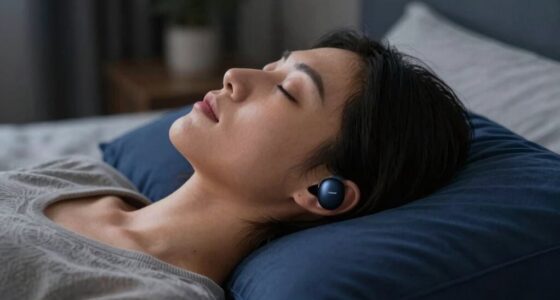
For anyone concerned about sleep quality, sleep breathing detectors offer vital insights into airflow, oxygen levels, and potential issues like sleep apnea. The EMAY SleepO2 Wrist Pulse Oximeter stands out as the best overall choice for its accuracy and ease of use, while the SkyPad Contact-Free Monitor offers a non-intrusive option for comprehensive sleep tracking. Buyers often face tradeoffs between detailed data and user-friendliness, or between affordability and advanced features. Continue reading for a detailed breakdown of these options to find the best fit for your sleep health needs.

Get wellness gear delivered free with Prime
- Fast, free delivery on millions of items
- Prime Video, Amazon Music and more included
- Member-only deals all year
Key Takeaways
- Most top-rated detectors balance detailed data collection with ease of use, but specialized monitors tend to be more complex and costly.
- Wrist-based pulse oximeters excel in accuracy but may require manual data handling, while contact-free devices offer seamless, hands-free monitoring.
- Bluetooth and app integration are common features that enhance data access, yet they vary in reliability and user interface quality.
- The best devices for sleep apnea detection often include additional vital sign monitoring, but they tend to be more expensive.
- Choosing between continuous overnight tracking and spot measurements depends on your specific health concerns and budget.
| EMAY SleepO2 Wrist Pulse Oximeter with Recording Capability |  | Best Overall for Continuous Overnight SpO2 Monitoring | Battery Life: 10 hours | Weight: 20g | Connectivity: Bluetooth | VIEW ON AMAZON | See Our Full Breakdown |
| EMAY Sleep Breathing Monitor for Airflow Tracking |  | Best for Airflow and Respiratory Event Detection | Weight: 10g | Material: Food-grade silicone | Sensors: Three sensors in probe | VIEW ON AMAZON | See Our Full Breakdown |
| EMAY Sleep Oxygen Monitor with PC Software & App, Bluetooth Pulse Oximeter, Rechargeable |  | Best for Detailed Data Analysis and Overnight Tracking | Modes: Spot check, continuous tracking | Memory: 72 hours | Connectivity: Bluetooth | VIEW ON AMAZON | See Our Full Breakdown |
| Sleep Detection Pad with Vital Sign Monitoring and Real-Time Sleep Tracking |  | Best for Non-Contact, Multi-Parameter Monitoring | Communication method: Wi-Fi | Power supply: Power adapter | Monitoring pad size: 790mm×880mm | VIEW ON AMAZON | See Our Full Breakdown |
| EMAY Sleep Oxygen Monitor with Built-in Recording Capability |  | Best for Basic Overnight Oxygen and Pulse Recording | Data Memory: 40 hours | Compatibility: iOS/Android | Use: Sports & aviation | VIEW ON AMAZON | See Our Full Breakdown |
| SkyPad Contact-Free Heart & Breathing & Sleep Apnea & Seizure Monitor |  | Best for Contactless, Continuous Monitoring in Home Settings | Sensor Type: Contactless health sensor | Monitoring Features: Heart rate, breathing, sleep apnea, seizures, room temperature, humidity | Connectivity: Wi-Fi, mobile app | VIEW ON AMAZON | See Our Full Breakdown |
| sleep breathing quality detector | Connectivity | Compatibility |
|---|---|---|
| EMAY SleepO2 Wrist Pulse Oxime | Bluetooth | — |
| EMAY Sleep Breathing Monitor f | — | Nasal breathing |
| EMAY Sleep Oxygen Monitor with | Bluetooth | — |
| Sleep Detection Pad with Vital | — | — |
| EMAY Sleep Oxygen Monitor with | — | iOS/Android |
| SkyPad Contact-Free Heart & Br | Wi-Fi, mobile app | Adults and children (1 year or older) |
More Details on Our Top Picks
EMAY SleepO2 Wrist Pulse Oximeter with Recording Capability
This wrist pulse oximeter stands out for its ability to record blood oxygen saturation and pulse rate continuously throughout the night without relying on a smartphone, making it ideal for users who want unobtrusive, long-term data collection. Compared with the EMAY Sleep Oxygen Monitor with Built-in Recording, it offers similar continuous tracking but adds the convenience of Bluetooth transmission and app integration, allowing detailed review without manually syncing data. The device’s lightweight design and rechargeable battery enhance comfort and usability, though it requires removing the finger probe before syncing data, which can interrupt sleep continuity. Its lack of an on-device display means users must access reports via the app, which might be less convenient for quick checks. This pick makes the most sense for those who prioritize ongoing, comfortable monitoring without complex setup or medical-grade accuracy.
Pros:- Continuous overnight data recording without smartphone dependence
- Lightweight, soft finger probe for comfortable sleep
- Rechargeable with a long 10-hour battery life
- Easy to review and share detailed reports via the EMAY app
Cons:- Requires removing finger from sensor before Bluetooth data download
- No display on the device itself, less immediate feedback
Best for: Individuals seeking continuous overnight oxygen and pulse tracking with minimal fuss and good comfort
Not ideal for: Users needing real-time, on-device display or those who prefer wired devices for medical diagnostics
- Battery Life:10 hours
- Weight:20g
- Connectivity:Bluetooth
- App Compatibility:EMAY app
Our verdict“This device is perfect for those who want reliable, long-term sleep oxygen monitoring with minimal intrusion.”
EMAY Sleep Breathing Monitor for Airflow Tracking
This airflow-focused device excels at detecting respiratory patterns and sleep quality through nasal airflow sensors, making it well-suited for users concerned specifically with breathing issues like apnea. Unlike the EMAY SleepO2 Wrist Pulse Oximeter, it does not monitor oxygen saturation or pulse, focusing solely on airflow and respiratory events. Its comfortable, lightweight silicone mask ensures minimal disturbance during sleep, and real-time data analysis provides users with professional-quality sleep reports. However, this device is limited to nasal breathing and isn’t suitable for mouth breathers, and it cannot be used simultaneously with C-PAP masks, which could limit its utility for some sleep apnea sufferers. Its narrow focus makes it ideal for those primarily interested in airflow but less so for comprehensive oxygen monitoring.
Pros:- Accurate airflow and respiratory event monitoring
- Real-time analysis with professional sleep reports
- Lightweight, comfortable silicone mask
- Travel-friendly design
Cons:- Not suitable for mouth breathers
- Cannot be used with C-PAP masks simultaneously
- Does not record SpO2 or pulse rate
Best for: People with nasal breathing patterns who want detailed airflow tracking and respiratory event detection
Not ideal for: Mouth breathers or those needing integrated oxygen saturation measurement
- Weight:10g
- Material:Food-grade silicone
- Sensors:Three sensors in probe
- Compatibility:Nasal breathing
Our verdict“Ideal for nasal breathers focused on airflow and respiratory events but not comprehensive oxygen monitoring.”
EMAY Sleep Oxygen Monitor with PC Software & App, Bluetooth Pulse Oximeter, Rechargeable
This oxygen monitor makes a strong case for users who want detailed, continuous oxygen and heart rate data without needing a smartphone during use. Unlike the wrist Pulse Oximeter, it offers both real-time spot checks and prolonged tracking with 72 hours of built-in memory, enabling comprehensive overnight monitoring. The inclusion of PC software provides in-depth analysis, ideal for users who prefer reviewing data on a larger screen. However, it requires manual syncing each morning and isn’t designed for medical diagnostics, making it less suitable for clinical needs. Its rechargeable setup and detailed report generation make it a versatile choice for non-medical, sleep-related contexts where detailed data is valued.
Pros:- Real-time and continuous oxygen and heart rate tracking
- No smartphone needed for operation or review
- Rechargeable with extensive 72-hour memory
- Detailed reports with PC software
Cons:- Requires manual syncing in the morning
- Limited to sleep and overnight use
- No waterproof features mentioned
Best for: Sleep enthusiasts and casual monitors who value detailed overnight oxygen data and analysis without complex setup
Not ideal for: Medical patients requiring certified diagnostics or those who prefer automatic data uploads
- Modes:Spot check, continuous tracking
- Memory:72 hours
- Connectivity:Bluetooth
- Rechargeable:Yes
Our verdict“Best suited for users seeking thorough overnight oxygen data with flexible review options but not for immediate clinical diagnostics.”
Sleep Detection Pad with Vital Sign Monitoring and Real-Time Sleep Tracking
This non-contact sleep detection pad is a versatile choice for environments from hospitals to homes, offering real-time monitoring of sleep stages, vital signs, and movement. Its contactless sensing technology makes it suitable for sensitive populations, such as the elderly, who may be uncomfortable with wearable devices. While it excels at providing comprehensive sleep data and alerts caregivers if the person leaves the bed, it depends on Wi-Fi connectivity and has limited details on software compatibility, making setup more complex. Unlike the EMAY products, it does not focus solely on oxygen or breathing but provides a broader health snapshot. Its non-intrusive design is a significant advantage for continuous monitoring in care settings.
Pros:- Non-contact, safe vital sign collection
- Real-time sleep stage and movement tracking
- Alerts caregivers if the elderly leave the bed
- Suitable for multiple environments
Cons:- Requires Wi-Fi connection for operation
- Limited details on app compatibility and setup
- No specific price info
Best for: Caregivers and health professionals needing non-contact, real-time vital sign and sleep stage monitoring
Not ideal for: Consumers seeking portable or wearable sleep monitors for personal use or detailed oxygen tracking
- Communication method:Wi-Fi
- Power supply:Power adapter
- Monitoring pad size:790mm×880mm
- Working temperature:0-40°C
Our verdict“Excellent for non-intrusive, real-time vital monitoring in care environments but less suited for portable personal tracking.”
EMAY Sleep Oxygen Monitor with Built-in Recording Capability
This model offers straightforward blood oxygen and pulse rate tracking overnight, with a built-in data memory that stores up to 40 hours of information—making it a simple choice for casual users. Unlike the wrist Pulse Oximeter, it provides a secure rubber velcro strap for consistent placement, which can be more comfortable for some. However, it is not designed for medical diagnostics and is primarily marketed for sports and aviation rather than healthcare, meaning its accuracy and data interpretation are limited. It requires manual data download and doesn’t integrate with smartphone apps, which could be inconvenient for those wanting quick, on-the-go access. Ideal for non-clinical use where ease and basic data sufficiency are key.
Pros:- Records oxygen and pulse continuously overnight
- Built-in data memory for up to 40 hours
- Secure strap for consistent placement
- Exports detailed sleep reports via free app
Cons:- Not intended for medical or diagnostic use
- Requires manual data download after use
Best for: Active individuals wanting basic oxygen and pulse data during sleep or sports activities
Not ideal for: Patients needing medical-grade accuracy or automated data management
- Data Memory:40 hours
- Compatibility:iOS/Android
- Use:Sports & aviation
Our verdict“Suitable for casual users who need basic, non-medical oxygen and pulse tracking during sleep or activity.”
SkyPad Contact-Free Heart & Breathing & Sleep Apnea & Seizure Monitor
SkyPad stands out for its contactless approach, making it ideal for in-home elderly or pediatric care where minimal intrusion is preferred. Unlike the EMAY SleepO2 wrist pulse oximeter, which requires wearables and may be less comfortable during sleep, SkyPad offers a non-intrusive alternative that continuously tracks vital signs without skin contact. This setup is particularly useful for detecting sleep apnea, seizures, or irregular breathing patterns while the user rests naturally. The inclusion of a touchscreen hub with emergency alert enhances safety, but its placement under a pillow can be tricky, and reliance on Wi-Fi might limit use in areas with unstable internet. Compared to wearable monitors, SkyPad provides seamless, ongoing data without user intervention, but it isn’t portable outside the home. This makes it an excellent choice for long-term, non-intrusive monitoring in a fixed environment.
Pros:- Contactless and non-intrusive, ideal for sensitive users
- Real-time health data accessible via mobile app
- Emergency alert and SOS feature enhances safety
- Suitable for both adults and children
Cons:- Placement under pillow can be inconvenient or tricky to position correctly
- Limited to in-home use; not portable for outside the house
- Dependent on Wi-Fi connection for remote monitoring
Best for: Families or caregivers seeking continuous, contactless health monitoring for elderly or children at home
Not ideal for: Active users or those needing portable, on-the-go monitoring, as it requires stable Wi-Fi and fixed placement
- Sensor Type:Contactless health sensor
- Monitoring Features:Heart rate, breathing, sleep apnea, seizures, room temperature, humidity
- Connectivity:Wi-Fi, mobile app
- Includes:Sensor pad, touchscreen hub with SOS button, power adaptor
- Compatibility:Adults and children (1 year or older)
- Subscription:None required
Our verdict“This pick makes the most sense for caregivers who need reliable, contactless, in-home vital sign monitoring without user intervention.”

How We Picked
We evaluated sleep breathing quality detectors based on their accuracy in measuring airflow, oxygen saturation, and respiratory patterns. Usability was a key factor, with a preference for devices that are easy to set up and interpret without extensive technical knowledge. Build quality and reliability were critical, especially for overnight use. We also considered value, looking at features relative to price, and versatility, such as compatibility with mobile apps or PC software. Products were ranked by how well they balanced these factors, with special attention to those suited for different user needs—from casual sleepers to those managing specific health conditions.| sleep breathing quality detector | Connectivity | Compatibility |
|---|---|---|
| EMAY SleepO2 Wrist Pulse Oxime | Bluetooth | — |
| EMAY Sleep Breathing Monitor f | — | Nasal breathing |
| EMAY Sleep Oxygen Monitor with | Bluetooth | — |
| Sleep Detection Pad with Vital | — | — |
| EMAY Sleep Oxygen Monitor with | — | iOS/Android |
| SkyPad Contact-Free Heart & Br | Wi-Fi, mobile app | Adults and children (1 year or older) |
Factors to Consider When Choosing Sleep Breathing Quality Detectors
When selecting a sleep breathing quality detector, it’s important to consider several factors that align with your health goals and lifestyle. Not all devices are created equal in terms of data accuracy, ease of use, and integration with other health tools. Understanding these aspects can help you avoid common pitfalls, such as choosing a device that is either too complex or insufficiently detailed for your needs. Here are some key considerations:Accuracy and Data Reliability
Look for devices that have been validated against clinical standards or have received positive reviews for precision. Accurate data is essential if you are monitoring sleep apnea or other respiratory issues. Cheaper or simpler devices may provide less reliable results, which could lead to misinterpretation or missed diagnoses. Balance your need for accuracy with your comfort in using the device regularly.
Ease of Use and Setup
Consider whether the device requires complex setup, manual data uploads, or calibration. Contact-free options tend to be more user-friendly, especially for overnight monitoring, but may sacrifice some detail. Wrist or finger sensors might demand more interaction but often provide richer data. Think about your comfort with technology and how much time you want to dedicate to managing the device.
Compatibility and Data Access
Check if the device integrates with your smartphone, tablet, or PC software. Reliable app support can greatly enhance your ability to track trends over time. However, some apps may have limited features or inconsistent updates. Ensure the device’s data format suits your preferred analysis method, whether through downloadable reports or real-time dashboards.
Battery Life and Maintenance
Longer battery life reduces the hassle of frequent charging, especially for overnight tracking. Consider whether the device offers rechargeable batteries or disposable ones, and how easy it is to maintain. Devices that require frequent calibration or cleaning may add to ongoing costs and effort.
Price and Value
Higher-priced devices tend to offer more comprehensive features and better accuracy, but that isn’t always necessary for casual monitoring. Identify your primary goals—whether detecting sleep apnea, tracking oxygen levels, or simply monitoring sleep quality—and choose a device that matches your needs without overspending. Remember that investing more can be worthwhile if you require detailed, reliable data for health management.
Frequently Asked Questions
Can sleep breathing detectors accurately diagnose sleep apnea?
Sleep breathing detectors can provide indicators that suggest sleep apnea, such as irregular breathing patterns or low oxygen levels, but they are not a substitute for a clinical diagnosis. If you suspect sleep apnea, these devices can be useful for screening and monitoring, but a sleep study conducted by a healthcare professional remains the definitive method. Using a detector over multiple nights can help identify patterns that warrant further medical evaluation.
Are contact-free sleep monitors reliable enough for health concerns?
Contact-free monitors offer a non-intrusive way to track sleep and respiratory patterns, making them convenient and comfortable. While they are improving in accuracy, they may not capture as detailed data as contact-based sensors, especially for detecting subtle airway obstructions. They are best suited for general sleep quality tracking or as supplementary tools rather than sole diagnostic devices for health issues like sleep apnea.
How do I choose between a wrist pulse oximeter and a contact-free monitor?
Wrist pulse oximeters typically provide more precise oxygen saturation and pulse data, making them ideal for detailed health monitoring. However, they require manual operation and data management. Contact-free monitors offer seamless overnight tracking with minimal interaction, but may sacrifice some accuracy. Your choice depends on whether you prioritize detailed, reliable data or ease of use and convenience.
Do these devices require ongoing maintenance or calibration?
Most sleep breathing detectors require minimal maintenance, such as occasional cleaning or software updates. Pulse oximeters with recording features may need calibration checks if specified by the manufacturer, but many modern devices are designed for plug-and-play use. Contact-free monitors usually require no calibration, but ensuring proper placement and regular software updates can help maintain accuracy over time.
Is it worth investing in a high-end device for sleep monitoring?
High-end devices often provide more comprehensive data, better build quality, and advanced features like detailed trend analysis and multi-parameter monitoring. If you have specific health concerns, such as diagnosed sleep apnea or respiratory issues, investing in a premium device can be beneficial. For casual users or those new to sleep tracking, more affordable options may deliver sufficient insights without unnecessary expense.