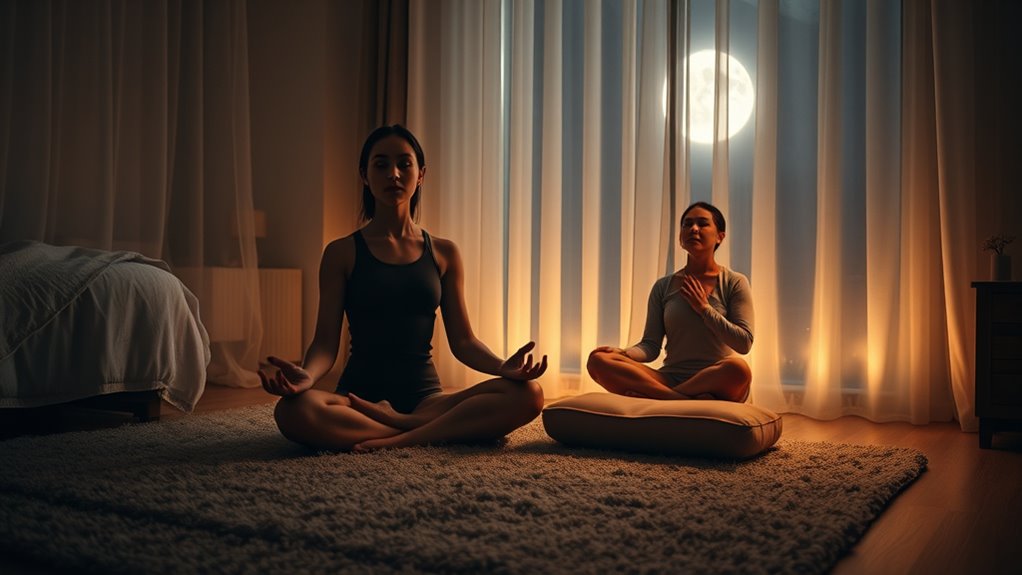

If you want to calm down quickly at night, breathwork usually offers faster results because it’s easy to learn and you can apply it anytime for immediate relief. Techniques like diaphragmatic or box breathing help slow your heart rate and relax your body instantly. Meditation might take longer to show effects, but it can provide deeper relaxation over time. Keep exploring these methods to discover which one helps you settle down most effectively.
Key Takeaways
- Breathwork techniques like diaphragmatic or box breathing often provide immediate calming effects, reducing anxiety quickly.
- Meditation, focusing on mindfulness and relaxation, may take longer to produce noticeable calming results but fosters sustained relaxation.
- Breathwork is simple to learn and can be used instantly in bed for quick stress relief before sleep.
- Meditation requires dedicated practice but offers deeper, longer-lasting relaxation over time.
- Combining both methods can optimize nighttime calmness, depending on individual preferences and needs.

When it comes to improving mental clarity and reducing stress, meditation and breathwork are two popular practices that often get compared. Both aim to calm your mind and prepare you for restful sleep, but they do so through different methods. If you’re trying to find which one helps you fall asleep faster, understanding their approaches is key. Meditation typically involves mindfulness techniques that focus on observing your thoughts without judgment, helping you detach from daily worries. It often incorporates relaxation exercises that promote a sense of calm, like guided imagery or body scans, which can relax your muscles and slow your heart rate. Breathwork, on the other hand, emphasizes control over your breathing patterns. It involves specific breathing techniques—such as diaphragmatic or box breathing—that can quickly activate your parasympathetic nervous system, the part responsible for relaxation.
Mindfulness techniques are central to many meditation styles, encouraging you to bring your awareness to the present moment. As you meditate, you might focus on your breath, sensations in your body, or sounds around you. This focus can diminish racing thoughts that keep you awake, making it easier to drift into sleep. Relaxation exercises during meditation often include progressive muscle relaxation or visualizations of peaceful places, both designed to ease tension in your body and quiet your mind. These techniques can be especially effective if your mind tends to be busy when you’re trying to fall asleep. Because meditation requires a dedicated time to sit quietly and practice, it may take a few sessions before you notice significant calming effects at night. Additionally, energy-efficient practices can enhance your relaxation routine by reducing mental and physical fatigue.
Breathwork offers a more immediate impact. When you consciously slow your breathing or perform specific breath patterns, you send signals to your nervous system that it’s safe to relax. This can rapidly reduce anxiety and physical tension, making it easier to fall asleep. Breathwork techniques are simple to learn and can be done anywhere, even in bed, making them a convenient option for quick stress relief before sleep. Many people find that focusing on their breath feels more accessible than sitting in silence or trying to clear their mind through meditation. Over time, combining breathwork with mindfulness techniques can enhance your overall relaxation strategy, creating a powerful toolkit for calming your mind and body at night.
Ultimately, both practices can help you relax faster, but your choice depends on what feels more natural for you. Some prefer the gentle focus of mindfulness and relaxation exercises, while others find the immediate calming effect of breath control more effective. Experimenting with both can help you discover which method best suits your needs, leading to more restful nights.

Pulsetto FIT (V2) Wellness Wearable – Relaxation, Sleep & Daily Wellness Support Device
- Short, Easy Relaxation Sessions: 4-10 minute calming routines
- Lightweight, Ergonomic Design: Comfortable wearable for daily use
- Customizable Wellness App: Personalized sessions and tracking
As an affiliate, we earn on qualifying purchases.
Frequently Asked Questions
Can Meditation or Breathwork Improve Sleep Quality Long-Term?
Yes, meditation and breathwork can improve your sleep quality long-term. Practicing mindfulness benefits your ability to relax and reduce stress, helping you fall asleep faster. Breathwork enhances breathing efficiency, which can calm your nervous system and promote deeper sleep. Regularly incorporating these practices into your bedtime routine can lead to lasting improvements in sleep quality, making restful nights more achievable and waking up feeling refreshed.
Which Method Is More Effective for Reducing Nighttime Anxiety?
Breathwork tends to be more effective for reducing nighttime anxiety quickly because it actively engages relaxation techniques that calm your nervous system. By focusing on mindful breathing, you can lower stress levels faster than with meditation, which often requires longer practice. Incorporate mindfulness practices like deep, diaphragmatic breaths before bed to ease your mind and promote a peaceful, restful night.
Are There Any Risks or Side Effects Associated With Each Practice?
Think of meditation and breathwork as gentle waves—usually safe, but sometimes you might face potential injuries if you push too hard or hold positions too long. These practices can also have psychological effects, like heightened awareness or emotional release, which may be unsettling. Always listen to your body, start slowly, and consult a professional if you notice any adverse reactions to reduce risks.
How Quickly Can I Expect to See Results From Either Practice?
You might notice relaxation within just a few minutes of consistent practice, but overall mindfulness duration and your relaxation speed vary. Breathwork often provides quicker calming effects, sometimes in less than five minutes, while meditation may take longer initially. Regular practice enhances these benefits over time. Stick with it daily, and you’ll likely experience faster, more sustained calmness at night as your body adapts to these calming techniques.
Is It Better to Combine Meditation and Breathwork for Sleep?
Yes, combining meditation and breathwork can enhance your sleep. You can integrate mindfulness techniques into your relaxation routines, making them more effective. For example, start with breathwork to calm your nervous system, then shift into meditation to clear your mind. This combined approach helps you relax faster and fall asleep more easily. Experiment with different routines to find what works best for you, creating a personalized, calming bedtime ritual.
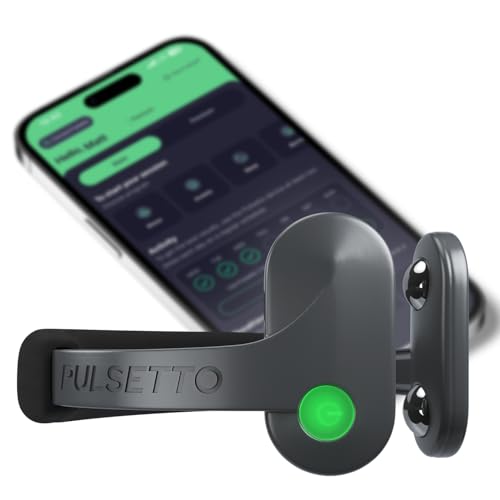
Pulsetto Lite (V1) Wellness Wearable – Relaxation & Daily Wellness Support Device
- Quick Relaxation Sessions: 4-10 minute calming routines
- Portable Wellness Device: Compact for home or on-the-go use
- Customizable with Pulsetto App: Personalize sessions and track progress
As an affiliate, we earn on qualifying purchases.
Conclusion
Ultimately, whether meditation or breathwork calms you faster depends on your personal rhythm. Think of it like tuning a musical instrument—you find what resonates best with you. Breathwork might be a quick spark, igniting relaxation instantly, while meditation gently guides you to calmness like a peaceful stream. Try both, and discover which method flows best into your night, turning your mind from a stormy sea into a tranquil lake. Your perfect nighttime calm is just a breath or thought away.

Entertech Flowtime: Biosensing Meditation Headband - Brain Tracker for Neurofeedback Training at Home - Heart Rate, Breath, HRV, Stress, Flow, Alpha, Theta, Beta, Gamma Wave Breakdowns
- Real-time Meditation Monitoring: Brainwaves, heart rate, and stress levels
- Scientifically Validated Meditation Lessons: Guided techniques for daily progress
- Detailed Performance Reports: Track and compare your meditation data
As an affiliate, we earn on qualifying purchases.

Smedz Neck Massager 2026 New Upgrade 3 in 1 Portable Massager with Heat and Comfortable Stretching - Adjustable Intensity for Neck and Shoulder Relaxation at Home, Office.USB-C Rechargeable
- Customizable Modes: Heat, Vibration, Deep Tissue options
- Auto Shut-Off: 15-minute safe session timer
- Ergonomic Design: Targets neck, shoulders, lower back
As an affiliate, we earn on qualifying purchases.