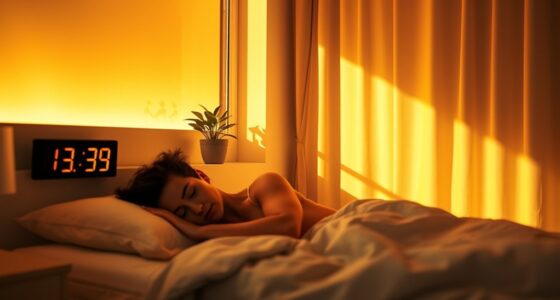
Red night lights can help protect your melatonin production because they emit wavelengths less likely to interfere with your sleep hormones. Unlike blue or white lights, red lights don’t markedly suppress melatonin, allowing you to fall asleep and stay asleep more easily. Using red lights during late hours supports your natural circadian rhythm and improves sleep quality. Want to know how different lighting choices impact your health? Keep exploring to find out more.
Key Takeaways
- Red night lights emit wavelengths that minimally suppress melatonin production.
- Exposure to red light during nighttime supports natural circadian rhythms.
- Red lights are less likely to interfere with melatonin than blue or white lights.
- Using red night lights helps maintain higher melatonin levels overnight.
- Proper light spectrum choice, like red, aids in protecting melatonin and sleep quality.

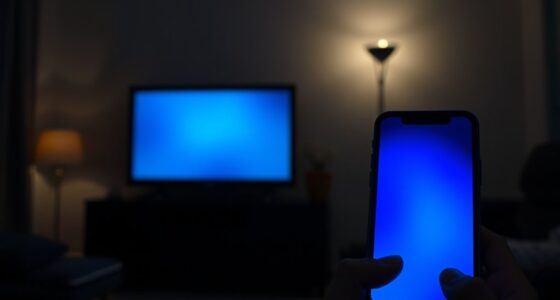
Many people use night lights to create a cozy atmosphere or to ease nighttime fears, but did you know that the color of those lights can markedly impact your sleep? When you turn on a light at night, especially in your bedroom, you’re introducing artificial illumination that can interfere with your natural sleep cycle. This is particularly true when the light contributes to light pollution—excessive or misdirected artificial light that disrupts the environment. Light pollution isn’t just an outdoor issue; it can seep into your home through poorly chosen night lights, subtly affecting your body’s circadian rhythm. Your sleep cycle relies heavily on the hormone melatonin, which your body produces in response to darkness. When exposed to bright or blue-toned lights, your melatonin production diminishes, making it harder to fall asleep or stay asleep throughout the night. Choosing the right night light isn’t just about comfort; it’s about protecting your sleep quality. Red night lights are often recommended because they emit a wavelength less likely to suppress melatonin. Unlike blue or white lights, which are known to be potent melatonin suppressors, red lights tend to have a minimal impact on your circadian rhythm. This means that using a red night light during late hours can help you maintain your natural sleep cycle, allowing your body to produce melatonin as it normally would in darkness. This is essential because disruptions to your sleep cycle can lead to a cascade of health issues, including fatigue, impaired cognitive function, and weakened immune response. Additionally, some research suggests that light spectrum can influence how much melatonin your body produces, highlighting the importance of choosing lighting carefully. Furthermore, the concept of light pollution extends beyond outdoor environments. Even small, poorly chosen lights inside your home can contribute to this problem. When you opt for red night lights, you reduce the amount of light pollution within your personal space, helping your body stay aligned with its natural rhythms. This not only preserves melatonin levels but also enhances overall sleep quality. As you become more conscious of how different light colors influence your sleep cycle, you’ll notice that small changes—like switching to red night lights—can make a significant difference. By limiting your exposure to blue or white lights at night, you support your body’s ability to produce melatonin naturally and enjoy restorative sleep every night.
Frequently Asked Questions
Do Red Night Lights Interfere With Sleep Quality?
Red night lights generally don’t interfere with your sleep quality because they emit light with a longer wavelength that minimally impacts your melatonin production. Unlike blue or white light, red light is less disruptive to your sleep cycle, helping you fall asleep faster and stay asleep longer. You can use red night lights safely at night without worrying about disturbing your natural sleep rhythm, making them a good choice for nighttime illumination.
Can Red Night Lights Cause Eye Strain or Discomfort?
Red night lights can sometimes cause eye strain or discomfort, like trying to read in fog. You might experience eye fatigue or visual discomfort because your eyes strain to focus on the dim, colored light. While red lights are gentler than bright white ones, prolonged exposure can still lead to fatigue. To avoid this, limit your use and make sure the light isn’t too harsh or too close, giving your eyes a break.
Are There Specific Brands of Red Night Lights Recommended?
You should look for red light bulbs designed specifically for night lights, as they emit the ideal red night light colors that minimize melatonin disruption. Recommended brands include Hatch, VAVA, and Miro-Nite, which offer adjustable brightness and high-quality red LEDs. These brands guarantee gentle illumination, reduce eye strain, and support your sleep cycle. Always check reviews and product specs to find the best fit for your needs.
How Does the Distance From the Light Affect Melatonin Production?
You’ll find that the distance from red night lights considerably impacts melatonin production because light intensity decreases with distance, reducing its influence. When you’re farther away, the light’s effect on your circadian rhythm diminishes, especially since red lights have a specific light color spectrum that’s less disruptive. Keep the light at a proper distance to minimize melatonin suppression, ensuring a more natural sleep cycle.
Are Red Night Lights Safe for Children and Infants?
Red night lights are generally safe for children and infants, and they can help protect melatonin production by minimizing blue light exposure. You should choose dim, red lights that are specifically designed for nighttime use, and keep them at a safe distance from your child’s eyes. Always make certain the light isn’t too bright, as excessive illumination can still interfere with melatonin, disrupting your child’s sleep patterns.
Conclusion
So, next time you’re tempted to leave a red night light glowing, remember—it’s probably just a fancy way to convince yourself you’re protecting your melatonin while secretly enjoying a gentle glow. Who knew that battling the dark could become so stylish? Ultimately, if you’re serious about sleep, maybe just turn off all lights and embrace the darkness. After all, the best way to protect your melatonin might be to stop obsessing over it and just sleep.