TL;DR

Get wellness gear delivered free with Prime
- Fast, free delivery on millions of items
- Prime Video, Amazon Music and more included
- Member-only deals all year
Fit&Well published a home leg-workout routine that uses four bodyweight exercises, performed for 30 seconds each, with a one-minute rest after each circuit. The report says five circuits take about 15 minutes, while beginners can start with three and add rest; individual results and suitability will vary.
Fit&Well has published a 15-minute, equipment-free leg workout built around four bodyweight exercises, offering a home option for people unable to get to a gym. The report sets out a timed circuit and beginner adjustments, but does not provide evidence that the routine will produce a particular strength or muscle-building result.
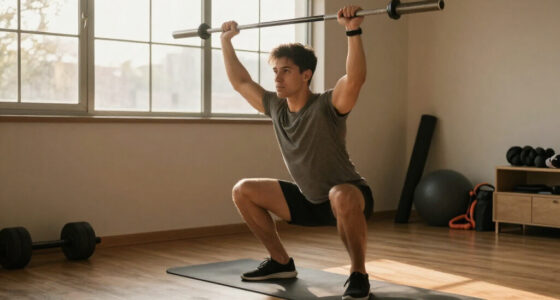
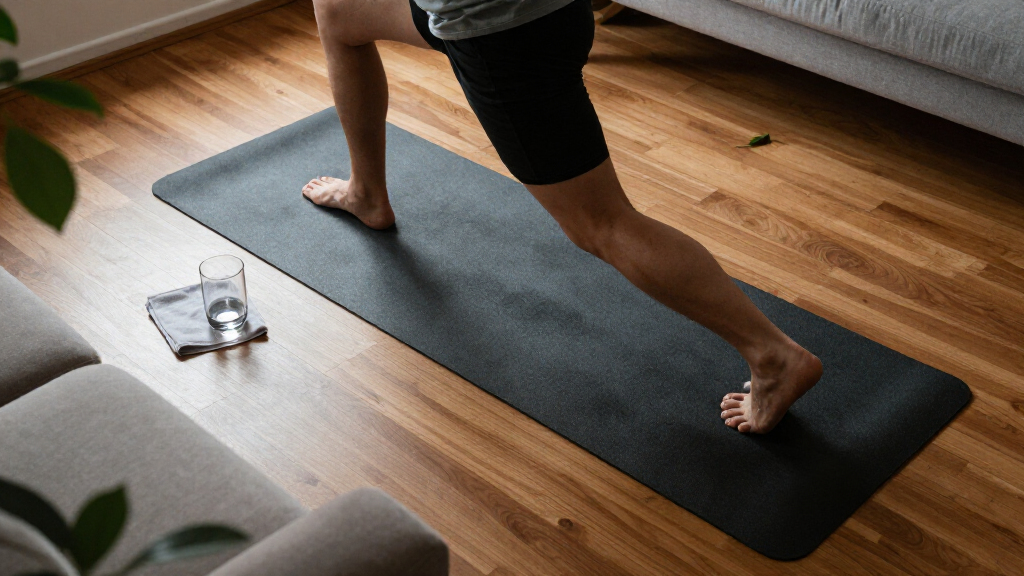
The circuit includes squats, reverse lunges, glute bridges and lateral lunges. Each exercise is performed for 30 seconds before moving to the next. After completing all four, the instructions call for a one-minute rest before starting the circuit again. The report says five circuits take about 15 minutes.
For squats, the instructions are to stand with feet about hip-width apart, lower by bending the knees and hinging at the hips, then return to standing. The report advises keeping the chest upright and feet planted, and lowering only as far as comfortable. Reverse lunges involve stepping one foot back and bending both knees; the movement alternates sides. The front knee should stay aligned with the middle of the foot, and a chair or other solid support can be used for balance.
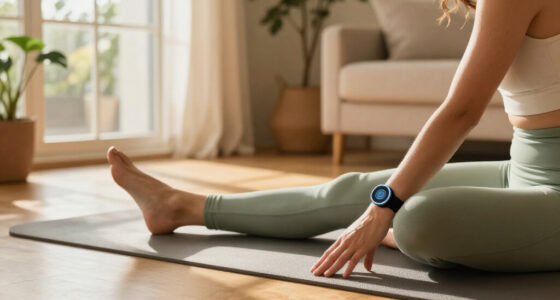
For glute bridges, participants lie on their backs with knees bent and feet flat, lift the hips by squeezing the glutes, then lower again. The report advises against arching the lower back or letting the knees fall inward. Lateral lunges involve stepping to one side, bending that knee while keeping the other leg straight, and returning to the starting position. The instructions say to keep the toes pointing forward and the chest upright.
A Short Routine for Home Training
The routine gives readers a structured option requiring no equipment beyond enough floor space to move. Its fixed work periods and rest break make the sequence straightforward to follow, and the exercise descriptions include basic form cues and modifications for balance or floor access. That can make it easier for some people to fit a workout into a busy day, though the source does not establish that a 15-minute session is suitable for everyone.
The report also distinguishes a suggested starting point from the full routine: beginners are advised to try three circuits with extra rest, then gradually reduce rest or add circuits as their strength and conditioning improve. These are general instructions, not an individualized training plan. People with injuries, health conditions or concerns about technique may need professional guidance before attempting the moves.
Products Worth Considering

Oral-B iO Series 3 Rechargeable Electric Toothbrush for Adults, Black, with 2 Brush Heads and Travel Case

BowFlex Results Series SelectTech 552 Adjustable Dumbbell

Oral-B iO Series 5 Rechargeable Electric Toothbrush with Travel Case and 3 Brush Heads, Black
As an affiliate, we earn on qualifying purchases.
How the Circuit Is Structured
The Fit&Well report presents the workout as a time-based circuit, rather than prescribing a set number of repetitions. Participants work through each movement for 30 seconds, rest for one minute after all four, and repeat. The total stated duration assumes five rounds; the report’s beginner option of three rounds will take less time, with additional rest extending the session.
The article says the movements are not very advanced but may still challenge beginners. It recommends that people new to exercise meet with a personal trainer to learn form and discuss modifications. The source describes exercise instructions and safety advice, but does not cite a clinical study or report measured outcomes from this specific circuit.
“All you’ll need to do the routine is a little bit of space to move—no equipment required.”
— Fit&Well report
Results and Individual Suitability
The source does not specify who tested the routine, provide study data, or quantify changes in strength, muscle size or fitness. Its claim that the workout can help build the lower body is presented as the report’s purpose, not as a measured outcome. It is also unclear whether the 15-minute estimate includes warm-up or cool-down time; the stated calculation covers five circuits of the described exercises and rests.
People differ in fitness, mobility, balance and health status, so the instructions do not establish that every movement is appropriate for every reader. The report advises beginners to seek help with form and says to stop for sharp pain, but it does not detail alternatives for particular injuries or medical conditions.
Starting With Fewer Rounds
Readers following the report can begin with three circuits and extra rest, rather than immediately attempting all five rounds. The article recommends gradually reducing rest and increasing the number of circuits as strength and conditioning improve. It does not set a timetable or prescribe how often to repeat the workout.
Before starting, people who are new to exercise can seek a trainer’s help with technique and modifications. During the routine, use a comfortable range of motion, use a stable support for balance if needed, and stop if sharp pain occurs. The source provides no further milestones or follow-up results.
Key Questions
What exercises are in the workout?
The circuit uses squats, reverse lunges, glute bridges and lateral lunges, each performed for 30 seconds.
How long does the full routine take?
Fit&Well says five circuits take about 15 minutes. Each circuit has four 30-second exercises, followed by a one-minute rest before the next round.
How should beginners modify the workout?
The report suggests starting with three circuits and extra rest. It also recommends asking a personal trainer for help with technique and modifications if needed.
Is equipment required?
No exercise equipment is required; the report says participants need space to move. It suggests using a stable chair or similar support during reverse lunges if balance is an issue.
What should someone do if a movement causes sharp pain?
The report says to stop immediately and speak with a doctor if sharp pain occurs. It does not provide individualized medical advice.
Source: fitandwell.com