To keep cords safe in your kids’ room, regularly check for damage and secure loose or dangling cords with clips or covers. Choose cordless or motorized shades to eliminate strings, and install them out of your child’s reach. Keep monitor and lamp cords organized using conduit tubing or covers, and avoid running cords across walkways. By following these steps, you create a safer environment—keep exploring to learn more about effective safety measures.
Key Takeaways
- Use cordless or motorized window shades to eliminate hanging cords and reduce strangulation risks.
- Regularly inspect and secure cords on monitors and lamps with clips or cord winders to prevent pulling hazards.
- Keep cords out of children’s reach by routing them behind furniture or using cord covers.
- Choose child-safe, cordless window treatments and ensure all cords are properly installed and maintained.
- Routinely check for damaged or loose cords and replace or repair them to prevent electrical hazards.
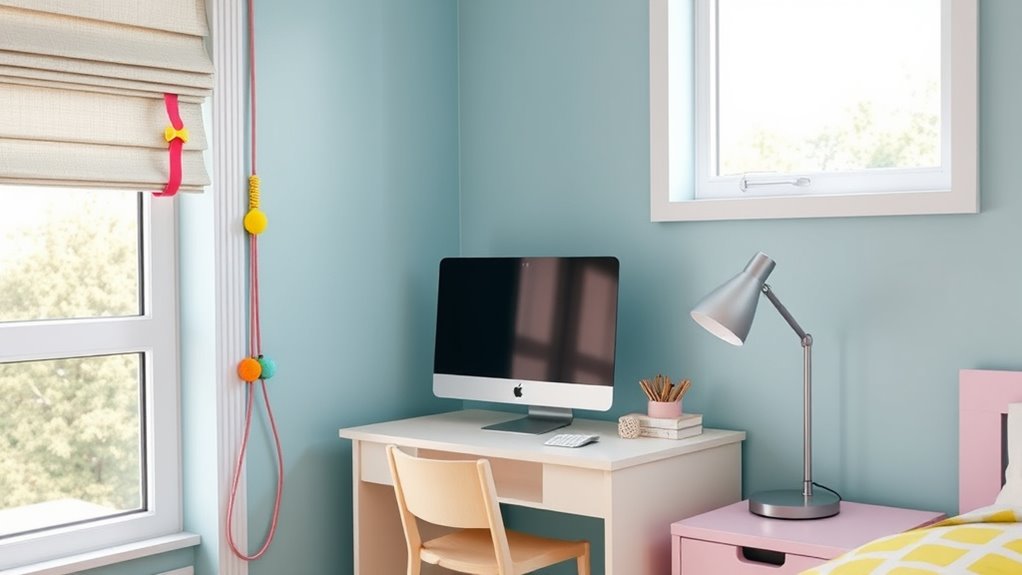
Creating a safe environment for your kids means paying close attention to the cords from shades, monitors, and lamps in their room. These cords can pose serious risks, especially when it comes to cord strangulation. Young children are naturally curious, and their fascination with dangling cords can quickly turn dangerous if they pull or get tangled. To prevent accidents, you need to focus on safe installation. Secure cords properly and keep them out of your child’s reach to eliminate the chance of strangulation or choking hazards.
Start by inspecting all cords regularly. Loose or dangling cords should be shortened or secured with clips or cord winders. When installing shades, opt for those with cordless designs or motorized operation. If cords are unavoidable, ensure they are tightly fastened and routed away from cribs, beds, and play areas. You can also hide cords behind furniture or use cord management systems to keep them neatly contained. This reduces the chance of your child pulling on them or accidentally getting entangled. Remember, the goal is to make cords inaccessible and unappealing to curious little hands.
Regularly inspect cords and secure or hide them to prevent toddler entanglement and accidents.
For monitors and lamps, choose models with built-in safety features. For instance, many modern monitors have wireless options, eliminating cords altogether. When cords are necessary, use cord covers or conduit tubing to keep them organized and out of reach. Avoid running cords across walkways or doorways where your child might trip or pull them down. Always check that cords are not frayed, damaged, or loose, as these conditions can increase the risk of electrical shock or fire. Properly secured and maintained cords are less likely to cause accidents.
When installing shades, evaluate the safety features provided by the manufacturer. Look for options that include breakaway cords or tassels that are too short for children to grab. If you’re installing new shades or curtains, consider those with child-safe, cordless mechanisms that eliminate the risk entirely. For existing window treatments, replace or retrofit cords with safety devices designed to prevent cord length hazards. Additionally, understanding sauna heater safety can help prevent electrical hazards in your home.
Creating a safe environment means taking proactive steps to minimize hazards associated with cords. Regularly review your setup, keep cords well-secured, and opt for safer alternatives whenever possible. By doing so, you protect your child from cord strangulation and ensure their room remains a safe space for exploration and rest. Proper installation and vigilant maintenance are your best defenses against these preventable accidents.

AOSKY Blackout Cordless Roller Shade for Indoor Windows, 46"W x 72"H, Black
- Premium Material: 100% polyester with thermal coating
- Blockout Sunlight: 100% blackout for sunlight and UV rays
- Energy Efficient: Reduces heat loss and energy bills
As an affiliate, we earn on qualifying purchases.
As an affiliate, we earn on qualifying purchases.
Frequently Asked Questions
How Can I Tell if a Cord Is Too Long for Safety?
You can tell if a cord is too long by checking if it exceeds safety guidelines, which recommend keeping cords short enough to prevent tripping hazards. Measure the cord length and compare it to safety standards—ideally, cords should be secured and tucked away to avoid dangling. If it seems long or loose, consider shortening it or using cord clips to keep it out of the way, ensuring a safe environment for kids.
Are Cordless Window Coverings Safer for Kids?
Cordless window coverings are definitely safer for kids, reducing the risk of strangulation and accidents. They also align with modern decorative options and window treatment trends, offering a sleek, clutter-free look. By choosing cordless shades, you create a safer environment while maintaining style. Plus, many options come in trendy fabrics and designs, making it easy to match your room’s decor and keep your little ones safe at the same time.
What Age Is Safest to Start Using Shades With Cords?
You should wait until your child is at least 8 to 10 years old before using shades with cords. Child safety is vital, and window treatments with cords pose risks of strangulation or injury. Keep cords out of reach for younger kids, and consider cordless or motorized options for added safety. Always supervise and educate your child about window treatment safety to prevent accidents and guarantee a secure environment.
How Often Should I Check Cords for Damage or Wear?
A stitch in time saves nine, so you should check cords for damage or wear every month. Regular safety inspections help catch frayed or loose cords early, preventing potential hazards. During these checks, look for any signs of deterioration, and make certain cords are securely attached and out of reach of kids. Keeping up with cord maintenance consistently ensures a safe environment, giving you peace of mind and protecting your little ones.
Can Cordless Lamps Be Used Safely in Children’s Rooms?
Cordless lamps are safe for children’s rooms because they eliminate dangling cords, reducing choking and strangulation risks. When choosing lighting fixtures, verify they have stable bases and are designed for safety. Always plug lamps into electrical outlets that are out of children’s reach or have safety covers. Regularly inspect the lamps and outlets for damage or wear, and never leave children unattended with any electrical lighting fixture.

Safety 1st Outlet Cover with Cord Shortener for Baby Proofing
- Child Safety: Prevents outlet access and cord entanglement
- Full Outlet Coverage: Covers entire outlet and manages cords
- Child-Resistant Design: Dual-press removal for safety
As an affiliate, we earn on qualifying purchases.
As an affiliate, we earn on qualifying purchases.
Conclusion
Ensuring cord safety in your child’s room might seem like a hassle, but it’s worth the effort. With simple steps like securing cords and using cordless options, you can create a safer space without much trouble. Remember, preventing accidents is always easier than dealing with injuries later. So, take a few minutes now—you’ll rest easier knowing you’ve done everything to keep your little one safe and sound.

VIVO Cable Management Clips for Desk Monitor Stands, Computer Office Workstation Cord Organization Kit, 1 Pole and 4 Arm Clips, Set of Monitor Mount Wire Holder Hooks, Black, PT-SD-WC05C
- Set Includes: 1 pole and 4 arm clips
- Compatibility: Works with various VIVO monitor stands
- Organization: Keeps cables tidy and out of sight
As an affiliate, we earn on qualifying purchases.
As an affiliate, we earn on qualifying purchases.

Toddleroo by North States – Window & Door Wedge Locks for Baby Proofing: Child Proof Window Locks – 4 Pack – White
- Child Safety Window Locks: Prevent children from opening windows and doors
- Universal Fit: Compatible with most sliding windows and doors
- Easy Installation: No tools or screws needed for setup
As an affiliate, we earn on qualifying purchases.
As an affiliate, we earn on qualifying purchases.