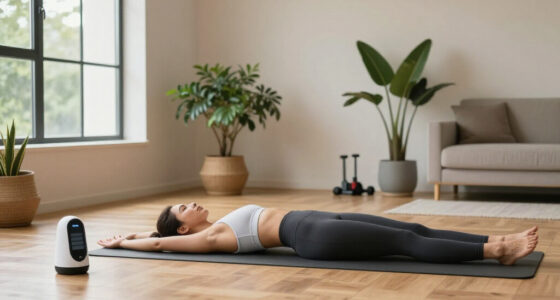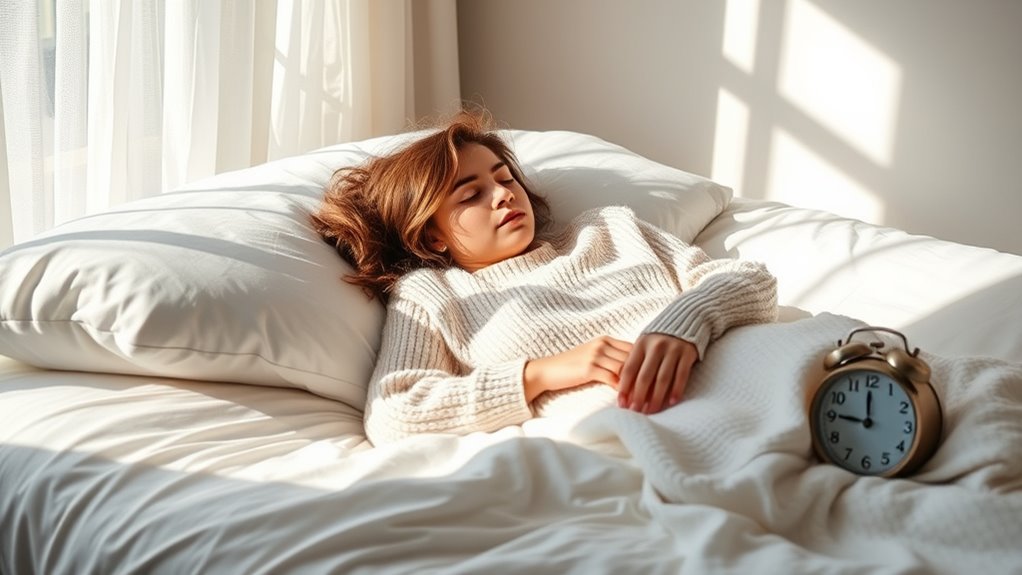

To avoid grogginess and boost your energy, keep naps between 20 and 30 minutes. This duration allows you to stay in light sleep stages, making it easier to wake up refreshed rather than groggy. Short naps align with your natural sleep cycles and circadian rhythm dips, providing quick energy boosts without disrupting your nighttime sleep. Stick to this sweet spot, and you’ll discover more tips to maximize your nap benefits smoothly.
Key Takeaways
- Limit naps to 20-30 minutes to stay in light sleep stages and avoid grogginess.
- Napping within this duration aligns with natural sleep cycles, reducing sleep inertia.
- Schedule naps early in the afternoon to prevent interference with nighttime sleep.
- Create a comfortable, quiet environment to enhance restful light sleep during short naps.
- Use natural wake-up methods like stretching or cold water to avoid reliance on stimulants and minimize crashes.

Pulsetto FIT (V2) Wellness Wearable – Relaxation, Sleep & Daily Wellness Support Device
- Short, Easy Relaxation Sessions: 4-10 minute calming routines
- Lightweight, Ergonomic Design: Comfortable wearable for daily use
- Customizable Wellness App: Personalized sessions and tracking
As an affiliate, we earn on qualifying purchases.
Optimal Short Naps to Boost Energy
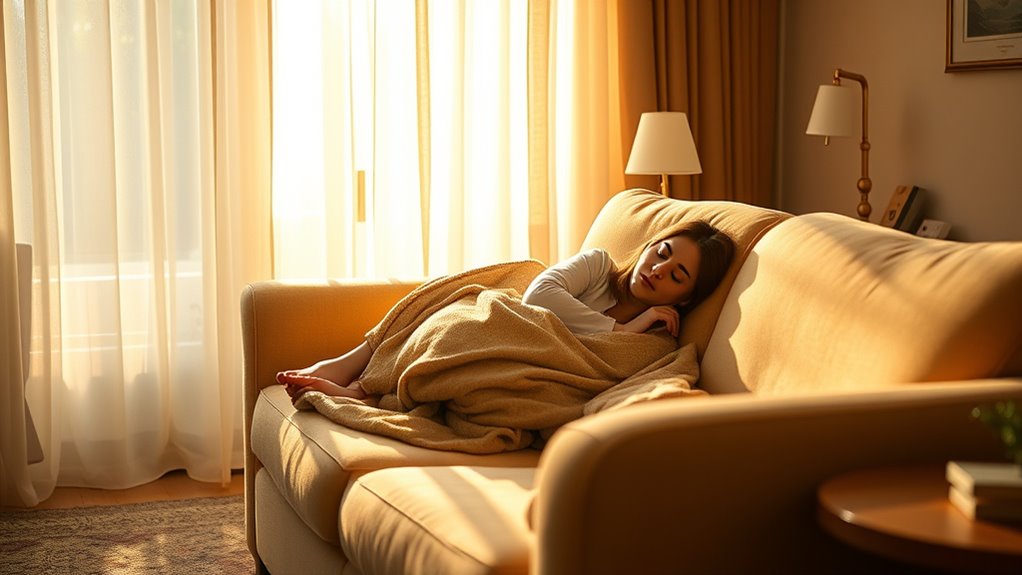
Many people struggle with feeling groggy after a nap, but with the right techniques, you can enjoy a revitalizing rest without the dreaded crash. The key lies in understanding your sleep cycles and timing your nap accordingly. Sleep cycles typically last about 90 minutes, during which your brain transitions through different stages of light sleep, deep sleep, and REM. When you nap longer than 20 to 30 minutes, you risk entering deep sleep, which can leave you feeling groggy and disoriented upon waking. To avoid this, sticking to a nap duration of about 20 to 30 minutes allows you to stay in the lighter stages of sleep, making it easier to wake up refreshed and alert.
Timing your nap within this window is essential. Early afternoon, usually between 1 and 3 p.m., is ideal because it aligns with your body’s natural circadian rhythm dip. Napping at this time helps prevent interference with your nighttime sleep while providing a quick recharge. When you wake up after a short nap, your brain is less likely to be in the deep sleep stage, which reduces sleep inertia—the grogginess many associate with waking up from a longer sleep. This approach guarantees you get the most restorative benefits of a nap without feeling sluggish afterward.
If you’re concerned about relying on caffeine or other stimulants, consider natural caffeine alternatives to boost your alertness. Things like a glass of cold water, a quick stretch, or some fresh air can invigorate you without the jitters or crash associated with caffeine. Hydration is especially important, as dehydration can exacerbate fatigue. Incorporating light physical activity after your nap can also help shake off any residual sleepiness and boost your energy levels naturally.
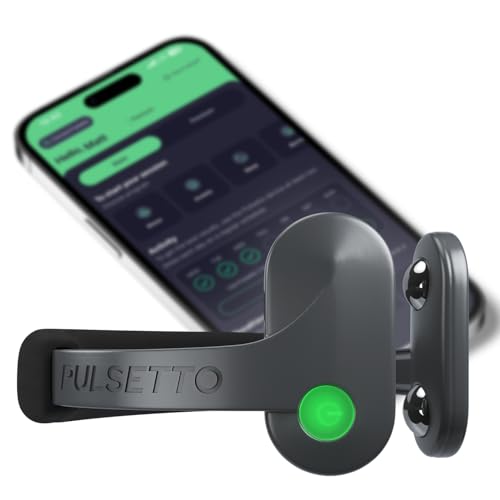
Pulsetto Lite (V1) Wellness Wearable – Relaxation & Daily Wellness Support Device
- Quick Relaxation Sessions: 4-10 minute calming routines
- Portable Wellness Device: Compact for home or on-the-go use
- Customizable with Pulsetto App: Personalize sessions and track progress
As an affiliate, we earn on qualifying purchases.
Frequently Asked Questions
Can Napping Too Often Harm My Sleep Cycle?
Napping too often can harm your sleep cycle, especially if it leads to sleep deprivation at night. Poor napping habits, like long or late naps, may disrupt your circadian rhythm and make it harder to fall asleep at bedtime. To avoid this, keep naps short and early in the day, ensuring they supplement your sleep without replacing or interfering with your regular sleep schedule.
Does the Time of Day Affect Nap Effectiveness?
Like a ship caught in a gentle tide, your nap’s effectiveness depends on the time of day. You’ll find the most benefit during your circadian rhythm’s afternoon dip, when your energy naturally wanes. Napping too early or late might disrupt your sleep cycle, but a well-timed short rest during this lull can boost alertness without throwing off your rhythm. Aim for that sweet spot to recharge just right.
Are There Specific Environments Best for Quick Naps?
You’ll get the best quick naps in a sleep environment that’s quiet and comfortable. Keep noise levels low to avoid disruptions, and choose a space with dim lighting or use an eye mask to block out light. A cool, well-ventilated room helps you relax faster. Make sure your surroundings are free of distractions, so you can fall asleep quickly and wake up refreshed, ready to tackle your day.
How Does Caffeine Influence Short Nap Benefits?
Oh, the joy of caffeine—your best buddy for a quick boost, right? When you time caffeine right, it kicks in just as you’re about to nap, maximizing alertness without the dreaded crash. But beware of stimulant effects if you drink it too late or in high doses; it can sabotage your rest, leaving you more exhausted. So, plan your caffeine timing carefully to enjoy the perfect power nap.
Can Napping Improve Productivity for Night Shift Workers?
Yes, napping can boost your productivity as a night shift worker. To maximize benefits, focus on good sleep hygiene by keeping naps short, ideally 20-30 minutes, to prevent grogginess. Short naps help replenish your energy without disrupting your main sleep. Incorporate consistent nap times into your schedule, and make certain your environment is comfortable and dark. This way, you stay alert and perform better during your shift.
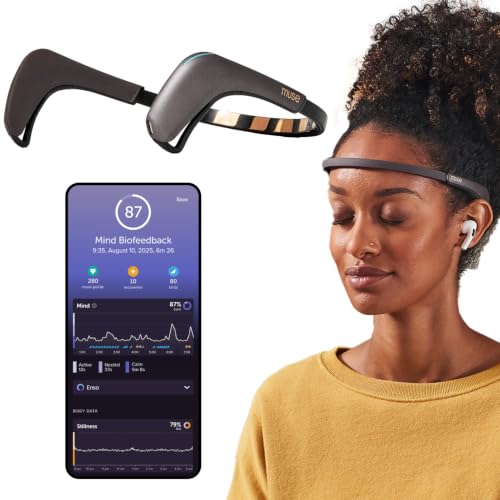
MUSE 2: The Brain Sensing Headband USB-C- EEG MUSE Headband Meditation Tracker - Multi Sensor Biofeedback Devices for Home Use with Responsive Sound Feedback Guidance - Neurofeedback Devices
- Immediate EEG Feedback: Core session tracking included
- Premium Subscription Benefits: AI Coach and 500+ meditations
- Personal Meditation Coach: Guides relaxation and mental wellbeing
As an affiliate, we earn on qualifying purchases.
Conclusion
So, next time you’re tempted to crash for hours, remember that a quick 20–30 minute nap might just be your secret weapon. Ironically, the best way to avoid feeling groggy is to nap briefly—yet many still overlook this simple trick. Instead of risking a nap that leaves you more drained, try the sweet spot and wake up refreshed. Who knew that doing less could actually give you more energy?

Entertech Flowtime: Biosensing Meditation Headband - Brain Tracker for Neurofeedback Training at Home - Heart Rate, Breath, HRV, Stress, Flow, Alpha, Theta, Beta, Gamma Wave Breakdowns
- Real-time Meditation Monitoring: Brainwaves, heart rate, and stress levels
- Scientifically Validated Meditation Lessons: Guided techniques for daily progress
- Detailed Performance Reports: Track and compare your meditation data
As an affiliate, we earn on qualifying purchases.