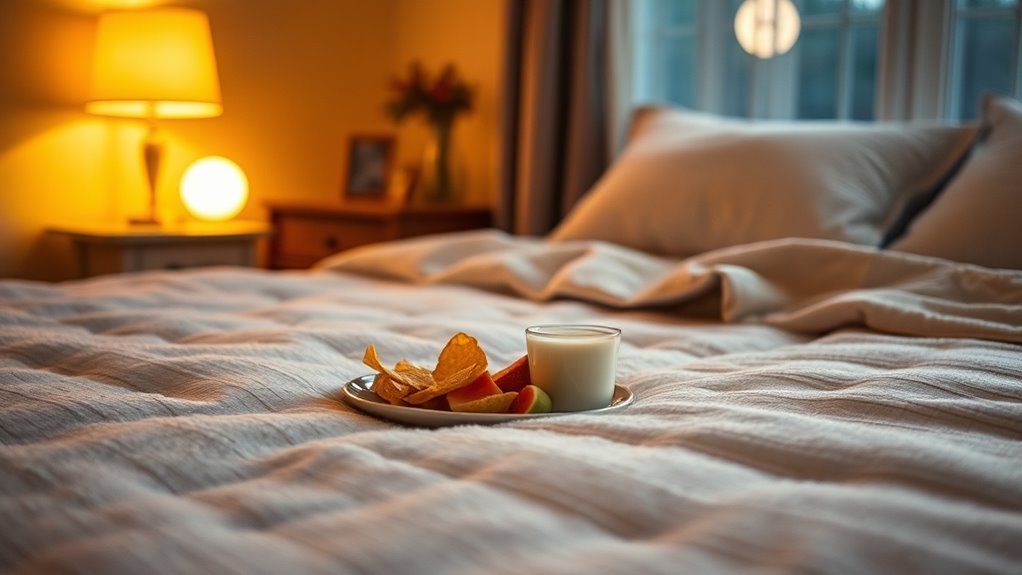

Snacking before bed isn’t always bad if you choose the right foods and time it well. Opt for small, nutrient-dense options like nuts, yogurt, or fruit, and avoid greasy or sugary treats that can disrupt sleep. Eating about 30 minutes beforehand can help prevent discomfort and blood sugar spikes. If you want to learn how to make smarter late-night snack choices that support restful sleep, keep exploring the details below.
Key Takeaways
- Snacking before bed isn’t always bad; healthy, small portions can support sleep and prevent hunger-induced disruptions.
- Unhealthy or large late-night snacks may interfere with digestion, sleep quality, and blood sugar levels.
- The timing and choice of snack matter; aim for nutrient-dense options about 30 minutes before sleep.
- Emotional triggers, stress, or dehydration can lead to cravings, which can often be managed with mindful eating habits.
- Moderation and mindful selection of snacks can make late-night eating beneficial rather than harmful.

Many people find themselves reaching for a snack before bed, but this habit can impact your sleep quality and overall health. Bedtime cravings often prompt you to seek out quick, satisfying bites that may not be the best choices for your body. Instead of automatically reaching for high-calorie or sugary treats, it’s helpful to consider healthy snack options that can satisfy your hunger without disrupting your sleep or digestion. Understanding why you crave certain foods at night and choosing wisely can make a significant difference in how rested and energized you feel in the morning.
Your bedtime cravings are influenced by various factors, including your daily diet, stress levels, and even dehydration. If you skip meals during the day or eat too little, your body might signal hunger late at night, pushing you toward snacks that provide immediate comfort but little nutritional value. These cravings are often for sweets, chips, or other processed foods that spike blood sugar temporarily but leave you feeling groggy and restless later. To combat this, you can opt for healthier snack options that help stabilize blood sugar and promote better sleep. Think about small portions of nuts, Greek yogurt, or fruit paired with a bit of protein, which can satisfy your hunger and provide essential nutrients.
Bedtime hunger often stems from skipped meals or dehydration, leading to cravings for sugary, processed snacks.
Choosing the right snacks before bed isn’t just about avoiding unhealthy foods; it’s about making choices that support your overall health. For example, a handful of almonds offers healthy fats and magnesium, which may improve sleep quality. A banana provides natural sugars along with potassium and magnesium, both of which help relax muscles and calm your nervous system. If you’re craving something savory, consider whole-grain crackers with hummus or a slice of turkey. These options are nutrient-dense, easy to digest, and less likely to disturb your sleep cycle than greasy or sugary snacks.
Timing also plays a role in how your snack affects you. Eating too close to bedtime can cause discomfort or indigestion, so aim to have your healthy snack about 30 minutes before you hit the pillow. This allows your body enough time to process the food without feeling overly full or uncomfortable. Additionally, being mindful of your hormonal levels can help you understand why cravings occur at certain times. Remember, it’s okay to indulge occasionally, but the key is moderation and choosing snacks that support your sleep rather than hinder it. By being mindful of your bedtime cravings and selecting healthy snack options, you can enjoy a calming, satisfying end to your day without compromising your rest or health.
Frequently Asked Questions
Can Snacking Before Bed Help With Nighttime Hunger?
Snacking before bed can help with nighttime hunger, especially if your bedtime metabolism slows down and you feel hungry. Choosing a small, healthy snack can support late night digestion without disrupting your sleep. Just be mindful of portion sizes and avoid heavy, greasy foods. A light snack can keep your stomach settled and prevent waking up hungry, making it easier to relax and rest through the night.
What Are Healthy Snack Options for Late-Night Cravings?
If you’re craving a late-night snack, opt for nutrient-rich choices like Greek yogurt, nuts, or fruit, and keep portion sizes healthy—around 150 calories. Did you know that 80% of people snack after dinner? Choosing healthy options helps satisfy your hunger without disrupting your sleep or weight goals. Stick to small, balanced snacks to enjoy the benefits without guilt, ensuring your cravings are both satisfying and nutritious.
Does Snacking Before Bed Affect Sleep Quality?
Snacking before bed can affect your sleep quality, but it depends on what and when you eat. A light, healthy snack might boost your metabolism and prevent hunger, helping you sleep better. However, heavy or sugary snacks can disrupt your sleep cycle. If you choose wisely, snacking may support weight management and metabolism boost without harming your rest. Pay attention to portion sizes and timing for the best results.
Are There Specific Foods That Promote Better Sleep?
If you want better sleep, try indulging in sleep-inducing foods like a banana with almond butter before bed. These bedtime nutrition choices contain magnesium and tryptophan, which promote relaxation and melatonin production. A case study shows that individuals incorporating sleep-inducing foods into their nighttime routine experience faster sleep onset and improved sleep quality. So, choosing the right bedtime nutrition can help you rest more peacefully.
How Much Is Too Much When Snacking at Night?
You should watch your portion control when snacking at night, as too much can disrupt your sleep. Aim for a small, balanced snack rather than a large meal, and try to schedule your snack at least an hour before bed to give your body time to digest. Remember, moderation is key—listening to your hunger cues helps prevent overeating and promotes better sleep quality.
Conclusion
While a late-night snack might seem like a small indulgence, it’s often best to enjoy it with a gentle touch of moderation. Sometimes, a little treat can soothe your evening, but overdoing it might tip the balance from comfort to inconvenience. Remember, a well-timed, mindful nibble can gently support your relaxation, not disrupt it. Listen to your body’s quiet signals, and let your bedtime routine remain a peaceful, undisturbed moment of self-care.