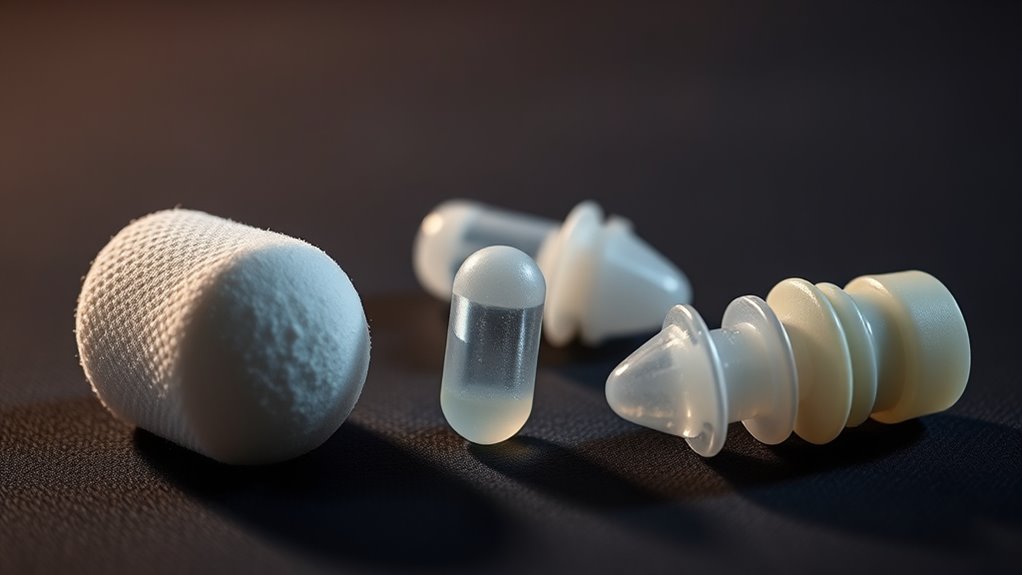
For nighttime use, foam earplugs are affordable and mold easily to block out loud noise, but they can be uncomfortable for long wear. Silicone earplugs offer a comfortable fit, especially if you have sensitive ears, and are reusable, making them a durable option. Flanged earplugs provide the highest noise reduction and stay secure, ideal for a noisy environment. To find the best fit for your sleep, explore each type’s benefits further.
Key Takeaways
- Foam earplugs are inexpensive and effective but may cause discomfort during long sleep sessions.
- Silicone earplugs offer a comfortable, reusable option suitable for extended nighttime wear.
- Flanged earplugs provide high noise reduction and a secure fit, ideal for noisy sleeping environments.
- Proper insertion and fit are essential for all types to maximize comfort and noise blocking at night.
- Silicone and flanged earplugs are more durable and easier to clean, making them better for regular nighttime use.
Have you ever struggled to get a good night’s sleep because of noise disturbances? If so, you’re not alone. Noise can be a major barrier to restful sleep, and tackling it often requires more than just turning down the volume. Good sleep hygiene involves creating an environment conducive to rest, and noise reduction techniques are a crucial part of that. One effective solution is using earplugs, but not all earplugs are created equal. Choosing the right type depends on your comfort, noise level, and personal preferences.
Foam earplugs are among the most common and affordable options. They’re made from soft, compressible material that molds to the shape of your ear canal, blocking out a considerable amount of noise. Foam plugs are lightweight, easy to roll and insert, and provide good noise reduction if fitted properly. They’re especially useful if you’re trying to drown out loud environmental sounds like traffic or snoring. However, they can sometimes feel uncomfortable or cause pressure if inserted too deeply, which might interfere with sleep hygiene. To maximize comfort and effectiveness, make sure to roll the foam tightly before insertion and gently adjust as needed. Regularly replacing foam earplugs also maintains their effectiveness and hygiene.
Foam earplugs are affordable, mold to your ear, and block out loud environmental noise effectively.
Silicone earplugs, on the other hand, are flexible and come in various shapes, often with a moldable or pre-formed design. They tend to be more durable and reusable than foam options, making them a good investment if you prefer a sustainable choice. Silicone provides a snug fit that can be more comfortable for longer wear, especially if you have sensitive ears. Its waterproof nature also makes it easier to keep clean, reducing the risk of ear infections. While silicone earplugs may not block out as much noise as foam, they’re often more comfortable for people who dislike the pressure some foam plugs can create. They’re also easy to insert and remove, which helps maintain your sleep hygiene by preventing disturbances during the night.
Finally, flanged earplugs are designed with multiple rim-like structures that create a secure seal in your ear canal. They are often made from silicone or softer plastics and are particularly effective at noise reduction, especially in noisy environments. Flanged earplugs are suitable if you need a high level of noise blocking, such as when sleeping in a busy city or a noisy hotel. They’re reusable and fit comfortably once properly inserted, making them a practical choice for consistent use. With any earplug type, proper insertion is key to both comfort and noise reduction. By choosing the right earplug and ensuring a good fit, you can profoundly improve your sleep hygiene and enjoy quieter, more restorative nights.
Frequently Asked Questions
Are There Any Health Risks Associated With Long-Term Earplug Use?
Long-term earplug use can pose health risks like ear canal irritation and earwax buildup. If you don’t clean your ears properly or use poorly fitting earplugs, you might experience discomfort or even infections. To minimize risks, choose the right type, keep them clean, and avoid using them for extended periods without breaks. Regularly inspecting your ears and consulting a healthcare professional can help prevent potential issues.
How Do I Choose the Best Earplug for Sensitive Skin?
If you have sensitive skin, choose earplugs made from hypoallergenic materials like silicone or soft, medical-grade foam. These reduce the risk of skin irritation and material sensitivity. Avoid earplugs with fragrances or dyes, which can cause reactions. Test a small area first, and if irritation occurs, switch to a different material. Proper cleaning and replacing earplugs regularly also help prevent skin issues and guarantee comfort.
Can Earplugs Cause Ear Infections if Not Cleaned Properly?
Don’t let hygiene practices slip, or you might open a can of worms with ear infections. If you don’t clean your earplugs properly, bacteria and fungi can thrive, leading to earwax buildup and infections. Always wash your earplugs after use, store them in a clean case, and replace them regularly. Taking these simple steps keeps your ears healthy and prevents unnecessary trouble down the line.
Are There Specific Brands Recommended for Nightly Use?
For nightly use, you should look into brand recommendations like Moldex, Howard Leight, or Mack’s. These brands are known for quality, comfort, and safety, making them good choices for regular wear. Always follow the manufacturer’s instructions for cleaning and replacement to prevent infections. If you have sensitive ears or concerns, consult with a healthcare professional to find the best option tailored for you.
How Effective Are Earplugs Against Different Types of Noise?
Think of earplugs as your personal noise-canceling shield. They’re quite effective against a range of noise frequencies and volume levels, reducing loud sounds to a whisper. Foam plugs excel at blocking high-frequency noise, while silicone and flanged options are better for lower frequencies. Depending on your sleep environment, you’ll find that different types can markedly minimize disturbances, helping you enjoy quieter, more restful nights.
Conclusion
Choosing the right earplugs at night is like finding the perfect cozy blanket—comfort and quiet become your sanctuary. Foam, silicone, or flanged—they each have their charm, so pick what feels best for you. When you find that perfect fit, you’ll drift into peaceful sleep, untouched by the world. Remember, the right earplugs are your ticket to a silent, restful night—your personal lullaby in a noisy world.