To help manage night sweats during perimenopause, keep your bedroom cool by setting the temperature between 60-67°F and using fans or air conditioning. Wear lightweight, breathable sleepwear made of natural fabrics like cotton or linen, and choose lightweight bedding. Staying well-hydrated during the day and avoiding caffeine or spicy foods in the evening can also make a difference. If you’d like more tips to stay comfortable, there’s plenty more to explore that can improve your sleep.

Get wellness gear delivered free — and shop member deals
- Fast, free delivery on millions of items
- Access to Prime Big Deal Days deals on October 6–7
- Prime Video, Amazon Music and more included
Key Takeaways
- Keep your bedroom cool with a temperature between 60-67°F using fans or air conditioning.
- Wear lightweight, breathable, moisture-wicking sleepwear made from natural fabrics like cotton or linen.
- Use lightweight, breathable bedding and consider sleeping with a cooling pillow or a damp cloth for relief.
- Practice relaxation techniques before bed to reduce stress and help regulate body temperature.
- Stay well-hydrated during the day and limit fluids close to bedtime to prevent nighttime sweating.
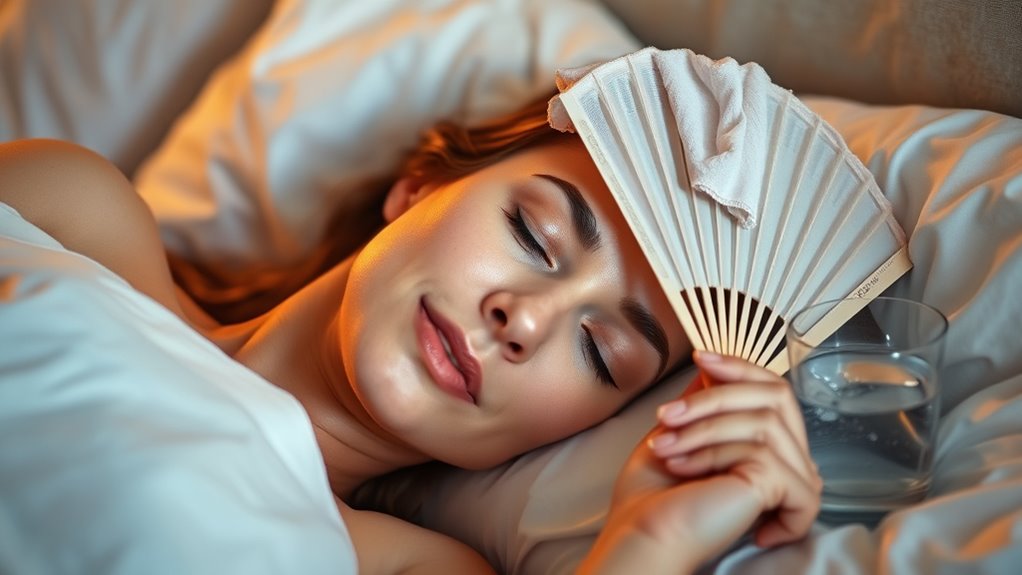
Perimenopause, the passage phase before menopause, often brings about a range of uncomfortable symptoms, and night sweats are among the most distressing. During this time, your body experiences hormonal fluctuations that directly affect your sleep patterns. These shifts can cause your internal thermostat to go haywire, leading to sudden, intense episodes of sweating that disrupt your rest. As a result, you might find yourself waking up drenched, feeling cold and clammy, or struggling to fall back asleep. This cycle of sleep disruption not only leaves you exhausted but can also exacerbate mood swings and irritability.
Understanding that hormonal fluctuations are at the root of night sweats helps you realize that these episodes are a natural, though unpleasant, part of perimenopause. To combat the discomfort, you need practical strategies tailored to manage these sudden hot flashes and improve sleep quality. First, consider adjusting your sleep environment. Keep your bedroom cool, ideally between 60-67°F (15-19°C), and use a fan or air conditioner to maintain a comfortable temperature. Lightweight, breathable bedding made of natural fabrics like cotton or linen can help wick away sweat and keep you cooler throughout the night.
Hormonal fluctuations cause night sweats, but adjusting your sleep environment can provide relief.
Another effective tactic is to dress in lightweight, moisture-wicking sleepwear. Avoid thick pajamas or synthetic fabrics that trap heat and moisture. Instead, opt for loose-fitting clothes that allow your skin to breathe. Hydration is also essential—drink plenty of water during the day but reduce fluid intake close to bedtime to minimize nighttime bathroom trips. Limiting caffeine and spicy foods in the evening can help reduce the severity of night sweats, as these can trigger hot flashes.
Practicing relaxation techniques before bed can calm your nervous system and lessen sleep disruption caused by hormonal swings. Deep breathing, meditation, or gentle stretches can help you unwind. Establishing a consistent sleep schedule also trains your body to anticipate rest, making it easier to fall asleep despite the hormonal rollercoaster. If you find that night sweats persist and severely affect your sleep, consult your healthcare provider. They may suggest treatments like hormone therapy or other options to stabilize your hormones and reduce symptoms.
Additionally, understanding the cultural beliefs surrounding astrology and beauty can offer a broader perspective on how personal traits are perceived and can influence your self-image during this transitional phase.
Frequently Asked Questions
Can Herbal Remedies Effectively Reduce Night Sweats?
Herbal remedies can sometimes help reduce night sweats, but their effectiveness varies. You might try herbal supplements like black cohosh or evening primrose oil, which are popular natural remedies for hormonal balance. While some women find relief, others see little difference. Always consult your healthcare provider before starting any herbal supplements, especially if you’re on medication or have health concerns, to guarantee safety and proper guidance.
Are There Specific Sleep Positions That Minimize Night Sweats?
Sleeping on your side or with a slightly elevated head can help reduce night sweats, as 60% of women find these positions more comfortable. Your sleep posture and mattress selection play vital roles in cooling. Opt for breathable, moisture-wicking sheets and a mattress with good airflow. These choices keep your body cooler and minimize sweating, making it easier to get restful sleep during perimenopause.
How Does Diet Influence Perimenopausal Night Sweats?
Your diet plays a key role in managing night sweats by supporting hormonal balance and optimizing nutrient intake. Focus on foods rich in phytoestrogens, like flaxseeds and soy, which can help stabilize hormones. Incorporate magnesium-rich foods such as nuts and leafy greens to relax your body and reduce sweating. Staying hydrated and limiting spicy or caffeine-laden foods also helps regulate body temperature, making night sweats less intense.
Is It Safe to Use Cooling Devices Every Night?
Think of a cooling device as your trusty garden hose—use it wisely, and it keeps things comfortable. It’s generally safe for nightly use, but you should consider cooling device safety and nightly use considerations. Overuse might lead to skin irritation or dependence, so alternate with other cooling tactics. Always follow the manufacturer’s instructions, and consult your healthcare provider if you notice any discomfort or unusual symptoms.
Do Exercise Routines Impact the Frequency of Night Sweats?
Exercise impact can influence how often you experience night sweats, especially if intense workouts trigger hormonal shifts or raise your core temperature. Regular moderate activity might help regulate your sleep and reduce sweating episodes. Additionally, your sleep position matters; sleeping on your back or side can improve airflow and cooling. Pay attention to how your body responds to different routines and positions to find what minimizes night sweats best for you.
Conclusion
Think of your body as a fiery furnace during perimenopause, with night sweats fueling the flames. But just as a gentle breeze can cool a blazing fire, the right cooling tactics can bring relief and calm to your nights. By staying cool, dressing smart, and managing stress, you’re taming the heat and reclaiming restful sleep. Remember, you hold the fan—your comfort is within your control, one cool step at a time.
Fall Picks
fall essentials
As an affiliate, we earn on qualifying purchases.