Most people find that keeping your bedroom between 60-67°F (15-19°C) creates the ideal sleep environment. This temperature supports your body’s natural cooling process, helping you fall asleep faster and enjoy deeper, restorative rest. Comfort preferences can vary with age and climate, but maintaining a consistent, cool temperature is key. If you’re curious about how to tailor your sleep setting and avoid common mistakes, there’s plenty more to discover.
Key Takeaways
- Most people prefer a bedroom temperature between 60-67°F (15-19°C) for optimal sleep comfort.
- Age influences temperature preference: kids tend to favor warmer, while seniors prefer cooler environments.
- Proper temperature regulation supports sleep stages, especially the restorative deep sleep phase.
- External factors like bedding, humidity, and air circulation significantly impact temperature comfort during sleep.
- Smart climate control devices can help maintain consistent, personalized sleep temperatures for better rest.
The Science Behind Sleep Temperature Preferences

Understanding how your body responds to different temperatures is key to enhancing your sleep environment. Your sleep comfort depends greatly on how you perceive temperature, which varies from person to person. Your body naturally aims to maintain a core temperature around 98.6°F, and even slight deviations can impact how restful your sleep feels. When the environment is too hot or cold, your temperature perception signals discomfort, making it harder to fall asleep or stay asleep. Research shows that your body prefers a cooler ambient temperature—typically between 60-67°F—for ideal sleep. Recognizing your personal temperature preferences helps you create a sleep setting that promotes relaxation and comfort, ensuring you get the restorative rest your body needs. Incorporating energy-efficient climate control devices can also help maintain a consistent and comfortable sleeping environment. Proper sleep environment adjustments, such as controlling humidity levels and selecting suitable bedding, can further influence perceived temperature. External factors like bedding materials and humidity levels can significantly alter how your body perceives temperature, impacting overall sleep quality. Additionally, the use of temperature regulation devices can help maintain a consistent and comfortable sleeping environment.
How Body Temperature Affects Restorative Sleep
Your body’s temperature plays a key role in your sleep quality, especially during different sleep cycles. When your core cools naturally, it signals your body to enter restorative sleep stages. Maintaining proper temperature regulation helps you feel more refreshed and allows your body to recover fully overnight. A consistent sleep environment is crucial for supporting your body’s natural sleep processes and overall health. Additionally, disruptions in body temperature can lead to lighter sleep and more frequent awakenings throughout the night. Ensuring a stable sleep temperature supports your natural sleep rhythm and promotes better rest.
Temperature & Sleep Cycles
Body temperature plays a crucial role in regulating your sleep cycles, with natural fluctuations signaling when it’s time to rest and wake. During sleep, your body cools down, helping you achieve deeper, restorative rest. Wearing comfortable sleepwear and choosing the right bedding materials can support this process by maintaining ideal skin temperature. When your bedding helps keep you at a comfortable warmth, your body can cycle smoothly through sleep stages without disturbance. Proper sleep environment adjustments, such as controlling room temperature, further enhance this natural cooling process. Additionally, understanding the body’s temperature regulation mechanisms can empower you to optimize your sleep conditions for better health. Recognizing how external factors influence temperature and sleep cycles can help you create an ideal setting for restorative sleep, especially when selecting appropriate bedding materials that support your body’s natural cooling. Maintaining consistent bedroom temperature is essential for aligning your body’s cooling patterns with your sleep needs.
Core Body Cooling
Ever wondered how your core temperature influences the quality of your sleep? When your core body temperature drops slightly, it signals your body that it’s time to rest, helping you fall asleep faster and enjoy deeper sleep cycles. Sleepwear comfort plays a key role here—breathable fabrics and lightweight materials help keep your body cool and prevent overheating. Similarly, bedding materials matter; natural fibers like cotton or linen promote airflow and wick away moisture, aiding in core cooling. If your sleep environment supports body heat dissipation, you’ll experience less tossing and turning and wake feeling refreshed. Maintaining ideal core temperature isn’t just about feeling cozy; it’s essential for restorative sleep, allowing your body to recover and recharge effectively overnight. Incorporating breathable fabrics and proper bedding choices can significantly enhance your sleep quality by facilitating natural cooling processes. Implementing natural cooling techniques can further enhance sleep quality by supporting your body’s ability to regulate temperature more efficiently. Additionally, body heat regulation is influenced by environmental factors like room temperature and humidity, which should be optimized for better sleep. Optimizing these conditions can also involve understanding how thermal comfort impacts sleep patterns and overall restfulness.
Temperature Regulation Benefits
When your body maintains ideal temperature levels throughout the night, it considerably enhances the quality of your sleep. Proper temperature regulation helps your body shift seamlessly into restorative sleep stages. Factors like sleepwear comfort and bedding materials play a vital role in this process. Here’s how they benefit you:
- Enhanced Comfort: Breathable sleepwear reduces overheating, promoting deeper sleep.
- Temperature Balance: Soft, moisture-wicking bedding materials help regulate body heat.
- Reduced Wake-Ups: Consistent temperature minimizes disruptions caused by feeling too hot or cold.
- Faster Sleep Onset: Prime temperature creates a cozy environment, helping you fall asleep quicker.
Typical Temperature Range for Optimal Sleep
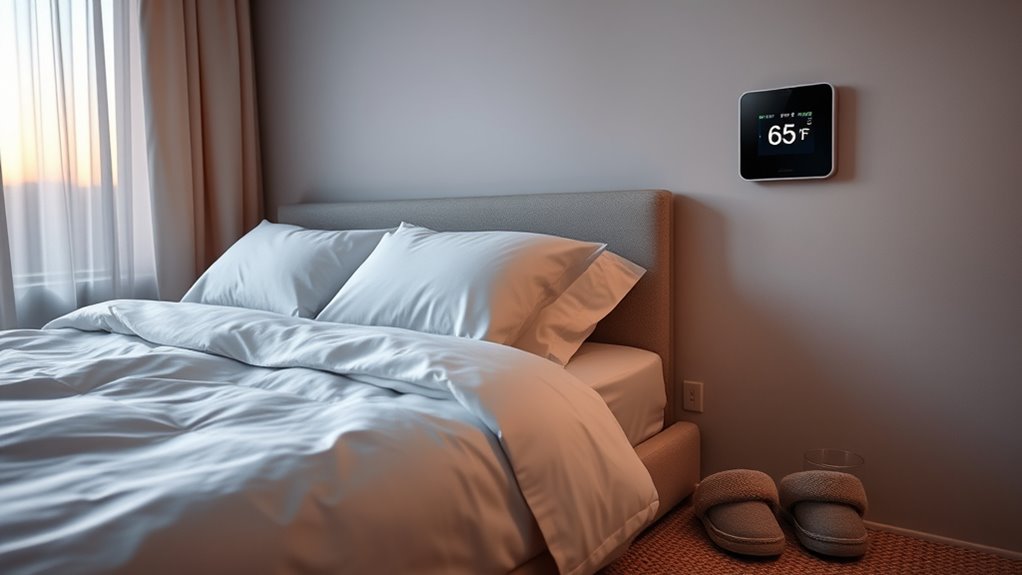
Maintaining the right bedroom temperature can considerably influence your sleep quality. Most experts recommend keeping your sleep environment between 60 to 67°F (15.5 to 19.5°C) for ideal rest. Staying within this range helps your body cool down naturally, signaling it’s time to sleep. Your bedding materials also play a vital role; lightweight, breathable fabrics like cotton or linen keep you comfortable and prevent overheating. Avoid heavy comforters or thick blankets that trap heat. If your room is too warm or too cold, it can disrupt your sleep cycles and reduce sleep quality. Consistently maintaining a temperature within this typical range creates the perfect environment for deep, restorative sleep, helping you wake up refreshed and ready for the day. Additionally, sleep environment modifications such as using blackout curtains or white noise machines can further enhance sleep quality. To optimize your sleep environment, consider climate control devices like thermostats and fans that help maintain a consistent temperature throughout the night. Proper insulation and temperature regulation strategies can also make a significant difference in achieving a comfortable sleeping environment. Understanding how thermal comfort impacts sleep can guide you in making more effective adjustments to your bedroom setting, especially when using smart thermostats or other innovative tools.
Differences in Preferences Among Age Groups

You might notice that kids often prefer warmer sleep environments, while adults generally favor cooler settings. Seniors tend to like even cooler temperatures to stay comfortable overnight. Understanding these differences can help you create the best sleep conditions for every age group.
Kids vs. Adults
Kids and adults often have very different ideas about what makes the perfect sleep environment. For children, cozy pediatric blankets and appropriate sleepwear choices are key to comfort. Their preference usually leans toward warmer setups, as they tend to feel colder easily. Consider these differences:
- Kids often prefer slightly higher temperatures, around 68-70°F.
- They might use thicker pediatric blankets for added warmth.
- Sleepwear choices are typically warmer, like fleece pajamas.
- Adults usually favor cooler temperatures, around 65-67°F, with lighter bedding.
Understanding these preferences helps you create a comfortable sleep space tailored to each age group, ensuring everyone gets restful sleep.
Seniors’ Cooler Preference
As we age, our sleep environment preferences often shift toward cooler temperatures, and seniors are no exception. Older adults tend to favor lower bedroom temperatures because their bodies often have more difficulty regulating temperature. This preference helps improve senior comfort, reducing night sweats and preventing overheating that can disrupt sleep. As temperature regulation becomes less efficient with age, a cooler environment supports better sleep quality. You might find that setting the thermostat between 60-67°F (15-19°C) helps you sleep more soundly. Adjusting your room temperature to match your comfort level can make a significant difference in sleep duration and restfulness. Prioritizing a cooler sleep space can help seniors enjoy more restorative sleep and feel more refreshed each morning.
The Impact of Climate and Environment on Sleep Comfort

Climate and environment play a crucial role in shaping sleep comfort, as temperature, humidity, and air quality directly influence how easily you fall asleep and stay asleep. Your experience varies across different climate zones, affecting your ideal sleeping conditions. Environmental noise, like traffic or wind, can disrupt your rest, making it harder to stay asleep. To optimize your sleep environment, consider these factors:
- Recognize climate zone effects on your comfort.
- Minimize environmental noise with soundproofing or white noise machines.
- Maintain proper humidity levels to prevent dryness or dampness.
- Ensure good air quality by ventilating and avoiding pollutants.
Being aware of how climate and environmental factors influence your sleep helps you make better adjustments for restful nights.
Adjusting Your Bedroom Temperature for Better Sleep

Finding the right bedroom temperature can considerably improve your sleep quality. To optimize it, consider adjusting your sleepwear choices and managing bedroom humidity. Wear lightweight, breathable fabrics to stay cool or warmer options if needed. Keep your room between 60-67°F (15-19°C) for ideal sleep comfort. Use a fan or air conditioner to regulate temperature and a humidifier or dehumidifier to control moisture levels. Maintaining proper humidity helps prevent dryness or dampness that can disturb sleep. Here’s a quick guide:
| Sleepwear Choices | Temperature Range | Humidity Tips |
|---|---|---|
| Cotton, linen | 60-67°F | 40-60% |
| Breathable fabrics | Adjust as needed | Use humidifier or dehumidifier |
| Loose-fitting | Keep consistent | Ventilate room |
Adjusting these factors creates a cooler, more comfortable sleep environment.
Common Mistakes That Disrupt Your Sleep Temperature Balance

One common mistake that disrupts your sleep temperature balance is neglecting to adjust your environment as needed, leading to discomfort throughout the night. Poor sleepwear choices can trap heat or cause chills, making it hard to stay comfortable. Ignoring bedroom humidity can also impact your sleep—high humidity feels muggy, while low humidity causes dryness. Additionally, you might forget to:
- Choose breathable sleepwear suited for the season
- Use a dehumidifier or humidifier to maintain ideal humidity levels
- Adjust your bedding to match room temperature
- Ventilate your room regularly to prevent stuffiness
Failing to address these factors hampers your body’s natural ability to regulate temperature, resulting in restless sleep. Paying attention to sleepwear and humidity helps keep your sleep environment balanced and comfortable.
Future Trends in Sleep Environment Technology

Advancements in sleep environment technology are transforming how you optimize your bedroom for better rest. Smart bedding is becoming more intuitive, adjusting to your body temperature and movements to enhance comfort automatically. Sleep trackers are evolving beyond basic data collection, offering real-time insights into your sleep quality and environmental factors like temperature and humidity. Future innovations will likely integrate these devices, creating a seamless sleep ecosystem that responds to your needs instantly. Expect smarter systems that learn your sleep patterns over time and make personalized adjustments—such as cooling or warming your bed or altering room conditions—to optimize sleep quality. These technologies will empower you to create a more consistent, comfortable sleep environment, ensuring you wake refreshed and ready for each day.
Frequently Asked Questions
How Does Humidity Influence Optimal Sleep Temperature?
Humidity impact plays a significant role in your sleep temperature comfort. When humidity is high, your body struggles with moisture regulation, making you feel warmer and more uncomfortable at typical sleep temperatures. Conversely, low humidity helps your body cool down more efficiently. Adjusting your environment’s humidity levels can improve sleep quality, ensuring you stay comfortable and avoid overheating or excessive dryness during the night.
Can Sleep Temperature Preferences Change Due to Health Conditions?
Your sleep environment can change how your body regulates temperature, especially if you have health conditions. You might find yourself more sensitive to temperature fluctuations, like a butterfly fluttering in a breeze. Conditions like arthritis or hormonal imbalances can make you prefer warmer or cooler settings. Adjusting your sleep environment to suit your needs helps maintain proper temperature regulation, ensuring restful sleep despite health challenges.
Are There Cultural Differences in Preferred Sleep Temperatures?
You’ll find that cultural sleep norms influence regional temperature preferences, shaping when and how people sleep comfortably. In warmer regions, folks often prefer higher temperatures or lighter bedding, while cooler climates favor lower temperatures and thicker covers. These differences reflect local customs and environmental conditions, so your ideal sleep temperature might vary based on where you’re from or the cultural practices you follow. Adjusting your sleep environment to match these norms can improve your rest.
How Does Bedding Material Affect Perceived Sleep Comfort?
Your bedding material considerably impacts your sleep comfort. Breathable fabrics like cotton or linen help regulate temperature and wick away moisture, keeping you cool and comfortable. Conversely, materials like polyester may trap heat, causing discomfort and disrupting your sleep. Choosing the right bedding material aligns with your preferences and environment, ensuring you stay comfortable throughout the night and wake feeling refreshed.
What Are the Signs of an Incorrect Sleep Temperature?
Imagine your sleep environment as a cozy cabin: if it’s too hot, you’ll toss and turn like a flickering flame struggling against the breeze; if too cold, you’ll shiver like leaves in winter. Signs of incorrect temperature regulation include sweating, feeling cold, frequent awakenings, or difficulty falling asleep. You might also wake up feeling unrested, indicating your body’s struggle to maintain ideal temperature for restful sleep.
Conclusion
Finding your perfect sleep temperature is like discovering a hidden treasure—subtle, personal, and essential for restful nights. By tuning into your body’s whispers and creating a cozy environment, you set the stage for deeper, more restorative sleep. Remember, small adjustments can release sweet dreams and brighter mornings. Embrace the gentle art of temperature balance, and let your sleep space become your sanctuary of comfort and renewal.