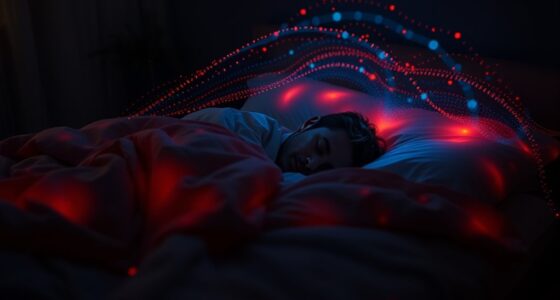
Motion sensors and microphones track your environment in different ways. Motion sensors detect movement using infrared, ultrasonic, or microwave signals, making them ideal for alerting you to physical motion without recording audio. Microphones pick up sound waves, capturing conversations or noise levels, but they raise privacy concerns. Understanding their unique functions helps you choose the right technology for your needs, and if you explore further, you’ll discover how each impacts privacy and efficiency.

Get wellness gear delivered free — and shop member deals
- Fast, free delivery on millions of items
- Access to Prime Big Deal Days deals on October 6–7
- Prime Video, Amazon Music and more included
Key Takeaways
- Motion sensors detect physical movement to trigger alerts, while microphones capture audio cues for more detailed monitoring.
- Sensors vary in accuracy depending on environmental factors like pets, lighting, and background noise.
- Motion sensors are less invasive and better for privacy, whereas microphones record audio, raising privacy concerns.
- Technological advancements have improved both devices’ reliability and precision in complex environments.
- Selection depends on detection needs: motion sensors for movement, microphones for sound analysis, considering privacy implications.
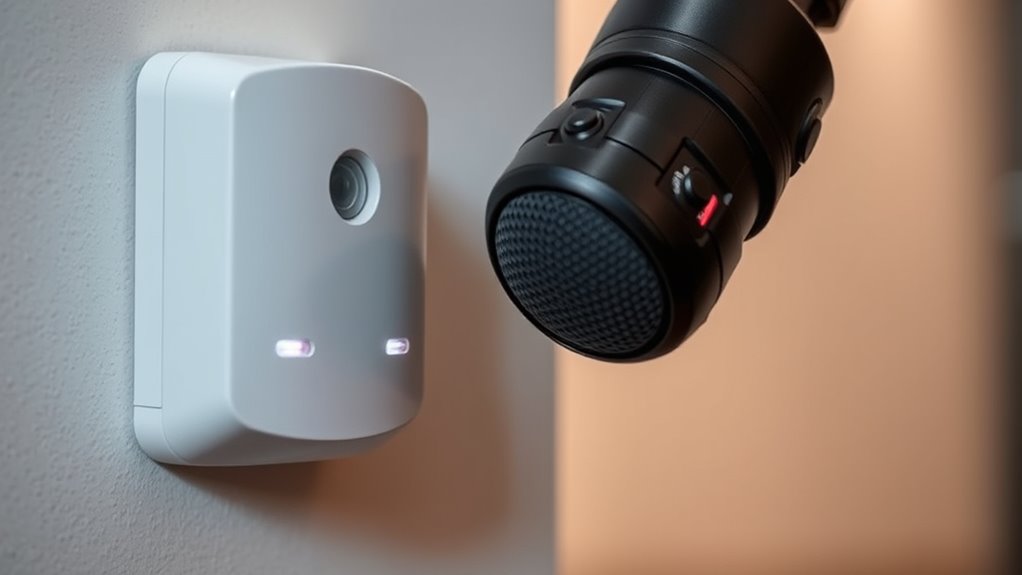
When choosing between motion sensors and microphones for your security or automation needs, understanding their core functions is vital. Motion sensors detect movement within a designated area, typically using infrared, ultrasonic, or microwave technology. They’re designed to trigger alarms, turn on lights, or activate cameras when motion is detected. Microphones, on the other hand, pick up sound waves, allowing you to monitor conversations, noises, or other audio cues in a space. Both tools serve different purposes, but their effectiveness depends heavily on sensor accuracy and how well they align with your goals.
Sensor accuracy is a pivotal factor in determining which option suits your setup. Motion sensors excel at detecting physical movement, but their accuracy can be influenced by environmental factors such as pets, moving curtains, or changing lighting conditions. If you want to avoid false alarms, high-quality motion sensors with advanced algorithms can improve accuracy, ensuring that only genuine intrusions or activities trigger alerts. Microphones, however, are sensitive to sound, but their accuracy can be compromised by background noise or echoes in the environment. A good microphone setup can distinguish between relevant sounds—like a glass breaking or a door opening—and irrelevant noise, but this often requires sophisticated audio processing. When choosing, consider how precise you need the detection to be and whether environmental variables will impact performance. Moreover, advancements in sensor technology have enhanced the reliability of both types, making them more suitable for complex environments.
Sensor accuracy impacts detection; motion sensors can be affected by environmental factors, while microphones require advanced processing to filter noise.
Privacy concerns are another vital aspect to weigh. Motion sensors are generally less invasive because they don’t record or transmit audio, making them less likely to raise privacy issues. They simply detect movement and act accordingly, which is often acceptable in most settings. Microphones, however, record audio, which can lead to privacy dilemmas. If you’re thinking about deploying microphones in shared or sensitive spaces, you need to be aware of legal and ethical considerations. Audio recordings can capture private conversations, and storing or transmitting this data introduces risks of misuse or unauthorized access. You should evaluate whether the benefit of audio monitoring outweighs potential privacy infringements and ensure you comply with local laws regarding audio surveillance.
Ultimately, the decision hinges on your specific needs. If you prioritize non-intrusive detection and minimal privacy concerns, motion sensors are usually the better choice. They provide reliable movement alerts without recording audio, making them suitable for most security applications. If, however, you require detailed audio information—such as identifying sounds or conversations—microphones become indispensable, provided you’re mindful of the privacy implications. Both tools have their strengths and limitations, but understanding their core functions, sensor accuracy, and privacy concerns helps you make an informed choice that best fits your security or automation setup.
Frequently Asked Questions
Can Motion Sensors Detect Sound or Voice Commands?
Motion sensors can’t detect sound or voice commands directly. Instead, voice recognition depends on microphones, which pick up audio signals. However, background noise or signal interference can affect microphone performance, making it harder for your device to accurately interpret commands. To guarantee reliable voice control, keep the microphone unobstructed and minimize ambient noise, allowing the system to recognize your voice commands effectively.
Are Microphones Affected by Environmental Noise?
Yes, microphones are affected by environmental noise, which can impact sound quality. Ambient interference, like background chatter or wind, makes it harder for microphones to pick up clear voice commands. You might notice distorted or muffled audio, especially in noisy settings. To improve performance, consider using directional microphones or noise-canceling technology, which help reduce ambient interference and enhance sound quality in various environments.
Do Motion Sensors Work Outdoors or Only Indoors?
Motion sensors work outdoors and indoors, but their durability and installation requirements differ. When placed outside, choose sensors built for weather resistance to withstand rain, snow, and temperature changes. Proper installation is essential; outdoor sensors need secure mounting and protection from environmental elements. Indoor sensors typically require less robust housing, but make sure they’re positioned to detect movement effectively without false triggers from pets or drafts.
How Do Privacy Concerns Differ Between Sensors and Microphones?
You should know that privacy implications differ considerably between sensors and microphones. Sensors typically collect less personal data, reducing privacy risks, but data security remains important to prevent unauthorized access. Microphones, on the other hand, capture audio that may reveal sensitive information, heightening privacy concerns. To protect yourself, make sure strong data security measures are in place and understand how your data is stored and used, regardless of the device type.
What Is the Typical Range of Motion Sensors Versus Microphones?
You’ll find that motion sensors typically have a range of about 10 to 30 feet, depending on sensor accuracy and device compatibility, making them suitable for room or hallway detection. Microphones, on the other hand, can pick up sounds from much farther away, sometimes up to 50 feet or more. However, their effectiveness depends on environmental noise and microphone quality, affecting how well they detect and track activity.
Conclusion
Ultimately, both motion sensors and microphones serve as vigilant guardians of your space, each with its own language. Motion sensors act as silent sentinels, sensing the unseen, while microphones are the storytellers, capturing whispers and shouts alike. Together, they form a symphony of awareness, turning your environment into a vigilant guardian that watches over you. Embrace their combined power, and your space becomes a lighthouse guiding safety through the fog of uncertainty.
Fall Picks
fall essentials
As an affiliate, we earn on qualifying purchases.