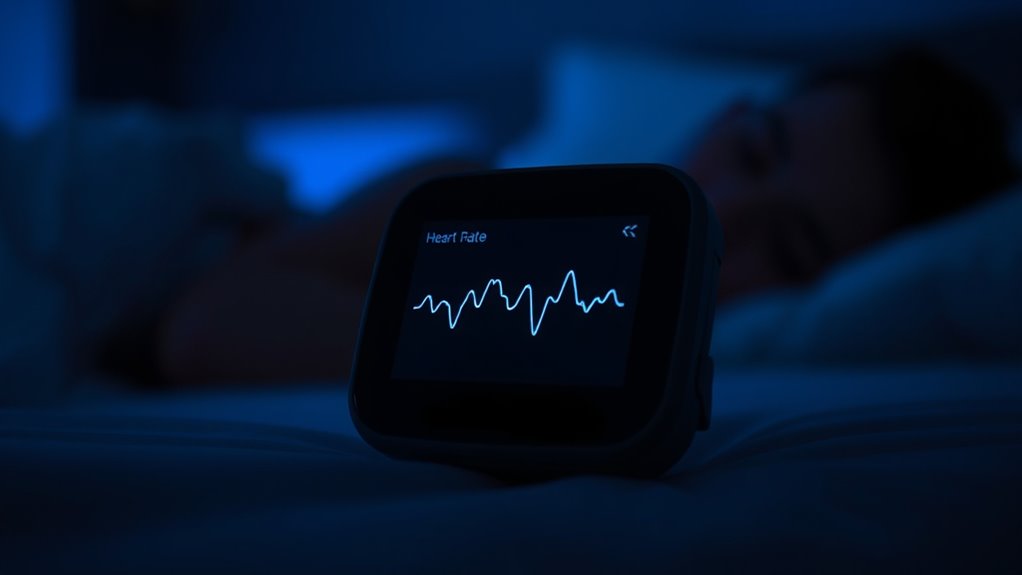

A rising heart rate overnight may mean your sleep isn’t restful, possibly caused by dehydration, stress, or circadian rhythm disruptions. Poor sleep quality can keep your nervous system active, raising your heart rate, while dehydration makes your heart work harder. Stress hormones like cortisol might also play a part. If this pattern persists, it’s a good idea to explore the underlying causes. To understand what your nighttime heart rate changes reveal about your health, keep going.

Get wellness gear delivered free with Prime
- Fast, free delivery on millions of items
- Prime Video, Amazon Music and more included
- Member-only deals all year
Key Takeaways
- Sleep disturbances, dehydration, stress, or circadian rhythm disruptions can cause heart rate to increase overnight.
- Restful sleep maintains stable heart rate; interruptions or poor quality lead to drift.
- Dehydration reduces blood volume, forcing the heart to work harder and raising heart rate during sleep.
- Elevated stress hormones and sympathetic activity can sustain higher heart rates overnight.
- Persistent or significant heart rate increases warrant medical evaluation to identify underlying causes.
Have you ever noticed your heart rate gradually increasing overnight without any obvious reason? It can be confusing and even a little unsettling, especially if you’re trying to track your health or optimize your sleep. Heart rate drift—this slow, steady rise in your resting heart rate during sleep—can stem from multiple factors, and understanding what it might mean could help you better interpret your body’s signals. One key aspect to contemplate is your sleep quality. If your sleep isn’t restful or is interrupted frequently, your body might respond with an elevated heart rate. Poor sleep quality can lead to increased sympathetic nervous system activity, which raises your heart rate even while you’re lying still.
Hydration levels also play a significant role in heart rate drift. When you’re dehydrated, your blood volume decreases, making your heart work harder to pump blood efficiently. This extra effort can cause your heart rate to climb gradually overnight. Conversely, staying well-hydrated can help maintain stable blood volume and reduce unnecessary stress on your cardiovascular system during sleep. If you notice a consistent drift in your heart rate, it might be worth evaluating your hydration habits before bed—drinking enough water earlier in the evening and avoiding excessive intake right before sleep can make a difference.
Another factor influencing heart rate drift is your overall stress level and circadian rhythms. Elevated stress hormones like cortisol can keep your heart rate elevated, even during sleep. If you’ve been under a lot of mental or physical stress during the day, your body may carry that heightened state into the night, causing your heart rate to slowly increase. Your circadian rhythm, which regulates sleep-wake cycles, also impacts heart rate. As your body prepares for wakefulness in the early morning hours, a natural rise in heart rate can occur, but if this process happens prematurely or excessively, it can be a sign your body’s internal clock is off. Understanding your circadian rhythm and how it influences physiological processes can provide insight into normal versus abnormal heart rate patterns.
It’s important to pay attention to these patterns, but also to remember that some degree of drift can be normal. If you’re consistently experiencing a significant increase in heart rate overnight, it might be worth consulting a healthcare professional. They can help determine whether underlying issues like dehydration, sleep disturbances, or other health conditions are contributing. Monitoring your sleep quality and hydration levels regularly can give you valuable clues about your overall health and help you make adjustments to improve your sleep and well-being.
sleep tracker with heart rate monitoring
As an affiliate, we earn on qualifying purchases.
As an affiliate, we earn on qualifying purchases.
Frequently Asked Questions
Can Heart Rate Drift Indicate Underlying Health Issues?
Yes, heart rate drift can indicate underlying health issues. When you notice changes in heart variability overnight, it may reflect your autonomic regulation’s response to stress, fatigue, or health problems. A persistent or irregular drift could signal issues like cardiovascular strain or autonomic dysfunction. Monitoring these patterns can help you identify early signs of health concerns, encouraging you to seek medical advice if needed.
How Does Sleep Quality Affect Overnight Heart Rate Drift?
Poor sleep quality can profoundly impact your overnight heart rate drift. During disrupted sleep cycles, your body struggles to recover, causing fluctuations in heart rate. High stress levels can amplify this effect, making your heart rate rise or fall unpredictably. When sleep is restful and uninterrupted, your heart rate drift tends to stabilize, reflecting better cardiovascular health and lower stress. Prioritizing good sleep and managing stress helps keep your heart rate more consistent overnight.
Is Heart Rate Drift Normal in All Age Groups?
Heart rate drift is like a tide that flows with age; it’s common but varies. Younger people often recover faster after exercise, with less drift, while older adults might see more, especially if hydration levels are low. It’s normal across all ages, but pay attention to how your body responds. Staying hydrated and allowing proper recovery can help manage your heart rate’s natural changes overnight.
What Lifestyle Changes Can Influence Overnight Heart Rate?
You can influence your overnight heart rate by managing stress through relaxation techniques like meditation or deep breathing, which help lower your resting heart rate. Staying well-hydrated throughout the day also supports cardiovascular health. Avoid caffeine or heavy meals before bed, and establish a consistent sleep schedule. These lifestyle changes promote a calmer, more stable heart rate overnight, contributing to better overall health and improved sleep quality.
Can Medication Impact Heart Rate Drift During Sleep?
Yes, medication effects can impact your heart rate drift during sleep. Sleep aids, in particular, may slow down your heart rate or alter its natural patterns, leading to less variability overnight. Some medications influence your autonomic nervous system, which controls heart rate. Always consult your doctor about potential effects of any medication on your heart health, especially if you notice unusual changes in your heart rate during sleep.
As an affiliate, we earn on qualifying purchases.
Conclusion
As dawn approaches, imagine your heart settling into a gentle rhythm, like waves lapping softly on the shore. If you notice your heart rate drifting overnight, it’s like the tide subtly changing—sometimes a sign to listen more closely. Pay attention to these quiet shifts; they whisper stories about your body’s state. By tuning into this nightly rhythm, you can better understand what your heart is trying to tell you, guiding you toward better health.
As an affiliate, we earn on qualifying purchases.
As an affiliate, we earn on qualifying purchases.
Halloween Picks
halloween
As an affiliate, we earn on qualifying purchases.