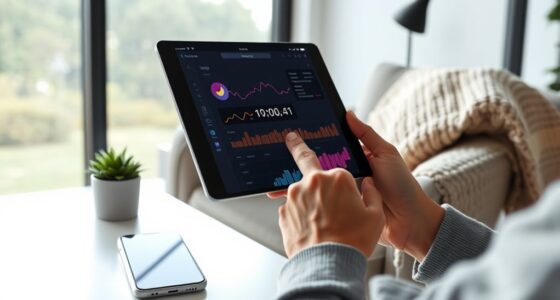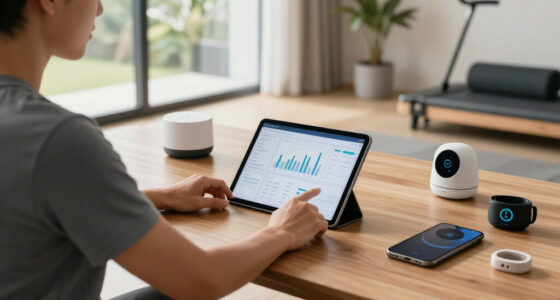
Sleep efficiency is the first metric you should monitor because it shows how effectively you’re sleeping during your time in bed. A high efficiency means you’re falling asleep quickly and staying asleep, leading to more restorative rest. Low efficiency indicates fragmented sleep and time spent awake, which can affect your overall health. Keeping an eye on this helps identify sleep issues early. If you want to improve your sleep habits, understanding this key marker will be helpful.
Key Takeaways
- Sleep efficiency measures the percentage of time in bed spent sleeping, reflecting overall sleep quality.
- High sleep efficiency indicates quick sleep onset and minimal awakenings, leading to restorative rest.
- Low efficiency suggests fragmented sleep, prolonged wakefulness, and potential sleep disorders.
- Monitoring sleep efficiency helps identify issues affecting sleep cycles and overall health.
- Improving sleep hygiene and consistency enhances sleep efficiency, boosting daytime alertness and well-being.
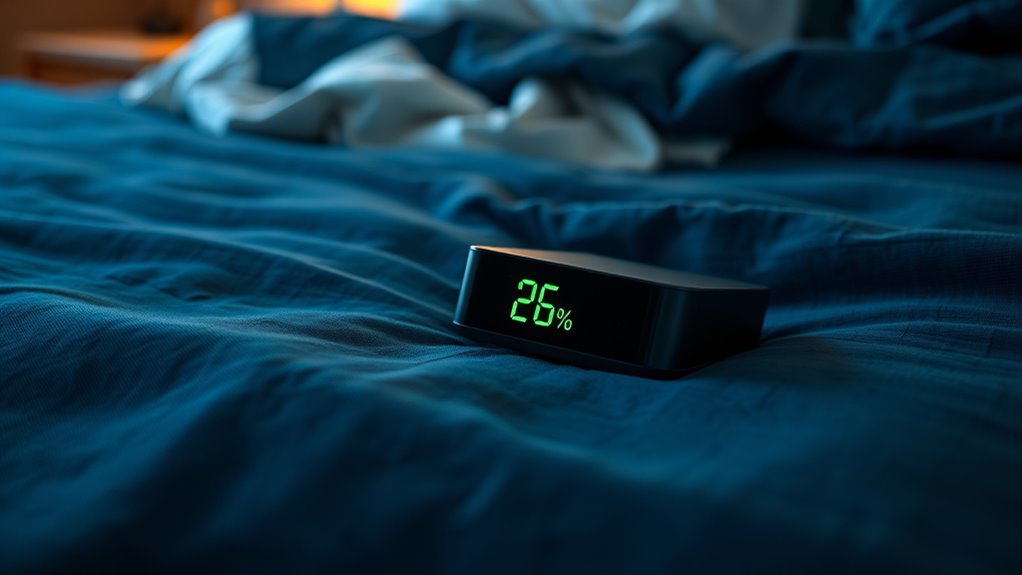
Have you ever wondered how well you’re actually sleeping each night? Understanding your sleep quality is essential for overall health, and one key factor to consider is sleep efficiency. Sleep efficiency measures how much of your time in bed is actually spent sleeping, and it can reveal a lot about your sleep habits. When your sleep efficiency is high, it means you’re falling asleep quickly, staying asleep, and waking up refreshed. But if it’s low, you might be spending too much time lying awake, tossing and turning, which can lead to poor rest and daytime fatigue.
High sleep efficiency means falling asleep fast and waking refreshed; low efficiency indicates restless, fragmented sleep.
A pivotal aspect of sleep efficiency involves your dream cycles. During the night, your body transitions through different stages of sleep, cycling through light sleep, deep sleep, and REM sleep, where most dreaming occurs. Each cycle typically lasts about 90 minutes, and the quality of these cycles directly impacts your overall sleep quality. When your dream cycles are disrupted—perhaps due to stress, certain medications, or irregular sleep schedules—you’ll likely experience fragmented sleep. This fragmentation reduces your sleep efficiency because you’re not getting enough restorative sleep stages, especially REM, which is essential for cognitive function and emotional health. As a result, even if you’re in bed for several hours, your sleep might be superficial or incomplete.
Monitoring your sleep efficiency helps you identify these issues early. If you notice that you’re spending a lot of time in bed but only getting a small percentage of that time as actual sleep, it’s a sign that your sleep quality needs improvement. Factors like frequent awakenings, difficulty falling asleep, or waking up too early can all diminish your sleep efficiency. Improving it involves establishing a consistent sleep schedule, creating a comfortable sleep environment, and practicing good sleep hygiene. These steps help regulate your circadian rhythm, promote smoother dream cycles, and enhance overall sleep quality. Additionally, understanding and optimizing your sleep architecture can lead to more restorative and consistent sleep patterns.
When your sleep efficiency improves, you’ll notice better daytime alertness, mood, and cognitive performance. A good night’s sleep isn’t just about the number of hours you spend in bed; it’s about how effectively you’re sleeping during that time. By focusing on your sleep efficiency, you’re addressing the core of restful sleep—ensuring your body and mind get the rejuvenation they need. Remember, small adjustments to your habits can greatly boost your dream cycles and, consequently, your sleep quality. Ultimately, tracking and optimizing your sleep efficiency is one of the most straightforward ways to enhance your overall well-being.

Zeacool Fitness Tracker with 24/7 Heart Rate, Blood Oxygen Blood Pressure Sleep Monitor, Activity Trackers 5 ATM Waterproof,Step Calorie Counter Pedometer Health Smart Watch for Women Men (Black)
- Heart Rate Monitoring: 24/7 real-time heart rate tracking
- Blood Oxygen & Pressure: Monitors blood oxygen and blood pressure
- Sleep & Temperature Tracking: Tracks sleep patterns and body temperature
As an affiliate, we earn on qualifying purchases.
As an affiliate, we earn on qualifying purchases.
Frequently Asked Questions
How Can I Improve My Sleep Efficiency Quickly?
To improve your sleep efficiency quickly, focus on optimizing your sleep environment by reducing noise and light, and keeping your room cool. Establish consistent bedtime routines to signal your body it’s time to wind down. Avoid screens and caffeine before bed, and try relaxing activities like reading or gentle stretching. These steps help you fall asleep faster and stay asleep longer, boosting your overall sleep quality efficiently.
What Is Considered a Healthy Sleep Efficiency Percentage?
A healthy sleep efficiency percentage is typically between 85% and 95%. This means most of your time in bed is spent sleeping, which boosts your sleep quality and guarantees you’re getting enough sleep duration. To improve your sleep efficiency, focus on maintaining a consistent sleep schedule, creating a relaxing bedtime routine, and limiting disruptions. These steps help you fall asleep faster and stay asleep longer, enhancing overall sleep health.
Does Sleep Efficiency Vary With Age?
Like the changing seasons, your sleep efficiency fluctuates with age. As you grow older, age-related changes and sleep cycle variations can reduce your sleep efficiency, making restful nights more elusive. Younger individuals often enjoy higher efficiency, while seniors may experience more fragmented sleep. Recognizing this natural shift helps you adapt habits for better rest, understanding that your sleep patterns are a reflection of life’s evolving rhythms.
Can Sleep Medications Affect Sleep Efficiency?
Yes, sleep medications can affect your sleep efficiency. While they might help you fall asleep faster, medication side effects like grogginess or disrupted sleep cycles can diminish overall sleep quality impact. Sometimes, these drugs cause lighter sleep or frequent awakenings, lowering efficiency. Always discuss with your doctor before using sleep medications, and monitor how they influence your sleep patterns to ensure you’re getting restorative rest.
How Does Sleep Efficiency Relate to Overall Health?
You improve your overall health by paying attention to sleep efficiency, which reflects how well your sleep patterns align with your circadian rhythms. When your sleep efficiency is high, you get restorative rest that boosts your immune system, mood, and cognitive function. Disrupted sleep patterns lower efficiency, increasing health risks like heart disease and diabetes. Prioritizing consistent sleep schedules helps maintain ideal circadian rhythms and supports better health.

8 Pcs Wax Play Candles Silk Blindfold for Adults Couples Romantic Long Thin Drip Low Temperature Massage Candles Satin Eye Mask Sleeping Covers Blindfolds for Couples Wax Play(Purple, Black)
- Includes Satin Blindfolds and Candles: 2 blindfolds and 6 drip candles in 3 colors
- Adjustable Blindfold Size: 150 cm length, 7 cm width, adjustable fit
- Customizable Candle Length: Candles measure 18 x 1.6 cm, can be cut to size
As an affiliate, we earn on qualifying purchases.
As an affiliate, we earn on qualifying purchases.
Conclusion
Keep a close eye on your sleep efficiency—it’s the compass guiding you to better rest. When you prioritize this metric, you’re steering your nights toward more restorative sleep and brighter days. Think of sleep efficiency as the heartbeat of quality sleep; ignore it, and your nights risk becoming a drifting boat without a lighthouse. So, tune in to this essential sign, and let it lead you to nights of truly invigorating sleep.

Bronson L-Theanine 200mg (Double-Strength) with Passion Flower Herb, Non-GMO Gluten-Free Soy-Free Stress Management Supplement, 120 Capsules
- Stress & Relaxation Support: Supports healthy stress response and relaxation
- Enhanced with Passion Flower: Includes Passion Flower for added support
- High-Quality Standards: GMO-Free, Gluten-Free, Soy-Free, lab tested
As an affiliate, we earn on qualifying purchases.
As an affiliate, we earn on qualifying purchases.

New Smart Ring Health Tracker for Women & Men, Sleep Exercise Health Monitoring, Daily Tracking, iOS/Android Compatible, IP68 Waterproof, No Subscription Required, 5‑Day Battery Life (Rose Gold, 8)
- Size Recommendation: Measure finger circumference before purchase
- Sleep & Fitness Tracking: Real-time sleep and activity monitoring
- Accurate Data Insights: Provides precise health and fitness data
As an affiliate, we earn on qualifying purchases.
As an affiliate, we earn on qualifying purchases.