
Sleep improvement devices now cover everything from noise masking to vagus nerve stimulation, which makes choosing one genuinely confusing. After comparing this lineup, the Ozlo Sleepbuds® 2 stand out as the best overall pick for their combination of passive noise blocking and all-night comfort, while the Dodow Sleep Aid offers the best value for anyone whose problem is a racing mind at bedtime rather than noise. The main tradeoff in this category is between passive comfort devices that require no habit change and active wearables or light-therapy tools that demand nightly consistency before paying off. Anti-snoring devices, meanwhile, solve a completely different problem — airflow — and shouldn’t be compared head-to-head with sleep trackers or sound machines. Read on for the full breakdown of which device fits which sleeper.

Get wellness gear delivered free with Prime
- Fast, free delivery on millions of items
- Prime Video, Amazon Music and more included
- Member-only deals all year
Key Takeaways
- Noise was the most solvable sleep problem in this roundup: the Ozlo Sleepbuds® 2 outperformed every sleep-mask headphone because passive earbud isolation beats thin mask speakers for blocking a snoring partner.
- Vagus nerve stimulation devices (Pulsetto FIT, Pulsetto Lite, Vagustim V2) split neatly by budget and app depth — the FIT earned its higher price with sleep-specific programs the Lite lacks.
- Anti-snoring hardware delivered the fastest results of any category here, with Rhinomed Mute offering the lowest-cost entry point and SleepEase Pro 4.0 adding electric muscle stimulation for persistent cases.
- Bedside light-based devices (Hatch Sleep Clock, Dodow) only work for sleepers whose problem is routine and wind-down, not noise or physical obstruction.
- The biggest pattern: every device in this lineup targets one specific sleep failure mode, so diagnosing your own problem before buying matters more than price.
| SleepEase Pro 4.0 Portable Anti-Snoring Device |  | Best Budget Anti-Snoring Pick | Number of Devices: 1 | Patch Count: 10 | Speed Settings: 3 | VIEW LATEST PRICE | See Our Full Breakdown |
| Hatch Sleep Clock Bedside Sleep Tracker, Smart Light, Sound Machine |  | Best All-in-One Sleep Hub | Connectivity: Bluetooth, Wi-Fi 2.4GHz | Subscription: $5.99/month or $59/year after 30-day free trial | Built-in Audio: Original audio library and sleep sounds | VIEW LATEST PRICE | See Our Full Breakdown |
| Pulsetto Lite (V1) Wellness Wearable – Relaxation & Daily Wellness Support Device |  | Best for Stress-Driven Sleep Problems | Session Duration: 4–10 minutes | Compatibility: iOS 12.0+ and Android 6.0+ | Design: Lightweight, ergonomic fit for medium-to-larger necks | VIEW LATEST PRICE | See Our Full Breakdown |
| Good Sleep Headset for Relaxation & Bedtime Routine with 40Hz Gamma Light & Bone Conduction Sound |  | Best Tech-Forward Wind-Down Ritual | Light Frequency: 40Hz gamma | Audio Type: Bone conduction sound | Session Duration: 30 minutes | VIEW LATEST PRICE | See Our Full Breakdown |
| Ozlo Sleepbuds® 2 – Sleep Earbuds, Noise Masking Headphones |  | Best Overall | Model Number: SB-G2 | Battery Life: Up to 14 hours | Eartips: Soft silicone, 4 sizes (XS, S, M, L) | VIEW LATEST PRICE | See Our Full Breakdown |
| Pulsetto FIT (V2) Wellness Wearable – Relaxation, Sleep & Daily Wellness Support Device |  | Best Premium Wearable for Relaxation | Session Duration: 4-10 minutes | Compatibility: iOS 12.0+ and Android 6.0+ | Developed In: Europe | VIEW LATEST PRICE | See Our Full Breakdown |
| Dodow Sleep Aid Device – Guided Breathing Light for Faster Sleep |  | Best Budget Sleep Trainer | Modes: 8 & 20 minutes | Guides Included: Yes | Light Color: Blue | VIEW LATEST PRICE | See Our Full Breakdown |
| Rhinomed Mute Nasal Dilators for Sleep, Snoring Solution, Starter Pack, 3 Sizes |  | Best for Nasal Congestion Snoring | Sizes: 3 sizes in starter pack | Reusable: Yes | Adjustable: Yes | VIEW LATEST PRICE | See Our Full Breakdown |
| Micro Anti Snoring Devices, Electric Snoring Solution for Men & Women |  | Best Value Electric Anti-Snoring Pick | Material: Soft silicone | Battery Life: 8 hours | Charging: USB rechargeable | VIEW LATEST PRICE | See Our Full Breakdown |
| Sleep Headphones Bluetooth Sleep Mask with Adjustable Speakers |  | Best Budget Audio Sleep Mask | Speaker Size: 2.7 inches | Adjustable Range: Up to 2.8 inches | Bluetooth Version: 5.4 | VIEW LATEST PRICE | See Our Full Breakdown |
| Vagustim V2 Essential Pack – AI-Powered Stress Reduction and Wellness Device |  | Best for Stress-Driven Sleep Issues | Includes: Earset with three size adjustors | Compatibility: iOS and Android devices | Key Features: AI personalization, EMDR-inspired sessions, smartwatch integration | VIEW LATEST PRICE | See Our Full Breakdown |
More Details on Our Top Picks
SleepEase Pro 4.0 Portable Anti-Snoring Device
For shoppers whose sleep problem is specifically snoring, this is the most affordable entry point in the lineup, and it attacks the issue at the source rather than masking it. Unlike the Ozlo Sleepbuds® 2, which cover a partner’s snoring with sound, the SleepEase Pro 4.0 aims to reduce the snoring itself using adjustable stimulation across three intensity levels. The pocket-sized ABS build makes it a genuine travel companion, something bulkier bedside units like the Hatch Sleep Clock can’t claim.
The tradeoff is precision: three settings is a narrow range, and results vary quite a bit from person to person. Compared with the Rhinomed Mute nasal dilators, it’s more tech-forward but less predictable in fit and comfort during the adjustment period.
Pros:- Adjustable intensity levels let you dial in comfort
- Skin-friendly ABS material is safe for overnight skin contact
- Genuinely portable and pocket-sized for travel
- Far cheaper than wearable or headset alternatives
Cons:- Only three intensity settings limits fine-tuning
- Effectiveness varies noticeably between users
- Requires an adjustment period before it feels comfortable
Best for: Light-to-moderate snorers who want a low-cost, travel-friendly device before committing to pricier solutions
Not ideal for: Partners trying to block out someone else’s snoring — this addresses the snorer, not the listener, so the Ozlo Sleepbuds are the better fit
- Number of Devices:1
- Patch Count:10
- Speed Settings:3
- Material:ABS
- Size:Compact, pocket-sized
- Use Case:Anti-snoring, overnight and travel
Our verdict“A low-risk first attempt for snorers who want to try stimulation-based relief without a big spend.”
Hatch Sleep Clock Bedside Sleep Tracker, Smart Light, Sound Machine
This is the central command center of the roundup — the only device here that combines tracking, sound, light, and wake-up routines in one bedside unit. Where the Pulsetto Lite targets the body and the Brain Spa headset targets the mind, the Hatch Sleep Clock targets the environment: real-time sleep data, a curated audio library, and a sunrise alarm that makes 6 a.m. feel less brutal. That breadth is why it earns the all-in-one spot.
But breadth costs money over time. The $5.99/month subscription after the 30-day trial is a real commitment the Pulsetto Lite avoids entirely, and the app-dependent setup makes it more complex than plug-and-play options. If you only need noise masking, the Ozlo Sleepbuds do that one job better.
Pros:- Combines sleep tracking, sound machine, and smart light in one device
- Sunrise alarm supports a more natural wake-up
- Personalized insights help identify sleep patterns over time
- Straightforward Bluetooth and Wi-Fi connectivity for updates
Cons:- Full features locked behind a $5.99/month or $59/year subscription
- Requires the app for setup and ongoing use
- More complex to configure than single-purpose devices
Best for: People rebuilding their entire sleep routine who want tracking, sound, and gentle waking from a single bedside device
Not ideal for: Subscription-averse buyers or anyone wanting a simple white-noise box — the recurring cost and app dependence will grate
- Connectivity:Bluetooth, Wi-Fi 2.4GHz
- Subscription:$5.99/month or $59/year after 30-day free trial
- Built-in Audio:Original audio library and sleep sounds
- App Requirement:Required for setup and ongoing use
- Power Adapter:Included
- Device Type:Bedside sleep tracker, smart light, and sound machine
Our verdict“The right pick if you want one device to manage your whole sleep environment — provided you accept the ongoing subscription.”
Pulsetto Lite (V1) Wellness Wearable – Relaxation & Daily Wellness Support Device
Not everyone’s insomnia starts at bedtime — for many, it starts with a nervous system that won’t power down. The Pulsetto Lite addresses that root cause with short 4–10 minute pulse sessions, a fundamentally different approach than the sound masking of the Ozlo Sleepbuds® 2 or the light routines of the Hatch Sleep Clock. Its strongest selling point against both: no subscription for core features, with five wellness programs, session tracking, and app control included.
The tradeoffs are real. Sessions are brief by design, so this won’t replace a full bedtime wind-down, and premium programs sit behind an upgrade — worth knowing before buying. The ergonomic fit is tuned for medium-to-larger necks, unlike the one-size-fits-most Sleepbuds, so smaller-framed users may struggle with fit.
Pros:- Short 4–10 minute sessions fit easily into a daily routine
- Adjustable pulse intensity via the free app
- No subscription required for core features
- Lightweight, ergonomic design for extended wear
Cons:- Limited to brief relaxation sessions, not all-night use
- Premium wellness programs require a paid upgrade
- Fit is designed for medium-to-larger necks
Best for: Stressed-out professionals whose racing mind ruins sleep and who want quick, app-guided relaxation sessions
Not ideal for: Buyers with smaller necks, or anyone expecting a medical-grade sleep treatment rather than a wellness device
- Session Duration:4–10 minutes
- Compatibility:iOS 12.0+ and Android 6.0+
- Design:Lightweight, ergonomic fit for medium-to-larger necks
- App Features:5 wellness programs, session tracking, wearable sync
- Subscription:Not required for core features
- Intensity Control:Adjustable via free app
Our verdict“The best choice when stress — not noise or light — is what’s keeping you awake, as long as the neck fit works for you.”
Good Sleep Headset for Relaxation & Bedtime Routine with 40Hz Gamma Light & Bone Conduction Sound
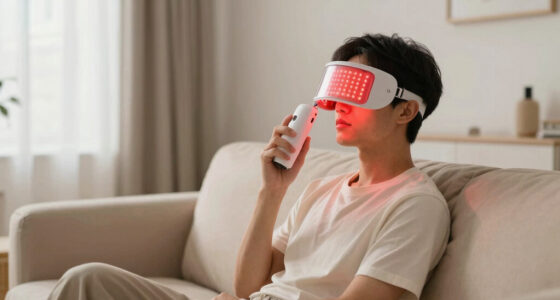
This headset takes the most experiment-forward approach in the roundup, pairing 40Hz gamma light stimulation with bone conduction sound in guided 30-minute sessions. Compared with the Pulsetto Lite’s pulse-based stimulation, this targets relaxation through sight and sound simultaneously, and the one-button operation plus adjustable elastic band makes it easier to live with than app-heavy rivals. Standalone mode means you can run a session without your phone nearby — a genuine advantage over the Ozlo Sleepbuds.
The catch: it’s a wind-down tool, not an all-night device. Once the 30-minute session ends, it comes off — unlike Sleepbuds that stay in until morning. There’s also no Bluetooth streaming, so anyone hoping for a dual-purpose audio headset should look at the Bluetooth sleep mask headphones instead.
Pros:- Combines 40Hz light therapy and bone conduction sound in one session
- One-button operation with volume control keeps it simple
- Adjustable elastic band stays secure and comfortable
- Standalone mode works without a phone connection
Cons:- Fixed 30-minute session length with no all-night use
- No Bluetooth connectivity for audio streaming
- Full functionality and extra modes require the app
Best for: Sleep-optimization enthusiasts who enjoy structured evening rituals and want light plus sound in one session
Not ideal for: People who fall asleep to music or podcasts all night — the fixed 30-minute sessions and lack of streaming rule that out
- Light Frequency:40Hz gamma
- Audio Type:Bone conduction sound
- Session Duration:30 minutes
- Battery Capacity:500mAh
- Connectivity:Standalone mode with app support
- Controls:One-button operation with volume control
Our verdict“A focused nightly ritual device for buyers who want guided light-and-sound wind-downs rather than passive noise blocking.”
Ozlo Sleepbuds® 2 – Sleep Earbuds, Noise Masking Headphones
This is the pick I’d point most sleep-deprived buyers toward, because it solves the most common complaint — noise ruining sleep — with the fewest compromises. The Sleepbuds® 2 stay put for side sleepers all night, last a full 14 hours on a charge, and come with four eartip sizes where rivals offer one fit. Compared with the SleepEase Pro 4.0, which tries to stop the snoring, the Ozlo approach simply removes it from your world — no adjustment period, no effectiveness lottery. Add the wireless charging case and a one-year warranty, and the hardware outclasses everything else here.
The price is the obvious hurdle, and it’s a single-purpose device: no music streaming, no daytime use, and full functionality depends on the app. If budget is the constraint, the Bluetooth sleep mask headphones cover similar ground for less.
Pros:- Secure, comfortable fit designed specifically for side sleepers
- 14-hour battery life reliably covers a full night
- Effective steady-sound masking with customizable options
- Four eartip sizes plus sleep tracking insights in the app
Cons:- Premium price compared with simpler masking options
- Sleep-only use — not suitable for music or active listening
- Requires the app for full functionality
Best for: Light sleepers and side sleepers battling a snoring partner, street noise, or a noisy household who want relief all night long
Not ideal for: Budget-focused buyers or anyone wanting earbuds that double as everyday music headphones — this is sleep-only hardware
- Model Number:SB-G2
- Battery Life:Up to 14 hours
- Eartips:Soft silicone, 4 sizes (XS, S, M, L)
- Weight:99 g
- Charging:USB-C to C silicone cable, wireless charging case
- App Compatibility:iOS and Android
- Warranty:1 year
Our verdict“If noise is your enemy and budget allows, this is the most complete, best-engineered sleep device in the roundup.”
Pulsetto FIT (V2) Wellness Wearable – Relaxation, Sleep & Daily Wellness Support Device
Pulsetto FIT (V2) sits at the premium end of this roundup, and it earns that position through short, targeted sessions — 4 to 10 minutes — rather than an all-night device. Compared with the Dodow Sleep Aid, which guides breathing passively via light, the Pulsetto takes an active approach: gentle, non-invasive pulses aimed at calming the nervous system before bed. That makes it better suited to people whose sleep problems start with a racing mind or stress rather than environmental disruptions. The free app includes five wellness programs and session tracking without a subscription, which is more generous than most wearables in this space. The tradeoff is real, though: the most useful features sit behind a Premium upgrade, and the device needs a compatible smartphone to function at all. Compared with the Pulsetto Lite (V1), the V2 adds more polish and program depth.
Pros:- Short 4-10 minute sessions fit easily into a bedtime routine
- Lightweight, ergonomic design comfortable enough for daily use
- Free app with 5 wellness programs and session tracking
- No subscription required for the base experience
Cons:- Most advanced features are locked behind a Premium upgrade
- Requires a compatible iOS or Android phone to use the app
- Basic version offers limited functionality beyond standard wellness pulses
Best for: Stressed professionals who struggle to wind down at bedtime and want a fast, app-guided relaxation routine
Not ideal for: Budget-conscious buyers or anyone without a modern smartphone, since core features require the app and the best programs need a paid upgrade
- Session Duration:4-10 minutes
- Compatibility:iOS 12.0+ and Android 6.0+
- Developed In:Europe
- App Features:5 wellness programs, session tracking, sync
- Subscription:Not required for base features
- Design:Lightweight, ergonomic wearable
Our verdict“This pick makes the most sense for stress-driven sleep issues where a short calming ritual before bed is the goal, not all-night intervention.”
Dodow Sleep Aid Device – Guided Breathing Light for Faster Sleep
The Dodow is the simplest and most affordable entry point in this roundup, and that simplicity is its whole appeal. A soft blue light pulses on your ceiling, slowing your breathing to a rhythm that encourages sleep onset — no app, no charging, no setup. Where the Pulsetto FIT (V2) asks you to run sessions through a phone app, the Dodow works entirely on its own with touch-sensitive controls and an 8 or 20-minute mode. This option stands out for people who fall asleep fine once in bed but take too long getting there. The tradeoffs are honest ones: benefits build over several nights of practice rather than appearing instantly, and it struggles in very bright rooms or spaces with vaulted ceilings where the light projection doesn’t work well. Compared with the Sleep Headphones Bluetooth Sleep Mask, it delivers nothing in the way of sound masking — it’s purely a behavioral tool.
Pros:- Guided breathing rhythm helps shorten time to fall asleep
- Dead-simple touch controls with 8 and 20-minute modes
- No charging, app, or subscription needed
- Includes guides to maximize results
Cons:- Requires consistent practice over multiple nights before benefits appear
- Light projection is ineffective in bright rooms or with vaulted ceilings
Best for: Budget-minded buyers who lie awake struggling to fall asleep and want a drug-free, screen-free routine
Not ideal for: Light sleepers bothered by ambient noise, or anyone with vaulted ceilings or a bright bedroom where the projected light is hard to see
- Modes:8 & 20 minutes
- Guides Included:Yes
- Light Color:Blue
- Breathing Guidance:Yes
- Controls:Touch-sensitive
- Power:Battery operated, no charging required
Our verdict“The Dodow is the lowest-cost way to build a fall-asleep-faster habit, provided your bedroom can actually show its projected light.”
Rhinomed Mute Nasal Dilators for Sleep, Snoring Solution, Starter Pack, 3 Sizes
The Rhinomed Mute attacks snoring from a different angle than every other device here: it physically opens the nasal passages, with clinical trials showing a 38% airflow increase. That evidence-backed claim is why it outranks the Micro Anti Snoring Device for anyone whose snoring stems from congestion, allergies, or narrow nostrils. Unlike that electric alternative, the Mute is passive and silent — no fan, no motor, nothing that hums beside your ear all night. The three-size starter pack matters more than it sounds: fit determines effectiveness, and many users need to experiment across sizes before finding the right one. Each dilator lasts up to 10 nights with proper cleaning, which makes it a recurring expense rather than a one-time purchase. Compared with the SleepEase Pro 4.0, it’s more discreet and nearly invisible during sleep, but it does nothing for mouth-based snoring.
Pros:- Clinically shown to increase nasal airflow by 38%
- Discreet and nearly invisible during sleep
- Adjustable fit across 3 included sizes
- Reusable for up to 10 nights per unit
Cons:- Finding the effective size requires trial and error
- Initial fit can feel uncomfortable for new users
- Results vary noticeably between individuals
Best for: Nasal or congestion-related snorers and their partners who want a silent, drug-free airflow solution
Not ideal for: Mouth snorers or anyone unwilling to replace the dilators roughly every 10 nights, since results and costs add up
- Sizes:3 sizes in starter pack
- Reusable:Yes
- Adjustable:Yes
- Material:Ultra-soft
- Usage Duration:Up to 10 nights per unit with proper cleaning
- Clinically Tested Airflow Gain:38%
Our verdict“This model is better suited to congestion-driven snoring than any electric option here, as long as you accept the sizing learning curve.”
Micro Anti Snoring Devices, Electric Snoring Solution for Men & Women
This Micro Anti Snoring Device lands in the value tier between the passive Rhinomed Mute and pricier powered options like the SleepEase Pro 4.0. Its approach is mechanical: a dual turbo fan with three adjustable speed settings actively moves air through the nostrils, housed in soft silicone with removable nose plugs for a one-size-fits-most design. The standout spec is 8 hours of battery life on a USB recharge — enough for a full night — plus genuine portability for travel. That said, the tradeoffs are more visible here than with the Mute: the fan becomes audibly noisy at higher speeds, which partially defeats the purpose of a snoring solution, and it does little for severe cases. Expect an adjustment period of a few days before the in-nose sensation stops feeling strange. Compared with the Mute, you get more airflow control but less proven clinical effectiveness.
Pros:- 3-speed adjustable airflow for customized comfort
- 8-hour battery covers a full night’s sleep
- Soft silicone with removable nose plugs suits most sizes
- Compact and travel-friendly with USB charging
Cons:- Fan noise at higher speeds can disturb the wearer or partner
- Requires several nights to adjust to wearing it
- Ineffective for severe snoring
Best for: Mild to moderate snorers who want an affordable, rechargeable powered device they can pack for travel
Not ideal for: Severe snorers or light sleepers, since high fan speeds add noise and the device may not be strong enough for serious cases
- Material:Soft silicone
- Battery Life:8 hours
- Charging:USB rechargeable
- Adjustable Speed:3-speed settings
- Design:Dual turbo fan, ergonomic fit
- Nose Plugs:Removable silicone
Our verdict“A reasonable budget-powered choice for mild snoring, provided you tolerate fan noise and stick with it past the adjustment period.”
Sleep Headphones Bluetooth Sleep Mask with Adjustable Speakers
This Bluetooth sleep mask is the affordable alternative to premium audio sleep devices like the Ozlo Sleepbuds 2 and the Good Sleep Headset. What separates it from both is the adjustable speaker system — 2.7-inch drivers that shift up to 2.8 inches to sit exactly where your ears are, which fixed-earbud designs can’t do. The 3D memory foam doubles as a blackout mask, blocking light while delivering audio, and the Bluetooth module pops out so you can actually wash it — a small feature that most competitors skip. The tradeoffs matter for serious audio sleepers: there’s no true noise cancellation, only masking via whatever you play, and some users find the maximum volume too soft. Battery life isn’t specified at all, which is a genuine gap compared with the Ozlo’s documented runtime. For side sleepers and travelers on a budget, though, it covers light and sound in one washable package.
Pros:- Adjustable speaker positioning for a personalized, side-sleeper-friendly fit
- 3D memory foam blocks light while playing audio
- Removable Bluetooth module makes the mask washable
- Bluetooth 5.4 delivers stable wireless audio
Cons:- No true noise cancellation — only passive masking through playback
- Battery life is not specified by the manufacturer
- Speakers may be too quiet for some listeners
Best for: Side sleepers and frequent travelers who want combined light blocking and audio masking without premium earbud pricing
Not ideal for: Buyers with serious noise problems or tinnitus who need strong noise cancellation and confirmed all-night battery life
- Speaker Size:2.7 inches
- Adjustable Range:Up to 2.8 inches
- Bluetooth Version:5.4
- Material:3D Memory Foam
- Washable:Yes
- Removable Bluetooth Module:Yes
- Noise Cancellation:None (passive masking only)
Our verdict“A practical two-in-one for budget-minded side sleepers, as long as moderate volume and unspecified battery life aren’t dealbreakers.”
Vagustim V2 Essential Pack – AI-Powered Stress Reduction and Wellness Device
Most devices in this roundup treat sleep from the outside in — masking noise like the Ozlo Sleepbuds® 2 or guiding breath like the Dodow. The Vagustim V2 Essential Pack takes the opposite approach, targeting the physiological root: an overactive stress response that keeps you awake. Its AI-personalized sessions, delivered through a comfortable earset with three size adjustors, adapt over time rather than running the same static program every night.
The tradeoffs are real. Compared with the Pulsetto wearables in this lineup, which sit on the neck and work hands-free, Vagustim requires its smartphone app for full functionality, so it’s less appealing if you want a screen-free bedtime. It’s also not a quick fix — results build gradually, and people sensitive to in-ear devices may find the fit bothersome. For sleeplessness tied clearly to stress and anxiety, though, this pick makes more sense than any sound-masking alternative.
Pros:- AI personalization adapts sessions to your response over time rather than repeating a fixed program
- Targets stress-driven sleeplessness at its source instead of masking symptoms
- Portable and lightweight enough for travel or midday stress sessions
- Smartwatch integration lets you track results alongside other wellness data
Cons:- Requires the smartphone app for full functionality, adding screen time to your wind-down routine
- Earset design may be uncomfortable for people sensitive to in-ear devices
- Effectiveness varies noticeably between users, so it’s not a guaranteed outcome
Best for: Stressed-out overthinkers whose racing mind and anxiety — not noise or snoring — are what keep them awake at night
Not ideal for: Anyone who wants a standalone, screen-free bedside solution, since the device depends on its companion app for full functionality
- Includes:Earset with three size adjustors
- Compatibility:iOS and Android devices
- Key Features:AI personalization, EMDR-inspired sessions, smartwatch integration
- Form Factor:Portable and lightweight earset
- Primary Benefit:Stress reduction and improved sleep quality
- App Required:Yes, for full functionality
Our verdict“Buy this if anxiety and stress are the real reason you can’t sleep, and skip it if your problem is noise, snoring, or screen dependence.”

How We Picked
I evaluated each device against four factors: how directly it addresses a sleep problem, comfort during actual overnight use, setup and habit burden, and value relative to what it solves. A $400 wearable that only vaguely supports relaxation ranked lower than a $60 device that measurably reduces time-to-sleep, because sleep improvement is an outcome category, not a features category. I also weighed consistency demands — devices needing nightly charging or app fiddling lost points, since abandonment is the most common failure mode in this space.
Ranking logic followed problem-solution fit. The Ozlo Sleepbuds® 2 took best overall because noise is the most common reported sleep disruptor and they solve it passively all night. Devices targeting narrower problems (snoring, bedtime routine, stress) were ranked within their lane rather than against each other, and duplicates within the same mechanism — three vagus stimulators, two headphone-style options — were separated by price tiers and program depth so each earns a distinct place in the lineup.
Factors to Consider When Choosing Sleep Improvement Devices
Before picking a specific device, it helps to understand how differently these tools work and where buyers most often go wrong. The guide below covers the decisions that matter before you spend anything.Diagnose Your Sleep Problem First
The single most expensive mistake in this category is buying a device for the wrong problem. A white-noise earbud does nothing for sleep apnea, and a nasal dilator won’t quiet a barking dog outside. Spend one week noting what actually wakes you or keeps you awake — noise, a racing mind, physical obstruction, or an inconsistent routine. That answer eliminates most of the lineup instantly. Buyers who skip this step often end up owning three devices, only one of which they use.
Passive vs. Active Devices
Passive devices — nasal dilators, sleep masks, foam-based earbuds — work the moment you use them and cost little, but they only mask symptoms. Active devices like vagus stimulators and guided light trainers aim to change how your nervous system behaves over weeks, which is more powerful but demands nightly consistency. My general advice: start passive and cheap to confirm the mechanism works for you, then invest in an active device only if you’ve proven you’ll stick with the routine. This is why the Dodow and Rhinomed Mute rank highly despite low prices.
Comfort Determines Whether You Use It
Overnight devices fail on comfort more than on technology. Side sleepers should be cautious of anything with rigid housings near the ear — sleep-mask headphones with adjustable flat speakers fare better than bulkier headsets. Wearables worn on the neck or chest matter less for sleeping position but more for strap irritation over long sessions. If a device needs to stay on for eight hours, any pressure point becomes a reason to abandon it by night three. Check return policies specifically for comfort, not just defects.
Recurring Costs and Ecosystem Lock-In
Several premium devices in this space — including app-driven vagus stimulators and content-dependent sound devices — pair hardware with subscriptions for guided programs. The upfront price can look reasonable until the useful features sit behind a monthly fee. Before buying, check what works offline or without a paid plan, and factor two years of subscriptions into the real cost. A $300 wearable with a $15/month app effectively costs $660 over its life, which changes how it compares to a one-time-purchase alternative.
When Snoring Might Need a Doctor
Anti-snoring devices like nasal dilators and muscle stimulators work well for simple airflow obstruction, but loud snoring with gasping, daytime exhaustion, or morning headaches can indicate sleep apnea — a condition no consumer device treats safely. This is the one situation where skipping the product roundup and getting a sleep study is the right call. Consumer devices can complement a CPAP routine or address mild occasional snoring, but they should never substitute for a diagnosis when red-flag symptoms are present. If a partner reports you stop breathing, that’s a medical conversation, not a shopping one.
Battery Life and Charging Reality
For overnight electronics, battery life is a usability spec, not a bonus feature. Earbuds that die at 3 a.m. are worse than no earbuds, and a bedside device with poor standby drains your willingness to keep it running. Look for all-night runtime on a single charge plus a charging case or dock, since nightly cable fiddling erodes habit formation. Wearables used for pre-sleep sessions have lighter demands, which is one reason neck-worn stimulators are easier to sustain than all-night hardware.
Frequently Asked Questions
Are vagus nerve stimulation devices like Pulsetto or Vagustim actually proven to help sleep?
Non-invasive vagus nerve stimulation has a growing research base for relaxation and stress reduction, and since stress is a major driver of sleep-onset problems, the connection is plausible rather than direct. What these devices do well is create a structured wind-down ritual that lowers physiological arousal before bed — similar in effect to guided breathing, but hands-free. Within this lineup, the Pulsetto FIT offers the most sleep-specific programming, while the Lite and Vagustim V2 lean more toward general wellness. If your insomnia is stress-driven, they’re worth trying; if it’s environmental (noise, light, snoring), your money is better spent elsewhere. Treat them as a complement to good sleep hygiene, not a replacement for addressing the root cause.
Do sleep headphone masks or dedicated sleep earbuds block a snoring partner better?
Dedicated sleep earbuds like the Ozlo Sleepbuds® 2 generally win because they combine physical in-ear isolation with masking audio, while mask-style headphones sit thin speakers against your ears with little passive sealing. Masks do double as blackout eye covers and cost far less, which makes them a reasonable budget choice. The tradeoff is that mask speakers struggle against deep, low-frequency snoring — the hardest frequency range to mask with sound alone. If your partner’s snoring is severe, passive isolation plus masking is the stronger combination, and you may also want them to try a nasal dilator like the Rhinomed Mute so you’re solving the problem from both sides.
Can a light-based device like the Dodow or Hatch really make me fall asleep faster?
Light devices work through a behavioral mechanism — pacing your breathing to a slowing light rhythm — rather than any direct biological effect, so results depend on whether your problem is an overactive mind at bedtime. Guided pacing like the Dodow’s mimics slow-breathing techniques that have decent evidence for reducing time-to-sleep in people with sleep-onset insomnia. The Hatch Sleep Clock adds sunrise waking and sound conditioning, making it better for resetting an inconsistent schedule. Neither will help if noise wakes you at 2 a.m., because they’re asleep-time tools, not all-night tools. They’re inexpensive, low-risk experiments, which is why they rank well for beginners.
Is an electric anti-snoring device better than a simple nasal dilator?
It depends on where the obstruction is. Nasal dilators like the Rhinomed Mute physically open the nasal valve, so they work well when congestion or narrow nostrils are the issue — and they cost a fraction of electric options. Electric devices such as the SleepEase Pro 4.0 use gentle stimulation to prevent tongue and throat tissue collapse, which targets the more common back-of-throat snoring mechanism. A sensible path is to try the dilator first at its low price, and step up to electric stimulation only if snoring persists. Persistent loud snoring with breathing pauses warrants a medical evaluation regardless of which device you choose.
How much should I spend on a sleep device if I’m not sure what will work?
Cap your first purchase around $60–100 and choose the device that most closely matches your suspected problem, because sleep device effectiveness is highly individual and return rates are substantial in this category. The Dodow, Rhinomed Mute starter pack, and a basic sleep-mask headphone all sit in that entry price band and cover the most common causes — racing mind, nasal obstruction, and noise respectively. If one mechanism works, that tells you where to invest more seriously, whether that’s premium earbuds or a vagus wearable. Jumping straight to a $400 device with subscription fees before validating the mechanism is the most common way buyers waste money here. Also verify the retailer’s return window covers tried-and-opened items, since many sleep devices can’t be resold once used.
Conclusion
For best overall, the Ozlo Sleepbuds® 2 earn the top spot because they solve the most common sleep disruptor — noise — comfortably and reliably all night. The Dodow Sleep Aid is the best value pick at a fraction of the price for anyone whose obstacle is a busy mind at bedtime, and it doubles as the best choice for beginners thanks to zero setup. On the premium end, the Pulsetto FIT justifies its price for stress-driven insomniacs willing to commit to nightly sessions, while the Hatch Sleep Clock suits buyers who want a full bedside ecosystem of light, sound, and routine.
For specific needs: choose the SleepEase Pro 4.0 or budget-friendly Rhinomed Mute for snoring, the Good Sleep Headset if you’re curious about 40Hz gamma light therapy, and the Pulsetto Lite or Vagustim V2 as lower-commitment or app-rich alternatives in vagus stimulation. The Sleep Headphones Mask rounds things out as the cheapest way to combine audio and blackout. Whatever you pick, match it to your actual sleep problem — that single decision matters more than any price difference in this lineup.