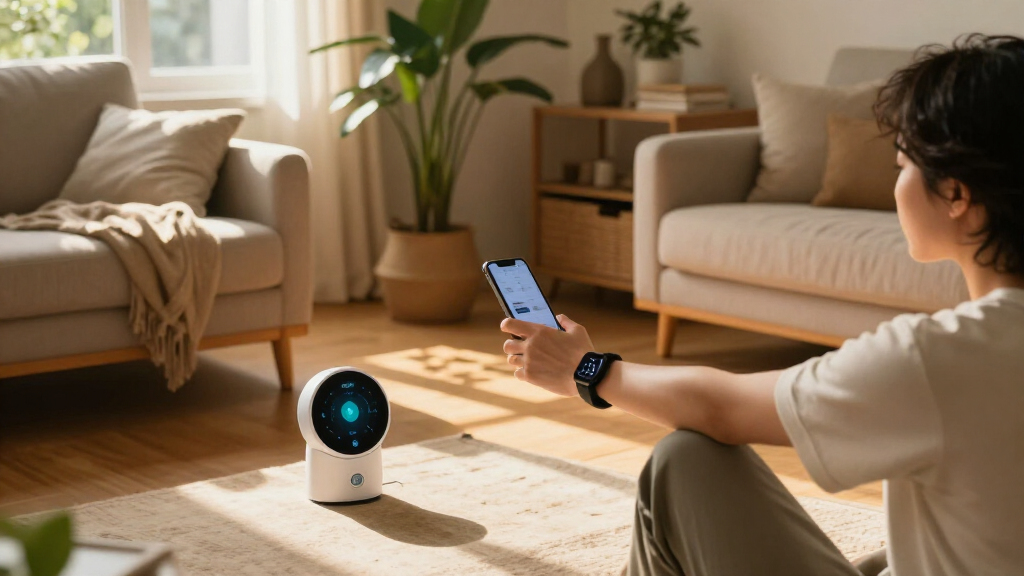

Smart home wellness devices often promise better health through more data, but air-quality monitors and sleep trackers answer different questions. A smart air-quality monitor checks the environment around you, such as particulate matter, humidity, temperature, and, on some models, carbon dioxide or volatile organic compounds. A sleep tracker uses a wearable or bedside sensor to estimate sleep duration, stages, movement, heart rate, or related trends.

Get wellness gear delivered free with Prime
- Fast, free delivery on millions of items
- Prime Video, Amazon Music and more included
- Member-only deals all year
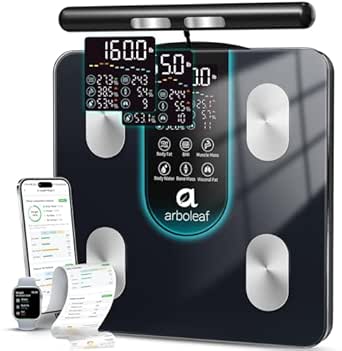
Arboleaf Smart Body Composition Scale with Dual-Frequency BIA and 8 Electrodes
- ✔ Model: CS10K
- ✔ Measurement technology: Dual-frequency BIA with 8 electrodes
- ✔ Displayed measurements: Weight, BMI, body fat, muscle mass, body water, bone mass, and visceral fat

REVO Original 4-in-1 Smart Cupping Massager with Heat, Vibration, LED Light, and Dynamic Suction
- ✔ Functions: Dynamic suction, vibration massage, LED light, and adjustable heat
- ✔ Intensity levels: 12
- ✔ Power: Cordless and rechargeable
The real choice is whether you want to identify environmental conditions you can adjust or learn more about your personal sleep patterns. Air monitors can point toward practical changes such as ventilation, filtration, or humidity control; sleep trackers can help reveal habits and recurring patterns, but their sleep-stage readings are estimates rather than medical diagnoses. Choose an air monitor if indoor conditions are your main concern. Choose a sleep tracker if you want ongoing personal data and are willing to wear or use a sensor regularly. Neither replaces clinical care or guarantees better health.
At a Glance
| Criteria | Smart air-quality monitors | Smart sleep trackers | Winner |
|---|---|---|---|
| What it measures | Indoor conditions such as particles, temperature, and humidity; sensors vary by model | Estimates sleep duration, movement, and sometimes heart rate or sleep stages | Depends |
| Actionability | Often points to changes in ventilation, filtration, or humidity | Can reveal patterns, but suggestions may not identify a clear cause | A |
| Personalization | Describes a room or home rather than an individual | Tracks an individual and may tailor trends to personal routines | B |
| Ease of everyday use | Usually runs continuously after setup | Requires regular wear or use and consistent charging or maintenance | A |
| Privacy | May collect home-location and environmental data through an app | May store sensitive health-related data in an account or app | Depends |
| Ongoing cost | Usually a one-time device purchase, though app or service fees vary | Device cost plus possible subscription for detailed reports | A |
| Best use case | Checking and improving indoor environmental conditions | Tracking personal sleep habits and trends over time | Depends |
Arboleaf Smart Body Composition Scale with Dual-Frequency BIA and 8 Electrodes
The Arboleaf is the more complete smart-home wellness pick if our goal is to build a repeatable record of body measurements. It shows weight, BMI, body fat, muscle mass, body water, bone mass, and visceral fat on the scale itself, so routine check-ins do not depend entirely on opening an app. Its handle and foot electrodes work together for dual-frequency, full-body BIA readings, while the app adds more than 50 metrics, segmental views, trend charts, and printable reports. That combination makes it a more informative tracker than a basic scale, though the extra detail should not be mistaken for clinical certainty.Compared with REVO, Arboleaf is better for people who want ongoing data and shared household use, not immediate physical comfort. It supports unlimited users and up to eight saved profiles, which makes it the more versatile common-area device. The tradeoff is a more involved first use: buyers need app pairing and profile setup, and BIA estimates can vary. We would use the readings to observe broad patterns under consistent conditions, not to make health decisions from a single result. Its guidance also says not to use it with a pacemaker or during pregnancy.For a smart scale, the on-device display keeps basic checks accessible; the app is where the richer analysis lives. That division is useful for households with different levels of interest in data, but app setup remains part of the experience rather than an optional extra for full functionality. The device runs on alkaline batteries and has a stated maximum capacity of 400 pounds. This is our top pick because it combines at-a-glance measurements, deeper trend tools, and multiuser support in one home device. Skip it if you want a simple weight-only scale, dislike health apps, or need professionally validated body-composition analysis.
Pros:
- Displays seven key measurements directly on the scale.
- Handle and foot electrodes provide dual-frequency, full-body BIA readings.
- App includes segmental views, trend charts, and printable reports.
- Supports unlimited users and up to eight saved profiles.
Cons:
- App pairing and profile setup are required before first use.
- BIA values are estimates and are not equivalent to professional medical analysis.
- Not suitable for people with pacemakers or during pregnancy.
Best for: Households that want to follow body-composition estimates and trends over time, with app reporting and multiple user profiles.
Not ideal for: People seeking clinical body-composition analysis, a weight-only scale with no app setup, or anyone with a pacemaker or who is pregnant.
Bottom line: We rank Arboleaf first for its combination of useful on-device readings, household profiles, and trend tools, provided we treat its BIA results as estimates rather than medical findings.
“We rank Arboleaf first for its combination of useful on-device readings, household profiles, and trend tools, provided we treat its BIA results as estimates rather than medical findings.”
REVO Original 4-in-1 Smart Cupping Massager with Heat, Vibration, LED Light, and Dynamic Suction
REVO is the hands-on alternative to Arboleaf’s measurement-first approach. It combines dynamic suction, vibration massage, adjustable heat, and LED light in a cordless cupping device, with 12 intensity levels and the option to use functions separately or together. That flexibility lets buyers choose a simpler session or combine effects, rather than committing to one fixed mode. As a wellness device, its purpose is direct and tactile: it is designed for home massage, not for collecting body data or tracking household health trends.Compared with the Arboleaf scale, REVO asks less of us in terms of app-based tracking and household setup, but it also offers a narrower role. It is portable and rechargeable, so it can be moved between rooms and used without a cord during a session. However, only one device is included, meaning dual placement requires buying a second unit. The description also omits battery life and charging time, which makes it harder to plan around frequent or longer sessions. Those omissions matter more here than they would on a stationary wellness accessory because cordless use is part of the appeal.The 12 levels are the clearest point of differentiation from a basic, less adjustable massage tool: they give users more control over intensity, while independent functions allow a more tailored setup. Still, more settings do not guarantee that cupping is right for every person or every situation. We would choose this over Arboleaf only when physical massage is the main goal; buyers looking for progress charts, body-composition readings, or multiuser profiles should choose the scale instead. REVO earns its place as the best focused comfort option, but its single-device format and unspecified power details keep it behind the broader household tracker.
Pros:
- Combines dynamic suction, vibration, adjustable heat, and LED light.
- Offers 12 intensity levels for session customization.
- Functions can be used independently or together.
- Cordless, rechargeable, and portable design.
Cons:
- One device supports only one placement at a time; dual placement requires a second device.
- Battery life and charging time are not specified.
- It provides massage functions rather than household measurement or trend tracking.
Best for: People who want a cordless, adjustable cupping-style massage device with heat and vibration options for home use.
Not ideal for: Shoppers who want body measurements, app-based progress tracking, dual-device placement out of the box, or clearly stated battery-life details.
Bottom line: We recommend REVO when adjustable, cordless cupping-style massage matters more than the broader tracking and shared-use features of the Arboleaf scale.
“We recommend REVO when adjustable, cordless cupping-style massage matters more than the broader tracking and shared-use features of the Arboleaf scale.”
As an Amazon Associate we earn from qualifying purchases.
Key Differences
The most important difference is the type of problem each device can help investigate. An air monitor measures the space you occupy. If readings show high humidity, elevated particles, or poor ventilation indicators, you can test changes to the room or home. The device does not prove that a reading caused a symptom, and sensor quality and coverage vary, but its measurements can connect to visible household actions. A sleep tracker measures or estimates signals associated with one person. It may show that sleep duration changes alongside bedtime, exercise, or other routines, yet it cannot reliably explain every restless night or diagnose a sleep disorder.
That difference also shapes the daily commitment. Most air monitors can sit in a room and collect readings without asking anyone to wear them. Sleep trackers need regular participation, and their value grows when the user wears or uses them consistently. In exchange, they can offer more individualized trend data. For many households concerned about indoor conditions, an air monitor is the simpler and more actionable first purchase. For a person focused on sleep habits, the tracker is more relevant, provided its estimates are treated as guidance rather than medical facts.
Cost and privacy depend on the product, not just the category. Air monitors are often bought once, although connected features or replacement sensors can add expense. Sleep trackers may carry subscriptions, and their data can be more personally sensitive. Before buying either, check which measurements the specific model supports, whether an ongoing fee is required, how data is stored, and whether the readings lead to a useful next step for you.
Detailed Comparison
What it measures (major difference)
Air monitors measure features of the indoor environment, with the exact sensor set varying widely. Sleep trackers estimate personal sleep and activity signals, and some include heart-rate data. Neither category measures health in a complete clinical sense. The winner depends on the question: choose A for the room, B for the sleeper. This is a major distinction because the devices produce different kinds of evidence.
Actionability (Smart air-quality monitors wins — moderate)
Air monitors have the clearer route from observation to intervention: a user may improve ventilation, use filtration, or adjust humidity, depending on the reading and the product. A tracker can help identify patterns around bedtime or routine, but a graph may not reveal what caused a sleep change. A wins by a moderate margin for users who want measurable household adjustments; B is more useful when behavior tracking itself is the goal.
Personalization (Smart sleep trackers wins — moderate)
A monitor reports conditions in a location, so its data may apply to everyone in that room without distinguishing individual responses. A sleep tracker follows one person and can build a history tied to that person’s habits. B wins by a moderate margin for individual trend tracking, though those personalized estimates should not be mistaken for a diagnosis.
Ease of everyday use (Smart air-quality monitors wins — moderate)
After setup, an air monitor generally works in the background. A sleep tracker requires consistent wear or placement, charging or battery care, and regular use for trends to be meaningful. A is the easier option for people who do not want another daily habit. The gap is moderate: users who already wear a compatible device may find B nearly effortless.
Privacy (moderate difference)
Both connected categories can send data to an app or cloud account, so privacy depends on each maker’s policies, settings, and security practices. Sleep data can reveal intimate personal routines and health-related patterns, while air-monitor data may reveal occupancy or household habits. There is no universal winner. Compare data retention, sharing controls, account requirements, and offline operation before buying either.
Ongoing cost (Smart air-quality monitors wins — moderate)
Many air monitors require a one-time purchase, although some products charge for advanced app features or need replacement parts. Sleep trackers can also be bought outright, but subscription-based analytics are common in some product lines. A is often less expensive over time, but check the full cost of the exact model. The gap is minor when both products have no recurring fee and major when B locks useful reports behind a subscription.
Best use case (major difference)
An air monitor fits a household trying to understand indoor conditions, particularly when the user has a specific environmental question and a plan to respond to findings. A sleep tracker fits someone who wants to observe personal patterns and will use the data consistently. Neither is a substitute for medical evaluation when symptoms persist. This is a genuine split rather than a category-wide win.
Smart air-quality monitors: Pros and Cons
Pros:
- Can identify environmental readings that may prompt practical home changes
- Usually operates continuously without a daily wearable routine
- Often avoids recurring fees, depending on the model
Cons:
- Sensor coverage and accuracy vary by device
- Measures a room, not an individual’s response or health
- Readings do not establish that an environmental factor caused symptoms
Smart sleep trackers: Pros and Cons
Pros:
- Provides personal trends tied to one user’s sleep routine
- Can help users notice changes in sleep duration or habits
- May suit people already comfortable wearing a smartwatch or sensor
Cons:
- Needs regular use to build useful trends
- Sleep-stage estimates are not clinical diagnoses
- Some models charge subscriptions for detailed analysis
Who Should Choose What
Choose Smart air-quality monitors if:
- You want to check indoor conditions and have a practical way to respond to readings.
- You prefer a device that runs in the background rather than a daily wearable.
- You want household-level information and want to limit recurring costs.
Choose Smart sleep trackers if:
- Your main goal is to track your own sleep habits and changes over time.
- You will use a wearable or bedside sensor consistently.
- You understand that sleep scores and stage estimates are directional data, not medical conclusions.
Skip both if: Skip both if you need a diagnosis or treatment plan for persistent sleep problems, breathing concerns, or other symptoms. Speak with a qualified health professional; a consumer device cannot replace clinical assessment.
Value for Money
For many households, an air monitor is the stronger value when the goal is to understand indoor conditions: it can run continuously, may support concrete home adjustments, and often has no required monthly fee. Paying more for one makes sense only if the extra sensors answer a real question for your space; a longer feature list is not useful when you will not act on the readings.
A sleep tracker is worth the added cost for someone who will use its personal trends to examine routines and who accepts the limits of estimated sleep data. Before paying a premium, check whether useful reports require a subscription and whether you would use them. If you only want a basic record of sleep duration, a lower-cost tracker or an existing device may be better value. Do not pay extra for medical-sounding claims that the product cannot substantiate.
Final Verdict
For a general household wellness purchase, choose a smart air-quality monitor if your concern is the environment you can change: it is usually easier to use passively and offers a more direct link between readings and household actions. Choose a smart sleep tracker if the person using it wants individual sleep trends and will keep up with regular use. The deciding factor is whether you need room-level measurements or personal sleep data, not which device advertises the more impressive score. If symptoms are the real concern, skip both as a diagnostic tool and seek appropriate medical advice.
Frequently Asked Questions
Can an air-quality monitor tell me why I feel unwell at home?
No. It can report readings from its available sensors, but it cannot establish that a measured condition caused a symptom. Sensor types and performance vary. Treat readings as information that may guide practical checks, not as a diagnosis.
Are smart sleep trackers accurate?
They can be useful for observing broad patterns, such as changes in sleep duration or consistency, but consumer devices estimate sleep from available signals. Accuracy varies by model and measurement, and sleep-stage labels should not be treated as clinical results.
Which device is better for a bedroom?
Choose an air monitor if you want readings about the bedroom environment. Choose a sleep tracker if you want data about one person’s sleep. They answer separate questions, so buying both is justified only when you have a reason to act on both kinds of information.
Do smart wellness devices require a subscription?
Some do and some do not. Check whether core readings, historical trends, alerts, or reports require a paid plan. Compare the total cost over the period you expect to use the device, not just its purchase price.