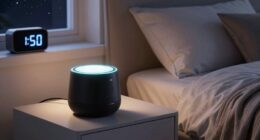
I compared these four guided breathing sleep devices by how they guide a bedtime routine, how much setup they ask of you, and whether their format fits a bedside table or a wrist. Dodow is the most sleep-focused pick, using a pulsing light and short session options. Mindsight Original Breathing Buddha suits people who want breathing cues alongside nature sounds, while the InterBreath wrist device offers wearable guidance without a screen or app. The main tradeoff is guidance style: projected or visible cues can be easy to follow in bed, while wearable options are more discreet but depend on tolerating a wrist-worn device. I rank the products by bedtime usefulness, clarity of guidance, and the practical limits stated in their specifications.

Get wellness gear delivered free with Prime
- Fast, free delivery on millions of items
- Prime Video, Amazon Music and more included
- Member-only deals all year
Key Takeaways
- Dodow is the clearest match for a sleep-only routine: it offers 8- and 20-minute light-guided sessions, but its projection may not suit bright rooms or vaulted ceilings.
- Mindsight Original Breathing Buddha combines three breathing modes, adjustable brightness, and nature sounds; choose it if audio is welcome, not if you need silent guidance.
- InterBreath is the wearable choice for discreet, app-free practice, with four modes and wireless charging, though battery-life and durability details are limited.
- The four-mode wireless wearable uses tactile guidance and a one-button control, but its listed session duration is about 15 minutes and it lacks visual prompts.
- A bedside light, a sound-and-visual device, and a wrist-worn guide create different routines; pick the form you can comfortably use in a dark, quiet bedroom.
| Dodow Sleep Aid Device – Guided Breathing Light for Faster Sleep |  | Best Overall for a Focused Bedtime Routine | Modes: 8 minutes and 20 minutes | Light: Pulsing blue light | Guidance: Visual breathing guidance | VIEW ON AMAZON | See Our Full Breakdown |
| Mindsight Original Breathing Buddha Guided Visual Meditation with Nature Sounds |  | Best for Visual and Audio Cues | Dimensions: 3.5 x 4 x 6 inches | Breathing modes: 3 | Battery life: Over one month at 10 minutes per day | VIEW ON AMAZON | See Our Full Breakdown |
| InterBreath Guided Breathing Device with 4 Modes, Wireless Charging, Purple |  | Best Wearable for Everyday Use | Modes: 4: Basic, Advanced, Deep, and Quick Adjustment | Charging: Wireless | Design: Lightweight, wrist-worn | VIEW ON AMAZON | See Our Full Breakdown |
| Guided Breathing Device with 4 Modes for Stress Relief, Sleep & Focus, Wireless Charging, Purple |  | Best for Tactile, App-Free Guidance | Breathing modes: 4 | Session duration: Approximately 15 minutes | Charging: Wireless | VIEW ON AMAZON | See Our Full Breakdown |
| guided breathing sleep device | Charging | Modes | Breathing modes | Battery life |
|---|---|---|---|---|
| Dodow Sleep Aid Device | — | 8 minutes and 20 minutes | — | — |
| Mindsight Original Breathing B | Rechargeable | — | 3 | Over one month at 10 minutes per day |
| InterBreath Guided Breathing D | Wireless | 4: Basic, Advanced, Deep, and Quick Adjustment | — | Not specified |
| Guided Breathing Device with 4 | Wireless | — | 4 | — |
More Details on Our Top Picks
Dodow Sleep Aid Device – Guided Breathing Light for Faster Sleep
Dodow is my first choice for readers who want a device shaped specifically around settling down at bedtime. Its pulsing blue light provides a visual rhythm to follow, and the 8- and 20-minute modes give a short option as well as a longer session. Compared with Mindsight, Dodow keeps the routine simpler: it does not add nature sounds or multiple breathing modes, which may help a person who prefers fewer sensory elements in a dark room.
That simplicity also narrows its usefulness. The product relies on seeing its light, so it is a weaker fit in a bright bedroom, and the supplied description cautions against use with vaulted ceilings. It may take several nights of practice before the routine feels natural, so I would not choose it expecting an immediate change in sleep onset. The wearable devices avoid projecting light and can be used more discreetly, but they do not offer the same clearly specified bedtime session lengths. For a dedicated, timed light cue, Dodow has the strongest fit in this group; for sound, tactile guidance, or daytime use, another format makes more sense.
Pros:- Pulsing light gives a clear visual breathing cue
- Two timed modes offer a shorter or longer session
- Touch-sensitive controls keep operation simple
- Guides are included to explain how to use the routine
Cons:- May take repeated use and practice before the routine feels helpful
- Light guidance can be ineffective in bright rooms or with vaulted ceilings
- Offers fewer sensory and mode options than the Mindsight device
Best for: People who want a simple light-led breathing routine at the bedside, with a choice between two timed sessions.
Not ideal for: Sleepers who need a silent, nonvisual cue, use the device in a bright room, or have a ceiling setup that makes projection impractical.
- Modes:8 minutes and 20 minutes
- Light:Pulsing blue light
- Guidance:Visual breathing guidance
- Controls:Touch-sensitive
- Guides:Included
- Room fit:Not suited to very bright environments or vaulted ceilings
Our verdict“I recommend Dodow first for a sleep-focused buyer who wants timed, visible breathing cues and can use them in a suitable bedroom.”
Mindsight Original Breathing Buddha Guided Visual Meditation with Nature Sounds
Mindsight is the most sensory-rich bedside option here. It pairs three guided breathing modes with ambient nature sounds, and its adjustable brightness lets the user soften the visual cue for a bedroom setting. That combination may make a wind-down routine feel more welcoming than Dodow’s single-color pulsing light, especially for someone who finds a quiet room too stark. Its compact footprint also makes it practical for a bedside table or desk.
The tradeoff is that it asks the sleeper to accept both light and sound as part of the routine. Someone who needs a silent, dark bedroom may find those extras counterproductive, while Dodow offers a more narrowly sleep-directed light cue and fixed session choices. The Buddha’s three-hour auto shutoff is not a manually adjustable timer, so it is less precise for people who want the device to stop after a particular short session. Its stated battery life—over a month at ten minutes a day—supports regular use, but it still needs recharging. I place it behind Dodow because its features are more flexible but less focused on a defined sleep session.
Pros:- Three breathing modes provide more variety than Dodow
- Nature sounds add an audio cue for a calming routine
- Two brightness levels help adapt the light to the room
- Specified battery life supports regular short sessions
Cons:- Nature sounds may not suit people who need quiet to sleep
- Auto shutoff is listed at three hours, with no manual timer specified
- No app control is described
Best for: People who like a bedside visual breathing guide with gentle nature sounds, adjustable brightness, and more than one breathing mode.
Not ideal for: People who prefer silent meditation, need a precise manual timer, or want app-based controls and customization.
- Dimensions:3.5 x 4 x 6 inches
- Breathing modes:3
- Battery life:Over one month at 10 minutes per day
- Brightness:2 levels
- Sound:Ambient nature sounds included
- Material:Soft silicone
- Auto shutoff:After 3 hours
- Charging:Rechargeable
Our verdict“I would choose Mindsight over Dodow when sound and multiple modes matter more than a narrowly timed sleep session.”
InterBreath Guided Breathing Device with 4 Modes, Wireless Charging, Purple
InterBreath is the best fit in this group for someone who wants breathing guidance without setting up a bedside light or playing audio. Its lightweight wrist-worn design and one-button control make it a more discreet option than either Dodow or Mindsight, and the four modes—Basic, Advanced, Deep, and Quick Adjustment—offer distinct starting points for different needs. Wireless charging and automatic session end also keep the routine straightforward.
Those advantages depend on being comfortable wearing a device on the wrist while relaxing or trying to sleep. The two bedside picks do not impose that requirement, and Dodow gives clearer information about session length. InterBreath’s description does not specify battery life, durability, or customizable settings, so I cannot judge how well it would support frequent overnight use or a tailored routine. Compared with the other wearable in this roundup, it has named mode types but less detail about session duration. It is a practical app-free choice for people who value discreet cues, but buyers seeking precise bedtime timing should favor Dodow.
Pros:- Four named modes offer varied breathing approaches
- One-button control keeps operation simple
- Wireless charging avoids a wired charging routine
- Automatic session end makes it easy to start a short practice
Cons:- Battery life and durability details are not specified
- Wrist-worn fit may be uncomfortable or unwanted at bedtime
- No app integration or customization is described
Best for: Adults or children who want a discreet, wrist-worn breathing guide for bedtime or short mindfulness breaks without an app.
Not ideal for: Anyone who dislikes wearing a device in bed, needs a visible breathing cue, or wants clearly documented battery life and durability.
- Modes:4: Basic, Advanced, Deep, and Quick Adjustment
- Charging:Wireless
- Design:Lightweight, wrist-worn
- Control:One button
- Session end:Automatic
- Color:Purple
- Battery life:Not specified
Our verdict“I recommend InterBreath for buyers who prefer discreet wrist-based guidance and accept less detail about battery life and long-term use.”
Guided Breathing Device with 4 Modes for Stress Relief, Sleep & Focus, Wireless Charging, Purple
This four-mode wearable is a good match for people who want a simple tactile cue rather than a projected light or a soundtrack. It has one-button operation, wireless charging, and a lightweight wearable design; the indicator light turns off ten seconds after mode selection, which can make the device less visually intrusive once a session begins. Compared with InterBreath, its description explicitly identifies tactile guidance and gives an approximate session duration, making the cue style and session limit clearer.
The stated approximately 15-minute sessions are useful to know, but the listing does not provide a battery-life figure, so frequent use may still require regular charging. Its lack of visual prompts also matters: unlike Dodow, it cannot guide someone who wants to watch a light expand and contract. The mode count matches InterBreath, yet this device is not described with named mode types, which makes the options harder to distinguish before use. I rank it fourth because it has fewer documented details to help a sleep-focused buyer choose a mode or estimate charging needs, though tactile guidance may suit a person who avoids light and sound.
Pros:- Tactile guidance avoids dependence on a projected light or audio
- Four modes give options for different routines
- Wireless charging and one-button control simplify operation
- Indicator light switches off shortly after mode selection
Cons:- Approximate 15-minute session duration may not suit longer routines
- No battery-life estimate or app-based tracking is specified
- Manual operation and no visual prompts may be a poor fit for some sleepers
Best for: People who want app-free, tactile breathing cues, a low-profile wearable, and a short session for bedtime or everyday relaxation.
Not ideal for: People who want visual prompts, need well-documented battery life, or prefer a bedside device that does not need to be worn.
- Breathing modes:4
- Session duration:Approximately 15 minutes
- Charging:Wireless
- Design:Lightweight wearable
- Control:One button
- Indicator light:Turns off 10 seconds after mode selection
- Guidance style:Tactile; no visual prompts specified
Our verdict“I would pick this wearable over a light or sound device only when tactile, discreet guidance is the main bedtime preference.”

How We Picked
I ranked these options for the specific job implied by this roundup: guiding slower breathing as part of a sleep routine. I gave more weight to bedtime fit and cue clarity than to broad claims about stress or focus, because those claims do not explain how a device works at night. I also looked at whether the product offers a set session, how its guidance reaches the user, and what room or wearing conditions could limit it.
The ranking reflects the information provided for each model, not hands-on testing or a claim that a device treats sleep problems. Dodow ranks first because its pulsing light and two timed modes are directly organized around falling asleep. Mindsight follows for its flexible visual and audio approach, which can make a calming routine feel more inviting but may be too stimulating for sound-sensitive sleepers. The wearables rank after these bedside options: they offer discreet tactile guidance, yet require wrist wear and give less information about battery life or the visual experience. I call out those gaps rather than treating every feature as an equal advantage.
| guided breathing sleep device | Battery life | Charging | Design |
|---|---|---|---|
| Dodow Sleep Aid Device | — | — | — |
| Mindsight Original Breathing B | Over one month at 10 minutes per day | Rechargeable | — |
| InterBreath Guided Breathing D | Not specified | Wireless | Lightweight, wrist-worn |
| Guided Breathing Device with 4 | — | Wireless | Lightweight wearable |
Factors to Consider When Choosing Guided Breathing Sleep Devices
I would start with the type of cue you can follow comfortably while getting ready for sleep. These devices differ less by broad relaxation claims than by whether they guide through light, sound, or touch, and by how much information they give about session length and charging.
Choose a cue that suits your bedroom
Light guidance can be easy to follow without listening to instructions. Dodow is the clearest example, but it depends on being able to see its blue pulse, so room brightness and ceiling layout matter. Mindsight also uses a visual cue, with two brightness levels, and adds nature sounds. That can make a routine feel more atmospheric, but a light-sensitive or sound-sensitive sleeper may prefer the simpler Dodow setup—or may find neither bedside device suitable.
A wearable changes the compromise. InterBreath and the four-mode tactile device do not depend on watching a projection, and neither requires an app according to the supplied details. In return, they need to be worn on the wrist. I would choose one only if that fit feels acceptable during rest; a discreet device is not useful if the sensation of wearing it keeps drawing attention.
Compare session structure before buying
Session length is one of the clearest differences in this lineup. Dodow specifies 8- and 20-minute modes, giving buyers a defined short or longer routine. The other wearable lists sessions of about 15 minutes, while InterBreath only says its sessions end automatically. Mindsight shuts off after three hours, but that is not the same as a short manual timer. If you want a device to fit a specific bedtime window, the stated timing matters more than simply counting breathing modes.
More modes do not automatically mean a better sleep device. InterBreath names four approaches, while the tactile wearable reports four modes without naming them in the information available here. Mindsight offers three modes. Think about whether you will use different approaches or whether one repeatable cue is more likely to become part of your routine.
Think through light, sound, and touch sensitivity
A breathing device should add a manageable cue, not another source of distraction. Mindsight is the only option here that includes ambient nature sounds, which may appeal to someone who welcomes background audio but is a poor fit for silent meditation. Dodow keeps the experience visual, while the wearables rely on tactile guidance and one-button controls. The tactile approach may be helpful when you want to keep your eyes closed, but the listed descriptions do not provide a visible breathing rhythm to follow.
For a shared bedroom, I would pay particular attention to light spill and sound. Mindsight has adjustable brightness, but only two levels are specified. Dodow’s projection depends on room conditions. The wearables avoid those bedroom light-and-audio questions, though their wrist fit becomes the deciding factor instead.
Check charging and information gaps
Mindsight provides the most specific battery-life figure: over a month at ten minutes of daily use. Both wearables list wireless charging, but InterBreath does not specify battery life, and the other wearable gives a session duration rather than an overall charge estimate. Those details are not interchangeable. I would treat missing battery information as uncertainty, especially if daily use is part of the plan.
Dodow’s supplied specifications focus on its light guidance and session options rather than charging details. The right choice may still be clear from its sleep-centered design, but buyers who prioritize charging intervals should compare the product information available at purchase. None of these descriptions specifies app tracking, and the wearable options are presented as app-free rather than data-focused tools.
Set expectations for what guidance can do
These products are breathing prompts, not a guarantee of faster sleep or a treatment for an ongoing sleep problem. Dodow’s description says regular practice over several nights may help some users with sleep onset, while also noting that practice may be needed. I would treat any device as a routine aid: it can offer a cue to follow, but the descriptions do not promise the same result for every person.
If sleep trouble persists or affects daily life, a breathing gadget is not a substitute for appropriate professional advice. For ordinary bedtime relaxation, choose the format that feels easiest to repeat: a timed light cue, a sound-and-visual bedside device, or a tactile wearable. Consistency and comfort are more useful selection criteria than choosing the device with the largest mode count.
Frequently Asked Questions
Which device is most specifically designed for bedtime?
Dodow is the most sleep-focused option in this comparison because its pulsing light is paired with 8- and 20-minute modes. Mindsight can also sit by the bed, but its nature sounds and three breathing modes give it a broader meditation feel. The wearables may work for bedtime, though their descriptions also frame them for daily use.
Should I choose visual, audio, or tactile breathing guidance?
I would choose based on what you can comfortably follow in your bedroom. Dodow and Mindsight use visual cues, and Mindsight adds nature sounds; the two wearables provide tactile guidance without a specified visual breathing prompt. If light or sound feels distracting, a tactile device may be a better match, provided you are comfortable wearing it on your wrist.
Which option gives the clearest session timing?
Dodow gives the clearest choice, with 8- and 20-minute modes. The other wearable lists sessions of about 15 minutes, while InterBreath says sessions end automatically without providing a duration. Mindsight’s three-hour auto shutoff is a safety-style limit rather than a short, manually selected bedtime session.
Do the wearable devices require an app?
The supplied descriptions present both wearables as simple, app-free devices and do not list app integration. InterBreath uses one-button control and wireless charging, while the other wearable also uses one button and tactile guidance. If tracking, stored routines, or app customization matters to you, those features are not specified for these options.
Can a guided breathing device solve ongoing sleep problems?
These products are described as aids for breathing practice and relaxation, not as treatments or guaranteed solutions for persistent sleep problems. A cue may help you follow a bedtime routine, but results can vary and Dodow’s description notes that practice may be needed. If sleep difficulty continues or affects everyday life, seek advice from a qualified health professional.
Conclusion
For a buyer who wants a defined, sleep-centered visual routine, I would choose Dodow first, as long as the bedroom suits its light projection. If you want a more atmospheric bedside practice and welcome nature sounds, Mindsight Original Breathing Buddha offers the broadest mix of audio, visuals, and modes, with a less precise timer. For a discreet wrist-worn option, choose InterBreath when named modes and wireless charging matter; choose the other four-mode wearable when tactile guidance and a short session appeal more. I would skip the wearables if wrist comfort is a concern, and skip the sound-and-light models if a dark, quiet room is non-negotiable. The best match is the one whose cue and routine feel easiest to repeat at bedtime.
Cold & flu season Picks
humidifiers
As an affiliate, we earn on qualifying purchases.