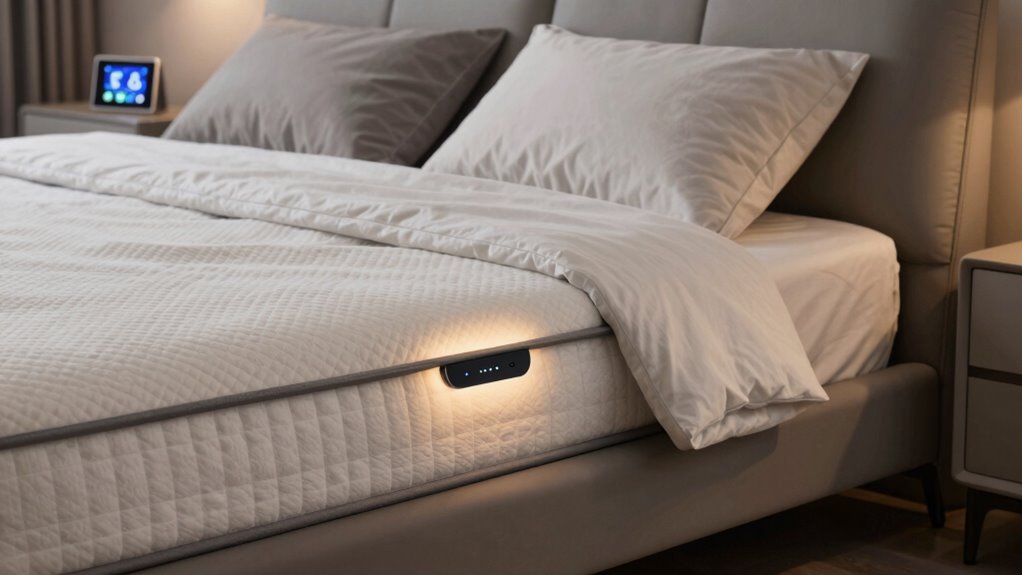
Smart bed occupancy sensors are vital tools for fall prevention, eldercare, and home automation, providing real-time monitoring of bed occupancy. The best overall pick, the TREATLIFE WiFi Presence Sensor, stands out for its reliable radar detection and smart home compatibility. The GoveeLife Smart Pressure Sensor 2.0 offers an affordable pressure-based alternative, while specialized options like the Wireless Bed Alarm System for Elderly and Dementia Patients excel in safety features. Buyers face tradeoffs between sensitivity, ease of use, and integration capabilities. Keep reading for a full breakdown to help you find the right sensor for your needs.

Get wellness gear delivered free with Prime
- Fast, free delivery on millions of items
- Prime Video, Amazon Music and more included
- Member-only deals all year
Key Takeaways
- Radar-based sensors like TREATLIFE provide highly reliable detection suitable for smart home integration.
- Pressure sensors such as GoveeLife offer a cost-effective, straightforward solution but may be less precise in dynamic environments.
- Specialized eldercare alarms prioritize safety features and caregiver alerts but often come with larger pads or higher costs.
- Compatibility with smart assistants and home automation platforms is a key factor for tech-savvy users.
- Tradeoffs often exist between sensor sensitivity, ease of installation, and price; understanding your specific needs is essential.
| TREATLIFE WiFi Presence Sensor 1 Pack, 24GHz mmWave Radar Smart Motion Sensor, Wired, Alexa/Google Home Compatible |  | Best Overall for Accurate, Hub-Free Occupancy Detection | Power Source: Corded Electric | Maximum Range: 20 feet | Mounting Type: Wall Mount, Ceiling Mount | VIEW ON AMAZON | See Our Full Breakdown |
| GoveeLife Smart Pressure Sensor 2.0 |  | Best for Customizable Pressure Detection in Beds and Couches | Range: 197ft | Battery: CR2450 (2-year battery life) | Modes: 4 adjustable sensitivity modes | VIEW ON AMAZON | See Our Full Breakdown |
| Smart Caregiver Bed Alarm for Elderly Adults |  | Best for Elderly Safety and Fall Prevention | Sensor Pad Size: 10″x30″ | Battery: 1 x 9-Volt (included) | Sensor Material: Vinyl with foam interior | VIEW ON AMAZON | See Our Full Breakdown |
| Zigbee Pressure Sensor Occupancy/Presence Detector for Home Automation |  | Best for Discreet, Scene-Linked Pressure Detection | Detection Threshold: 10kg | Power Source: Battery | Installation: Under bedsheet or seat | VIEW ON AMAZON | See Our Full Breakdown |
| Wireless Bed Alarm Sensor Pad for Elderly and Dementia Patients, 20×30 inches with Caregiver Pager |  | Best for Large, Reliable Wireless Fall Prevention | Size: 20 x 30 inches | Power Source: 2 AA batteries (included) | Maximum Range: 400 feet | VIEW ON AMAZON | See Our Full Breakdown |
| Smart Caregiver Bed and Chair Exit Alarm System for Fall and Wandering Prevention |  | Best for Discreet, Immediate Alerts in Single Locations | Monitor Size: not specified | Bed Sensor Pad Size: 10in x 30in | Chair Sensor Pad Size: 10in x 15in | VIEW ON AMAZON | See Our Full Breakdown |
| Wireless Motion Sensor Alarm System with Pager for Fall and Wandering Prevention |  | Best for Remote, Discreet Monitoring via Wireless Alerts | Power Source: Battery Powered | Maximum Range: 300 ft | Mounting Type: Pocket or Mountable | VIEW ON AMAZON | See Our Full Breakdown |
| Smart Caregiver Wireless Monitor and Motion Sensor System |  | Best for Expandable, Personalized Motion Monitoring Near Entry Points | Monitor Batteries: 3 C batteries (not included) | Motion Sensor Batteries: 3 AA batteries (not included) | Power Options: Battery or AC-04 power adapter (not included) | VIEW ON AMAZON | See Our Full Breakdown |
| Wireless Bed Pad Alarm System with Weight Sensor for Fall Prevention |  | Best for Long-Range, Multi-Device Bed Monitoring | Size: 10″ x 30″ | Sensor Type: Weight sensor pad | Range: Up to 300 feet | VIEW ON AMAZON | See Our Full Breakdown |
| Bed Alarm for Elderly Care with Motion Sensors and Plug-in Receiver |  | Best for Simple, Reliable Indoor Motion Monitoring | Number of Sensors: 2 motion sensors | Receiver Type: Plug-in with chime and flashing light | Power Source: Plug-in | VIEW ON AMAZON | See Our Full Breakdown |
| Smart Caregiver Replacement/Add-on Bed Alarm Sensor Pad, 10in x 30in, Compatible with Wireless Pager and Monitors |  | Best Compatibility and Ease of Use | Size: 10in x 30in | Compatibility: Smart Caregiver pagers, 433-EC monitors, 433-EC Central Monitoring Units | Material: Vinyl | VIEW ON AMAZON | See Our Full Breakdown |
| Smart Caregiver Large Wireless Bed Sensor Pad – 20in x 30in, Add-on/Replacement for Elderly and Dementia Care |  | Best for Larger Coverage and High-Rlexibility | Size: 20in x 30in | Compatibility: Smart Caregiver TL-2020P pager, 433-EC monitor, CMU 40/60 | Material: Latex-free vinyl | VIEW ON AMAZON | See Our Full Breakdown |
More Details on Our Top Picks
TREATLIFE WiFi Presence Sensor 1 Pack, 24GHz mmWave Radar Smart Motion Sensor, Wired, Alexa/Google Home Compatible
The TREATLIFE WiFi Presence Sensor stands out for its high-precision, radar-based detection that accurately identifies human presence without requiring a hub, making it ideal for seamless integration into existing smart homes. Unlike the Zigbee Pressure Sensor, which relies solely on pressure detection, this sensor offers a broader detection range and more reliable presence indication, especially for motion in larger rooms. Its wired power setup ensures consistent operation, but that also means limited placement flexibility and no backup battery—potential drawbacks for those seeking wireless or portable options. The adjustable mounting options and compatibility with Alexa and Google Home make it versatile, especially in dry indoor environments. Compared to simpler motion sensors, this model excels in detection accuracy, but it’s less suitable for humid areas or where wireless power is preferred.Pros:- High-precision radar detection with 24 GHz technology
- No hub needed—connects directly via Wi-Fi
- Flexible mounting with 360° rotation and 45° foldable options
- Supports multiple smart platforms like Alexa and Google Home
Cons:- Limited to dry indoor areas — not water-resistant
- Requires continuous power supply—no battery backup
- Incompatible with SmartThings and IFTTT
Best for: Homeowners seeking precise, hub-free occupancy detection for dry indoor spaces, especially where integration with Alexa or Google is desired.
Not ideal for: People wanting wireless sensors or devices suitable for humid or moist environments, as this sensor isn’t waterproof and requires constant power.
- Power Source:Corded Electric
- Maximum Range:20 feet
- Mounting Type:Wall Mount, Ceiling Mount
- Battery:Not included
- Compatible Devices:Alexa, Google Assistant, Smartphone
- Frequency:24 GHz
- Item Weight:4.16 ounces
Our verdict“This sensor is best suited for users who prioritize accuracy and easy Wi-Fi integration in dry indoor environments without the need for wireless power.”
GoveeLife Smart Pressure Sensor 2.0
The GoveeLife Smart Pressure Sensor 2.0 excels in detecting pressure on beds, couches, or chairs, making it perfect for automating device controls based on occupancy. Its long-range Bluetooth connectivity of 197 feet allows flexible placement without proximity constraints, unlike the Zigbee Pressure Sensor which requires a hub. The ability to adjust sensitivity across four modes offers tailored detection, but once the pressure strap is cut, it cannot be restored—limiting reusability. Additionally, Wi-Fi support requires a separate gateway, adding extra complexity and cost. The battery life of two years is a benefit, yet frequent battery changes can be a minor inconvenience. This model suits those who want a customizable, pressure-based sensor but are comfortable with additional setup for Wi-Fi features.Pros:- Long-range Bluetooth connection up to 197 ft
- Four adjustable sensitivity modes for customization
- False-trigger prevention enhances reliability
- Flexible, cuttable design for tailored placement
Cons:- Requires additional gateway for Wi-Fi support
- Once cut, the pressure strap cannot be restored
- Battery replacement needed every two years
Best for: Users seeking a highly adjustable pressure detection solution for beds or couches, especially if long-range Bluetooth is a priority.
Not ideal for: Buyers who need a simple, wireless, all-in-one sensor without the need for a gateway or who prefer re-usable straps, as cutting the strap is permanent.
- Range:197ft
- Battery:CR2450 (2-year battery life)
- Modes:4 adjustable sensitivity modes
- Connectivity:Bluetooth, Wi-Fi support with gateway
- Design:Cuttable pressure strap
- Application:Beds, couches, chairs
Our verdict“Ideal for those wanting a customizable pressure sensor with long-range Bluetooth, accepting the extra step of gateway setup and the permanence of the strap cut.”
Smart Caregiver Bed Alarm for Elderly Adults
The Smart Caregiver Bed Alarm provides a straightforward solution for monitoring elderly adults, alerting caregivers when pressure is removed from the sensor pad. Its easy setup and durable, incontinence-resistant pad make it a reliable choice for daily caregiving, especially compared to pressure-only sensors like the Zigbee Pressure Sensor, which lack alert flexibility. While it offers multiple alert options—like in-room alarms and wireless add-ons—the need for a 9-volt battery and the fact that wireless alerts are sold separately could be inconvenient. The sensor pad’s size and resistance to moisture make it suitable for continuous use, yet it’s limited to in-room alerts, which might not suit those needing remote or multi-room monitoring. This system is best for managing fall risks in a specific bedroom environment.Pros:- Easy to set up and discreet under bedding
- Durable, moisture-resistant sensor pad
- Flexible alert options for caregiver or patient
- Suitable for daily use with incontinence resistance
Cons:- Wireless alert kit sold separately—additional cost
- Requires 9-volt battery, which needs replacement
- Limited to in-room alert functionality only
Best for: Caregivers of elderly or dementia patients needing a simple, reliable bed pressure alert within a single room.
Not ideal for: Those seeking remote alerts or multi-room monitoring, as wireless options are sold separately and it’s limited to in-room alerting.
- Sensor Pad Size:10″x30″
- Battery:1 x 9-Volt (included)
- Sensor Material:Vinyl with foam interior
- Incontinence Resistance:Yes
- Alert Options:In-room alarm, wireless add-on
- Volume Levels:Two adjustable levels
Our verdict“Best for caregivers who want a simple, durable in-room bed pressure alert for elderly patients, accepting the need for separate wireless alerts.”
Zigbee Pressure Sensor Occupancy/Presence Detector for Home Automation
The Zigbee Pressure Sensor is designed for subtle pressure detection under bedding or cushions, making it ideal for integrating with Zigbee-compatible smart home scenes. This discreet sensor offers high-precision detection of sitting or lying, which can trigger automations like lighting or climate control, unlike more overt motion-based sensors. However, it requires a compatible Zigbee hub, which adds complexity and cost compared to standalone motion sensors like the TREATLIFE radar. Its battery life can vary with usage, and it only detects pressure, not motion—limiting its versatility. This makes it suitable for users wanting seamless, scene-based automation with minimal visual footprint but less suitable for those needing motion or multi-occupant detection.Pros:- Discreet installation under bedding or cushions
- High-precision pressure detection
- Supports automation scene linkage
- Minimal visual footprint
Cons:- Requires a Zigbee hub for operation
- Limited to pressure detection—not motion
- Battery life may vary with use
Best for: Smart home enthusiasts who want discreet pressure detection integrated into scenes, especially if they already have a Zigbee hub.
Not ideal for: Users seeking motion detection or a standalone occupancy sensor, as this device only detects pressure and requires a Zigbee hub.
- Detection Threshold:10kg
- Power Source:Battery
- Installation:Under bedsheet or seat
Our verdict“Perfect for Zigbee users wanting discreet, pressure-based scene automation but not suited for motion detection or standalone use.”
Wireless Bed Alarm Sensor Pad for Elderly and Dementia Patients, 20×30 inches with Caregiver Pager
The Wireless Bed Alarm Sensor Pad offers a large, waterproof surface area of 20×30 inches, making it especially reliable for detecting patient movement and preventing falls in elderly or dementia care. Its wireless operation with a caregiver pager provides flexibility and convenience, particularly compared to wired systems. The long-range of up to 400 feet supports multi-room setups, ideal for larger homes. However, it requires placement on a flat mattress or topper to avoid false alarms, and batteries need replacement roughly annually—though the system is straightforward to set up. This model suits caregivers seeking a large, dependable, wireless alarm for active or high-risk patients, with the understanding that false triggers may occur if placement isn’t optimal.Pros:- Large, waterproof sensor pad for high reliability
- Wireless operation with up to 400 ft range
- Includes caregiver pager for immediate alerts
- Easy to set up and discreet under bedding
Cons:- Requires flat placement on mattress or topper
- Battery replacement needed annually
- Range indoors may vary depending on obstacles
Best for: Caregivers with elderly or dementia patients needing a large, wireless, fall-prevention solution for the bed area.
Not ideal for: Homes with uneven mattresses or those wanting a wired system, as proper flat placement is essential to avoid false alarms.
- Size:20 x 30 inches
- Power Source:2 AA batteries (included)
- Maximum Range:400 feet
- Material:Waterproof
- Mounting Type:Inductive connection
- Sensor Technology:Contact Sensor
- Battery Life:At least 12 months
Our verdict“Best suited for caregivers needing a large, wireless, fall-prevention alarm with long-range alert capabilities for active or high-risk elderly patients.”
Smart Caregiver Bed and Chair Exit Alarm System for Fall and Wandering Prevention
This alarm system excels at providing immediate alerts when a person attempts to leave a bed or chair, making it ideal for preventing falls and wandering in specific, monitored areas. Compared with the Wireless Motion Sensor Alarm System (B008BMASJM), this system offers a more targeted approach with sensor pads that discreetly slip under sheets or on chairs, reducing false triggers caused by unrelated movement. Its simple setup and adjustable volume make it accessible for caregivers who prefer straightforward solutions. However, the lack of detailed monitor specifications and the need for additional monitors for multiple locations can limit scalability. The sensor pads, while reliable, require careful placement to maintain sensitivity. This pick makes sense for caregivers seeking a dedicated, in-place sensor system for specific beds or chairs, especially where discreetness is valued.
Pros:- Immediate alerts help prevent falls and wandering
- Easy to set up and switch between bed and chair sensors
- Adjustable volume and discreet placement under sheets or on chairs
- Supports simple, targeted monitoring in specific areas
Cons:- Monitor size and battery details are not specified, limiting clarity on operation
- Requires additional monitors for multiple locations, increasing cost and complexity
- Sensor pads may need careful placement to ensure sensitivity
Best for: Caregivers of elderly or dementia patients needing reliable, localized fall and wandering prevention in specific beds or chairs
Not ideal for: Those wanting a fully integrated, multi-location system with remote monitoring capabilities
- Monitor Size:not specified
- Bed Sensor Pad Size:10in x 30in
- Chair Sensor Pad Size:10in x 15in
- Battery:not specified
- Sensor Material:vinyl with foam interior
- Placement:under fitted sheet for bed, on chair seat for chair
Our verdict“This system is best suited for caregivers needing focused, discreet alerts at specific beds or chairs without extensive remote monitoring.”
Wireless Motion Sensor Alarm System with Pager for Fall and Wandering Prevention
This wireless motion sensor system provides a hands-off monitoring solution by sending silent alerts to a caregiver pager up to 300 feet away, ideal for supervising multiple rooms or exits without physical sensors on beds or chairs. Unlike the Bed and Chair Exit Alarm (B00489XYTI), which requires direct placement, this system offers more flexibility with its portable, mountable design and remote alerting. It’s well-suited for caregivers who need to supervise across larger spaces or multiple locations, but its reliance on batteries (not included) and the absence of compatibility with other systems can be limiting. The limited to standalone use means integration with other monitoring solutions isn’t straightforward. For caregivers who prioritize remote alerts and mobility, this system delivers a simple, effective option, though at the expense of needing extra batteries and accessories.
Pros:- Remote monitoring without disturbing residents
- Wireless range up to 300 feet for flexible placement
- Includes caregiver pager for immediate alerts
- Mountable and portable for various locations
Cons:- Batteries not included, requiring additional purchase
- Extendable mounting bracket sold separately, adding extra cost
- Limited compatibility with other systems or sensors
Best for: Professional or family caregivers needing remote, wireless alerts for multiple rooms or outdoor areas
Not ideal for: Caregivers seeking integrated, multi-sensor systems that work seamlessly with other monitoring devices
- Power Source:Battery Powered
- Maximum Range:300 ft
- Mounting Type:Pocket or Mountable
- Batteries Required:4 AA batteries
- Temperature Range:73 °F
Our verdict“Ideal for those who need flexible, remote alerts across larger or multiple spaces without requiring complex wiring.”
Smart Caregiver Wireless Monitor and Motion Sensor System
This wireless system offers a flexible setup for monitoring movement near beds or doorways, with the ability to expand up to six components. Compared to the Bed Pad Alarm System (B01FRGJ3K4), which relies solely on weight sensors, this system’s motion sensors provide a broader detection range and easier placement without physical contact. Its adjustable volume and simple setup make it suitable for caregivers who want to tailor alerts to specific areas. However, the need for batteries and power adapters not included can complicate initial setup, and its basic motion detection may not be enough for high-precision fall prevention. This pick is best for caregivers seeking a customizable, expandable system for multiple entry points, especially in environments where physical sensors are less practical.
Pros:- Easy to monitor movement near beds or doorways
- Expandable system up to 6 components
- Adjustable volume for personalized alerts
- Wireless setup simplifies placement
Cons:- Batteries and power adapters are not included, adding setup hassle
- Limited to basic motion detection, less precise than weight sensors
- Requires multiple batteries for operation
Best for: Caregivers managing multiple entry points or room areas requiring adaptable motion detection
Not ideal for: Those needing a dedicated, high-sensitivity bed sensor system for immediate fall alerts
- Monitor Batteries:3 C batteries (not included)
- Motion Sensor Batteries:3 AA batteries (not included)
- Power Options:Battery or AC-04 power adapter (not included)
- Expandable:Yes, up to 6 components
- Adjustable Volume:Hi/Lo/Med
Our verdict“Best suited for caregivers needing a customizable, expandable motion detection system for multiple access points.”
Wireless Bed Pad Alarm System with Weight Sensor for Fall Prevention
This wireless bed alarm features a large 10″ x 30″ weight sensor pad designed specifically to alert caregivers when a patient gets off the bed. It is particularly effective for long-range monitoring up to 300 feet, making it a strong choice for caregivers managing multiple residents or rooms. Compared to the Bed and Chair Exit Alarm (B00489XYTI), which uses contact sensors, this system’s weight sensor provides a more natural detection of bed exit, reducing false alarms. The system’s ability to monitor multiple devices simultaneously adds flexibility but also increases complexity. Batteries are required, which could be a drawback for some users, and it’s limited to bed area use only. This makes it well-suited for elderly or dementia patients at high fall risk, seeking a reliable, long-range solution.
Pros:- Long-range wireless monitoring up to 300 feet
- Easy to set up with adjustable volume
- Supports multiple devices simultaneously
- Effective for fall prevention and wandering management
Cons:- Requires 3 C batteries, which need replacement
- Limited to bed area, not suitable for other fall prevention needs
- Additional components may be needed for full system integration
Best for: Caregivers of elderly or dementia patients needing reliable, long-range bed exit alerts
Not ideal for: Those looking for multi-location or multi-purpose sensors beyond bed monitoring
- Size:10″ x 30″
- Sensor Type:Weight sensor pad
- Range:Up to 300 feet
- Power:3 C batteries included
- Warranty:1 year
Our verdict“This system is a solid choice for caregivers needing long-range, reliable bed exit alerts for high-risk patients.”
Bed Alarm for Elderly Care with Motion Sensors and Plug-in Receiver
This system offers a straightforward approach with motion sensors and a plug-in receiver, making it easy for caregivers to monitor activity near beds or doorways. Compared with the wireless systems that rely on batteries, this setup’s plug-in receiver provides constant power and reduces maintenance concerns. Its simple chime and flashing light make it suitable for environments where high-tech features aren’t necessary. However, the limited number of sensors—just two—may restrict coverage areas, and false alarms can occur if sensors are not well aimed. The absence of remote or wearable alerts means it’s best suited for stationary monitoring, not multi-room or outdoor use. This system makes sense for caregivers who want a no-fuss, indoor-only alert solution that’s easy to install.
Pros:- Easy setup without WiFi or apps
- Reliable indoor alerts with audible and visual signals
- Suitable for various indoor monitoring areas
- Plug-in receiver ensures consistent operation
Cons:- False alerts may occur if sensors are not properly aimed
- Limited to indoor use only
- No remote or wearable alert options
Best for: Caregivers seeking reliable, indoor motion alerts near beds or doorways without needing WiFi or app connectivity
Not ideal for: Those desiring a multi-sensor, high-sensitivity system or remote alerts
- Number of Sensors:2 motion sensors
- Receiver Type:Plug-in with chime and flashing light
- Power Source:Plug-in
- No WiFi or App:Yes
Our verdict“Best for caregivers who want a simple, reliable indoor motion alert system with minimal setup complexity.”
Smart Caregiver Replacement/Add-on Bed Alarm Sensor Pad, 10in x 30in, Compatible with Wireless Pager and Monitors
This sensor pad stands out for its broad compatibility with various Smart Caregiver monitoring devices, making it a flexible choice for caregivers who already use or plan to integrate multiple systems. Compared with larger pads like the 20×30 model, it offers a compact size that fits well on standard beds without taking up excessive space. Its vinyl surface is moisture-resistant and simple to clean, which is essential for maintaining hygiene in busy care environments. However, this pad’s reliance on proper placement for early alerts means it might require some trial to optimize positioning, especially in dynamic bed scenarios. It does not work with larger facility units or certain monitors like the TL-2100G, which could limit its use in some settings. Overall, this pick makes the most sense for caregivers needing a reliable, adaptable sensor that integrates smoothly with existing Smart Caregiver systems.Pros:- Compatible with multiple Smart Caregiver monitoring devices
- Easy to clean, moisture-resistant vinyl surface
- Reliable alert system for bed exit detection
Cons:- Does not support TL-2100G or large facility units
- Placement sensitivity requires careful alignment for early alerts
Best for: Home caregivers or small care facilities seeking a versatile, easy-to-maintain bed sensor that works with multiple monitoring devices.
Not ideal for: Large care facilities or users with complex monitoring systems like TL-2100G, due to limited compatibility.
- Size:10in x 30in
- Compatibility:Smart Caregiver pagers, 433-EC monitors, 433-EC Central Monitoring Units
- Material:Vinyl
- Warranty:One year
Our verdict“This sensor pad is ideal for caregivers who need flexible, compatible monitoring with straightforward maintenance, but may require some setup adjustment.”
Smart Caregiver Large Wireless Bed Sensor Pad – 20in x 30in, Add-on/Replacement for Elderly and Dementia Care
This larger 20×30 inch sensor pad is tailored for users who prioritize extensive coverage to reduce false alarms, especially in restless sleepers or those under 115 lbs. Compared to the smaller 10×30 model, it offers enough space to be positioned under hips or shoulder blades, providing earlier warnings and minimizing false triggers from movement outside the bed. Its water-resistant, latex-free vinyl makes cleaning straightforward, which is vital in high-traffic care environments. However, it depends on existing compatible systems like the TL-2020P pager or CMU units, meaning it’s not a standalone solution. The weight limit of 115 lbs makes it less suitable for heavier individuals or those who need universal coverage. This pick is best for caregivers of restless or lighter users who want dependable detection with flexible placement options.Pros:- Large coverage area reduces false alarms
- Compatible with multiple Smart Caregiver systems
- Water-resistant, easy to clean
- Flexible positioning for early warnings
Cons:- Requires compatible pager or monitor to function
- Limited to specific weight range under 115 lbs
- Not a standalone alarm system
Best for: Family or professional caregivers managing restless sleepers or individuals who fit within the weight range, seeking extensive bed coverage.
Not ideal for: Caregivers with heavier patients or those looking for a standalone sensor, as this requires a compatible system and specific weight limits.
- Size:20in x 30in
- Compatibility:Smart Caregiver TL-2020P pager, 433-EC monitor, CMU 40/60
- Material:Latex-free vinyl
- Water Resistance:Yes
- Use:Add-on or replacement pad
- Weight Limit:Under 115 lbs
Our verdict“This sensor pad is well-suited for caregivers needing broad coverage and early detection for lighter or restless individuals, but it’s not ideal for heavier users or those seeking an independent device.”

How We Picked
Products were evaluated based on detection reliability, ease of installation, integration capabilities, build quality, and value for money. We prioritized sensors that deliver consistent occupancy detection with minimal false alarms, especially for eldercare and fall prevention. Compatibility with popular smart home platforms like Alexa and Google Home was a key criterion, alongside user-friendly setup. The ranking reflects a balance of performance, affordability, and suitability for different user needs, from caregivers to home automation enthusiasts.Factors to Consider When Choosing Smart Bed Occupancy Sensors
Choosing the right smart bed occupancy sensor involves several considerations beyond basic detection capability. It’s important to evaluate compatibility with your existing smart home devices, the size and placement of sensor pads, and the ease of use for caregivers or elderly users. Reliability and false alarm rates can significantly impact safety and convenience, so understanding sensor technology—radar, pressure, or motion—is key. Budget constraints often influence the choice, but investing in quality can reduce long-term costs associated with false alarms or replacements. Carefully weighing these factors ensures you select a sensor that performs well in your specific environment.Detection Technology and Reliability
Different sensors use radar, pressure, or motion detection, each with unique advantages. Radar sensors like TREATLIFE are highly reliable in detecting occupancy even through bedding materials, making them suitable for smart home integration. Pressure sensors, such as GoveeLife, work by detecting weight changes, which can be less sensitive to environmental factors but might require proper placement and calibration. Motion sensors are simpler but may be prone to false alarms if pets or other movements are common. Selecting a technology aligned with your environment and safety needs is essential for trustworthy monitoring.
Ease of Installation and Maintenance
Some sensors are straightforward to set up, with adhesive pads or wired connections, while others may require more complex wiring or calibration. Consider whether you need a plug-and-play solution or are comfortable with more involved installation. Maintenance needs vary; pressure pads might need periodic cleaning or replacements, whereas radar sensors typically have minimal upkeep. Ease of use becomes particularly important for elderly users or caregivers managing multiple devices, making intuitive setup and ongoing maintenance a key decision factor.
Compatibility and Integration
Compatibility with smart home platforms like Alexa, Google Home, or Zigbee can greatly enhance the sensor’s utility, enabling automation and remote alerts. Some sensors work as standalone alarms, while others integrate into larger systems for comprehensive monitoring. If you already have a smart home ecosystem, ensure the sensor supports your preferred platform. Conversely, if simplicity is your goal, standalone alarms with caregiver alerts might suffice, though they may lack the broader automation capabilities.
Size, Comfort, and Safety
The size of sensor pads influences ease of placement and comfort, particularly for eldercare. Larger pads can cover more area but might be invasive or difficult to position discreetly. Smaller, unobtrusive sensors are preferable where aesthetics or comfort matter, but they must still reliably detect occupancy. Safety features like fall alarms or caregiver alerts add layers of protection, especially in environments with high fall risk. Balancing size, comfort, and safety features is crucial to effective monitoring.
Budget and Long-term Value
While budget-friendly sensors are tempting, they may sacrifice detection accuracy or durability. Investing in higher-quality sensors can reduce false alarms, improve reliability, and extend lifespan, translating into better long-term value. Consider whether the initial cost aligns with your safety priorities and whether the sensor’s features justify the price. For caregivers or facilities, durability and low maintenance may justify spending more upfront for peace of mind and lower ongoing costs.
Frequently Asked Questions
How accurate are smart bed occupancy sensors for fall prevention?
Modern occupancy sensors, especially radar-based models like TREATLIFE, offer high accuracy and low false alarm rates, making them effective for fall prevention. Their reliability depends on proper installation and calibration, but when set up correctly, they can detect occupancy changes swiftly. This accuracy is critical in eldercare settings where timely alerts can prevent dangerous falls or wandering. Keep in mind that no sensor is perfect; combining multiple detection methods can improve overall safety.
Can smart bed occupancy sensors be integrated with existing smart home systems?
Many sensors now support integration with popular platforms such as Alexa, Google Home, or Zigbee, enabling automation and remote alerts. Compatibility varies by model, so it’s important to verify whether a sensor works with your current setup before purchasing. Integration allows for more comprehensive safety monitoring, like automatic turning on lights or alerting caregivers via smartphone. If seamless integration is a priority, selecting sensors with established compatibility will provide the most benefit.
Are pressure sensors better than radar sensors for bed monitoring?
Pressure sensors are generally more affordable and straightforward but may require precise placement and calibration to avoid false readings. Radar sensors like TREATLIFE tend to be more reliable across different bedding and environmental conditions, detecting occupancy through bedding materials without physical contact. However, radar sensors can be more expensive and might require more setup effort. Your choice depends on your budget, environment, and desired detection accuracy.
What safety features should I look for in a smart bed occupancy sensor?
Key safety features include caregiver alerts, fall detection, and automatic alarm triggers. Some sensors offer caregiver paging systems or integration with alarm systems for immediate response. Fall detection sensors with large pads or multiple sensors can identify when a person leaves the bed unexpectedly. Ensuring the sensor system supports quick alerts and reliable detection is vital for environments where safety is a primary concern, especially with elderly or dementia patients.
How do I choose the right size and type of sensor pad?
The size of the sensor pad should match the bed size and the mobility needs of the user. Larger pads provide broader coverage but may be more intrusive, while smaller pads are discreet but might miss some movements. Consider the placement location—centered or along edges—and whether the user is prone to rolling over or getting out of bed. A balance between coverage and comfort, along with safety features, will help you select the most suitable sensor pad for your environment.
Conclusion
For those prioritizing overall safety and smart home integration, the TREATLIFE WiFi Presence Sensor is the best choice, combining reliability with connectivity. Caregivers seeking affordability and simplicity might prefer the GoveeLife Smart Pressure Sensor 2.0, which offers reliable detection at a lower cost. For users with advanced automation needs or larger budgets, premium options with extensive compatibility and safety features are worth considering. Beginners or those unfamiliar with tech setups should focus on plug-and-play models with straightforward alerts, while professional caregivers may opt for system-integrated sensors with multiple safety layers.
Halloween Picks
halloween
As an affiliate, we earn on qualifying purchases.