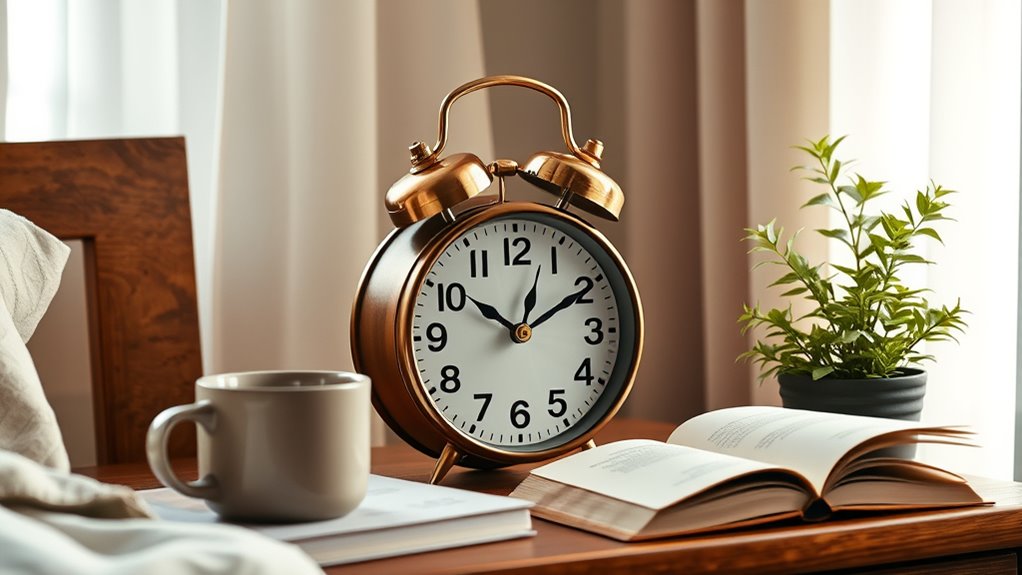

To create a screen-free alarm that still works, choose a traditional alarm clock with a loud buzzer or a sunrise alarm clock that gradually brightens your room. Place it across the room to encourage movement and avoid the temptation to snooze. Establish a calming bedtime routine without screens and keep consistent sleep habits. If you keep exploring, you’ll find helpful tips on making your mornings smoother and healthier.

Get wellness gear delivered free with Prime
- Fast, free delivery on millions of items
- Prime Video, Amazon Music and more included
- Member-only deals all year
Key Takeaways
- Choose a traditional alarm clock or sunrise alarm clock that uses light or sound without screens.
- Place the alarm device across the room to encourage movement and prevent snoozing.
- Avoid using smartphones or devices with screens as part of your waking routine.
- Develop a consistent bedtime routine that minimizes screen exposure before sleep.
- Reinforce waking habits with gentle physical actions, like turning off a vibrating alarm or pressing a button.
If you’re tired of waking up to a blaring alarm on your phone or tablet, creating a screen-free alarm is a simple and effective solution. Many people rely heavily on their smartphones, which can sometimes lead to smartphone dependency that disrupts healthy sleep habits. Constantly checking your device before bed or immediately upon waking can interfere with your sleep cycle awareness, making it harder to wake up feeling refreshed. By switching to a screen-free alarm, you reduce the temptation to check your device during the night or morning, helping you establish a more natural wake-up routine.
One of the main benefits of a screen-free alarm is that it minimizes exposure to blue light, which can suppress melatonin production and delay your sleep cycle. When you wake up to the harsh glow of a screen, your body might stay in a state of alertness longer than necessary, leaving you groggy. A physical alarm clock or a device that uses sound or light without relying on a screen can help you wake more gradually, aligning better with your natural sleep cycle. This awareness of your sleep patterns is vital for overall health, mood, and productivity.
Minimizing blue light exposure helps regulate your sleep cycle for a more natural wake-up.
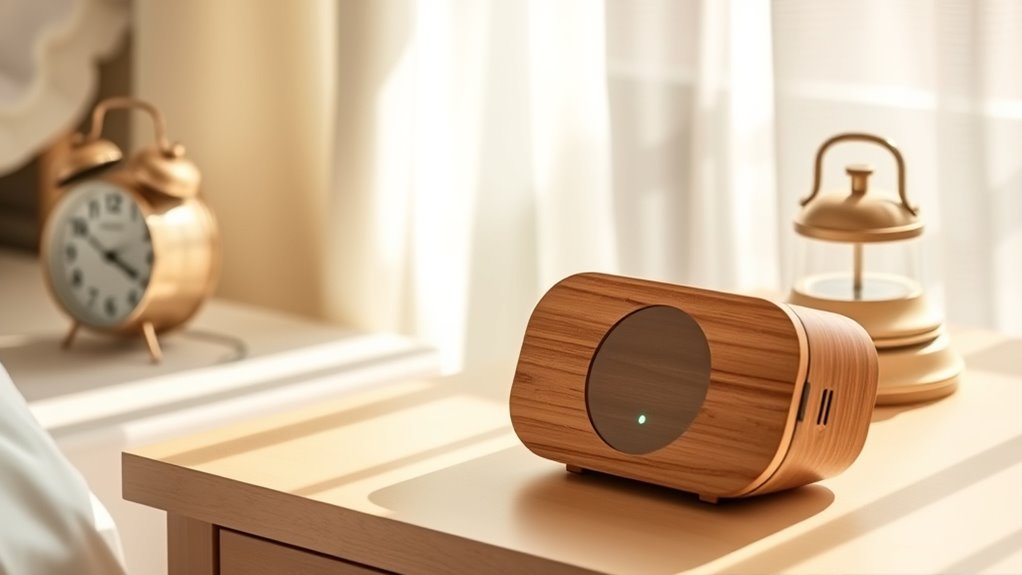
To create an effective screen-free alarm, you should choose a device that utilizes sound, gentle vibration, or light to rouse you. For example, a traditional alarm clock with a loud buzzer or a sunrise alarm clock that gradually brightens your room can serve as a more natural wake-up method. These options avoid the temptation of scrolling through notifications or checking social media first thing in the morning. Additionally, placing the alarm clock across the room forces you to get out of bed to turn it off, which can help you wake up more fully and reduce the chance of snoozing repeatedly.
Another tip is to establish a bedtime routine that minimizes your dependence on your phone. Set a specific time to power down your device, ideally an hour before bed, and replace screen time with relaxing activities like reading or meditation. This not only supports better sleep hygiene but also reinforces your awareness of your sleep cycle. When you wake up to a physical alarm, you’re less likely to experience the morning anxiety caused by missed notifications or social media updates, helping you start your day more calmly and consciously. Incorporating proper sleep habits can further enhance your overall rest and waking experience.
As an affiliate, we earn on qualifying purchases.
Frequently Asked Questions
How Long Do Traditional Mechanical Alarms Typically Last?
Traditional mechanical alarms usually last about 5 to 10 years, depending on their battery longevity and mechanical durability. You should regularly replace the batteries to guarantee consistent performance, as worn-out batteries can cause alarms to fail. The mechanical parts, like gears and springs, are built to endure daily use, but over time, wear and tear may require repairs or replacement to keep your alarm functioning properly.
Can Screen-Free Alarms Be Used for Multiple Wake-Up Times?
Yes, screen-free alarms can be used for multiple wake-ups. You can set multiple alarms, allowing you to wake up at different times without relying on a screen. Many mechanical or analog alarms feature multiple alarm settings or a snooze function, making it easy to manage multi wake ups. Just confirm your alarm device supports multiple alarms, so you can customize your wake-up schedule without needing a screen.
Are There Any Safety Concerns With Loud Mechanical Alarms?
While loud mechanical alarms can be effective, they do carry safety precautions you should consider. The loud alarm risks include potential hearing discomfort or triggering anxiety if you’re sensitive to noise. To stay safe, keep the volume at a reasonable level and place the alarm away from your ears. It’s wise to test the alarm regularly and make sure it doesn’t cause unintended stress, balancing effectiveness with your well-being.
What Are the Maintenance Requirements for Mechanical Alarm Clocks?
You need to wind your mechanical alarm clock regularly, typically once a day or as specified by the manufacturer, to keep it running accurately. Keep an eye on the battery lifespan if it has a backup battery, and replace it when it dims or stops working. Regularly clean the clock’s components to prevent dust buildup, ensuring smooth winding and alarm function. Proper maintenance keeps your clock reliable and accurate.
Do Screen-Free Alarms Work Effectively in Very Noisy Environments?
Yes, screen-free alarms can work effectively in noisy environments when you choose the right type. Vibration alerts can wake you through gentle or intense vibrations, while scent-based alarms can stimulate your senses with strong aromas. Both options bypass noise, ensuring you wake up on time. You can combine these methods for added reliability, making sure your alarm suits even the loudest settings and your personal preferences.
traditional alarm clock with loud buzzer
As an affiliate, we earn on qualifying purchases.
As an affiliate, we earn on qualifying purchases.
Conclusion
By choosing a screen-free alarm, you’re reclaiming your mornings from digital noise, allowing nature’s signals—like the sunrise or a gentle chime—to wake you naturally. Think of this alarm as a lighthouse guiding you safely into a new day, free from screens’ glare. Embrace the symbolism of dawn’s first light, awakening your senses and setting a peaceful tone. Sometimes, the simplest signals are the most powerful, guiding you gently toward a brighter, more mindful day.
vibrating alarm clock for waking up
As an affiliate, we earn on qualifying purchases.
As an affiliate, we earn on qualifying purchases.
As an affiliate, we earn on qualifying purchases.
Halloween Picks
halloween
As an affiliate, we earn on qualifying purchases.