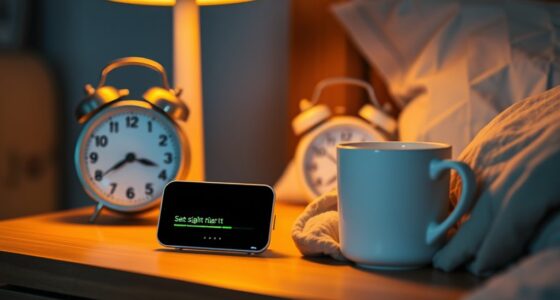
To avoid alarm fatigue and wake up feeling refreshed, consider replacing loud, abrupt alarms with gentle, gradual options like natural sunlight simulators or soft sounds. Creating a calming sleep environment, maintaining consistent sleep routines, and practicing good sleep hygiene can help you rest better and wake naturally. Avoiding sudden shocks helps preserve your energy and reduces stress. Keep exploring ways to improve your mornings to start each day more alert and balanced.

Get wellness gear delivered free with Prime
- Fast, free delivery on millions of items
- Prime Video, Amazon Music and more included
- Member-only deals all year
Key Takeaways
- Use gentle, gradual alarm sounds or natural light to wake up calmly and reduce alarm shock.
- Establish consistent sleep and wake times to support your body’s internal clock.
- Create a relaxing pre-sleep routine to improve sleep quality and morning alertness.
- Optimize your sleep environment: keep it dark, cool, and quiet for restorative rest.
- Limit sudden, loud alarms to prevent grogginess and promote a more refreshed awakening.

Alarm fatigue occurs when healthcare workers become desensitized to frequent alerts from medical devices, leading them to overlook or ignore critical alarms. While this issue is primarily discussed in medical settings, it also highlights a broader challenge that many face daily—how constant noise and interruptions can affect our ability to wake up refreshed and alert. If you’re struggling with mornings, it might be time to rethink your routines and sleep hygiene to break free from the cycle of exhaustion and being jolted awake by loud alarms. Recognizing how constant noise impacts your sleep can help you create a calmer environment that promotes restorative rest.
Constant noise and interruptions can hinder restful sleep and alertness, just as alarm fatigue affects healthcare workers.
Your morning routines play a significant role in how smoothly you shift from sleep to wakefulness. Relying solely on a loud, abrupt alarm can startle you awake, leaving you groggy and disoriented. Instead, consider setting a gentle, gradual wake-up alarm that mimics natural sunlight or uses soft sounds. This approach can help your body adjust more easily to waking, reducing the stress on your nervous system. Incorporating a consistent wake-up time every day, even on weekends, reinforces your body’s internal clock, making it easier to wake up feeling energized rather than exhausted. Establishing a calming pre-sleep routine—such as reading, stretching, or practicing mindfulness—also helps your body prepare for restful sleep, which in turn makes waking up less of a struggle.
Sleep hygiene is another pivotal element in improving your mornings. Good sleep hygiene involves creating an environment conducive to quality sleep—dark, cool, and quiet. Limit screen time at least an hour before bed, since blue light from devices can interfere with melatonin production, disrupting your sleep cycle. Avoid caffeine and heavy meals close to bedtime, as they can cause discomfort and make falling asleep difficult. Instead, focus on relaxing activities that promote rest, like taking a warm bath or listening to calming music. When your sleep hygiene is solid, your body gets the restorative rest it needs, resulting in mornings where you wake up naturally and feel more alert throughout the day.
Ultimately, breaking the cycle of disruptive alarm sounds starts with understanding how your routines and sleep environment impact your rest. By designing gentle wake-up methods and prioritizing sleep hygiene, you reduce the shock of abrupt alarms and set yourself up for a more peaceful, energized start to each day. Just as healthcare professionals can’t afford to ignore critical alarms, you shouldn’t ignore the signals your body gives when it’s time to rest and wake up. Small adjustments to your morning routines and sleep habits can lead to a healthier, more refreshed you.
As an affiliate, we earn on qualifying purchases.
Frequently Asked Questions
How Can Alarm Fatigue Impact Mental Health?
Alarm fatigue can negatively impact your mental health by causing increased stress and anxiety, which wear down your emotional resilience. When you rely on loud, multiple alarms, you may wake up feeling groggy or overwhelmed, making it harder to start your day positively. Over time, this constant disruption can lead to mood swings, irritability, and burnout, emphasizing the importance of mindful waking methods to protect your mental well-being.
What Are Alternative Methods to Traditional Alarms?
You can embrace gentle wake-ups that align with your biological rhythms, easing into the day instead of startling awake. Try smart alarms that monitor your sleep stages, gradually increasing light or sound to wake you naturally. Sunlight simulators or calming sounds can also help, promoting a smoother shift from sleep to wakefulness. These alternatives reduce alarm fatigue and support your mental health by fostering a more peaceful, restorative start to your day.
Can Alarm Fatigue Affect Workplace Productivity?
Alarm fatigue can definitely affect your workplace productivity. When alarm design relies on loud, jarring sounds, you might wake up feeling groggy and less alert. This impacts your waking strategies, making it harder to start your day energized. By choosing alarms with gentler sounds or alternative methods, you can improve your alertness and focus, leading to better performance and less fatigue throughout your workday.
How Does Alarm Fatigue Influence Sleep Quality?
Alarm fatigue can markedly impact your sleep quality by causing sleep disruption and increasing morning grogginess. When you’re exposed to multiple alarms or loud sounds, your body struggles to shift seamlessly from sleep to wakefulness, leading to fragmented rest. This constant disturbance can leave you feeling tired and unrefreshed, making it harder to start your day alert and focused. To improve sleep, consider gentler wake-up methods that reduce alarm fatigue.
Are There Specific Populations More Vulnerable to Alarm Fatigue?
Alarm fatigue hits certain groups harder, like shift workers and the elderly, because they often face constant alerts disrupting sleep. Imagine a battle where your senses become dulled—this is what they experience, making them more vulnerable. Elderly health is compromised when disrupted sleep worsens cognitive decline, while shift workers struggle to maintain alertness. Both groups need tailored solutions to break free from the cycle and protect their well-being.
As an affiliate, we earn on qualifying purchases.
Conclusion
So, next time you set your alarm, ask yourself: are you truly waking up refreshed or just numbing your senses? Alarm fatigue can dull your response and affect your mornings. Rethink how you wake up—try gentler methods or smarter alarms. Isn’t it time to start your day energized instead of exhausted? Small changes can make a big difference. Wake up better, feel better, and seize each day with a clearer mind.
As an affiliate, we earn on qualifying purchases.
sleep environment blackout curtains
As an affiliate, we earn on qualifying purchases.
As an affiliate, we earn on qualifying purchases.
Halloween Picks
halloween
As an affiliate, we earn on qualifying purchases.