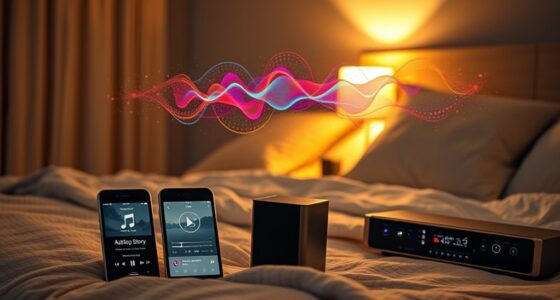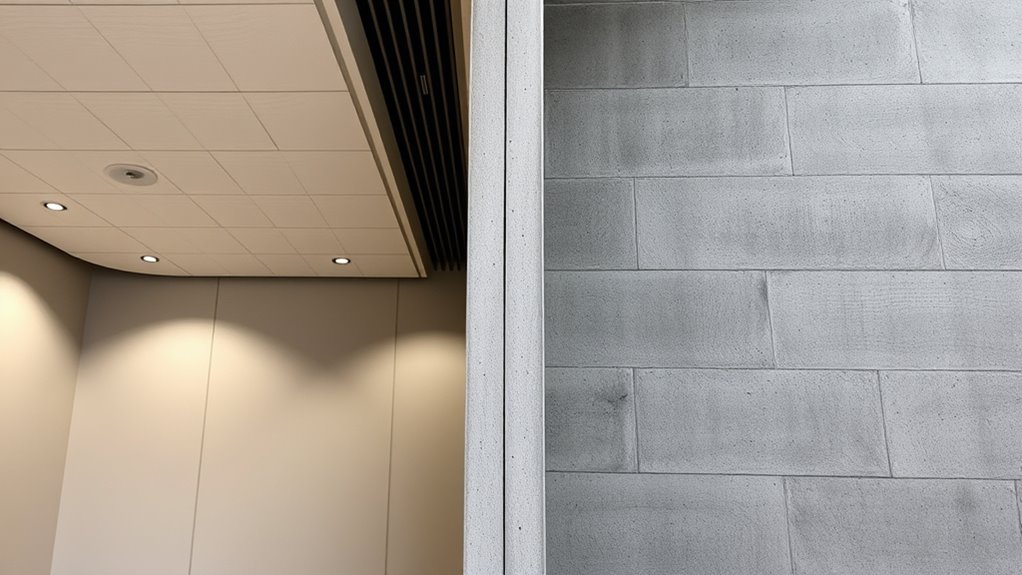
Sound masking adds background noise to blend distracting sounds and create privacy, while sound proofing uses barriers and insulation to block or absorb sound physically. Masking provides a subtle ambient environment, ideal for open offices or hospitals, whereas proofing is suited for studios or private spaces needing complete sound containment. Understanding their differences helps you choose the right solution for your needs. Keep exploring to learn more about how each method works and when to use them.
Key Takeaways
- Sound masking adds steady background noise to reduce speech intelligibility, while sound proofing physically blocks or absorbs sound.
- Sound masking creates ambient noise to mask disruptions; sound proofing installs barriers to prevent sound transmission.
- Sound masking is ideal for open offices and hospitals; sound proofing suits recording studios and private offices.
- Sound masking enhances privacy subtly without eliminating all sounds; sound proofing aims for complete sound isolation.
- Choosing between them depends on whether the goal is to mask conversations or fully block sound transmission.
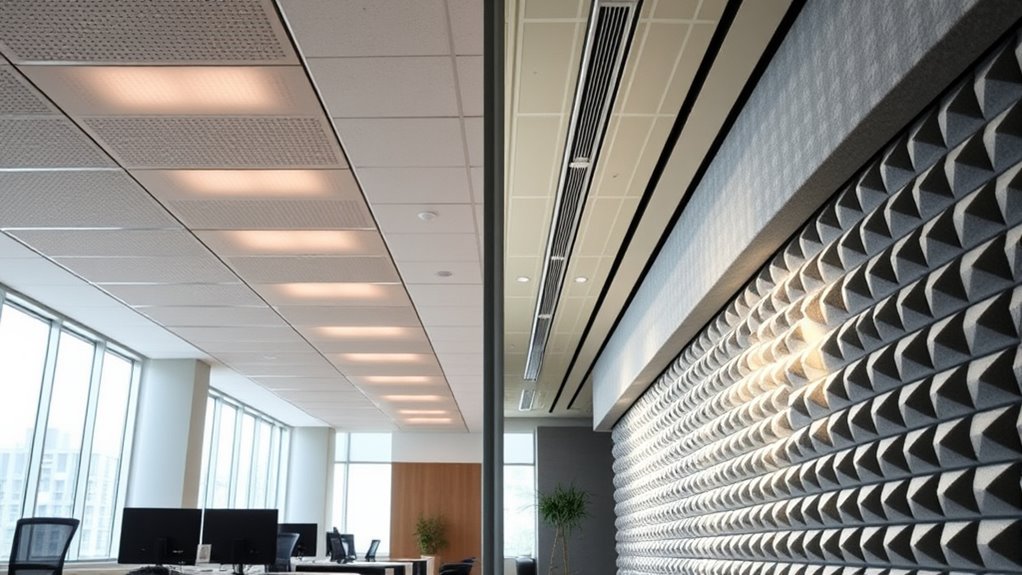
When it comes to reducing noise, understanding the difference between sound masking and sound proofing is essential. Both are crucial noise control strategies, but they serve different purposes and are used in distinct ways to enhance acoustic privacy. Sound masking involves adding a background sound, often a steady, unobtrusive noise, to blend distracting sounds and create a more peaceful environment. It’s like turning up the background noise so that sudden or loud sounds become less noticeable. This method is especially effective in open offices, hospitals, or places where privacy is vital because it minimizes speech intelligibility and prevents conversations from being overheard. When you implement sound masking, you’re essentially filling the acoustic space with a consistent sound that makes other noises less disruptive, thus improving overall acoustic privacy without physically blocking sound. Additionally, sound masking can be customized to suit different environments and noise levels, making it a versatile solution for many settings.
On the other hand, sound proofing takes a more physical approach. It involves adding barriers or materials to block or absorb sound waves, preventing them from entering or leaving a space. Think of it as creating a sound fortress around a room. Sound proofing is essential when you need to contain noise within a space or prevent external sounds from penetrating. Materials like dense drywall, acoustic panels, sealing gaps, or adding insulation are common solutions. If your goal is to achieve complete silence or prevent sound from traveling between rooms, sound proofing is your best strategy. It’s especially useful in recording studios, conference rooms, or private offices where confidentiality and clarity are paramount.
While both sound masking and sound proofing improve acoustic privacy, they do so differently. Sound masking subtly makes sounds less noticeable by adding ambient noise, making it ideal for environments where speech privacy is needed without creating a completely silent space. Conversely, sound proofing physically blocks sound, creating a barrier that keeps noise from escaping or entering a room. Your choice depends on your specific needs: if you want to make speech less intelligible and improve overall comfort, sound masking is effective. If you need to eliminate or considerably reduce sound transmission, sound proofing is the way to go. Knowing this distinction helps you select the right technique for your environment, ensuring you implement the most efficient noise control strategy for your space. Understanding the acoustic environment and your specific noise control goals is crucial when choosing between sound masking and sound proofing.
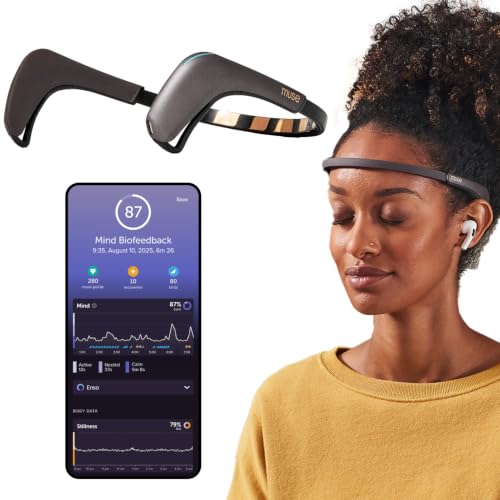
MUSE 2: The Brain Sensing Headband USB-C- EEG MUSE Headband Meditation Tracker - Multi Sensor Biofeedback Devices for Home Use with Responsive Sound Feedback Guidance - Neurofeedback Devices
- Immediate EEG Feedback: Core session tracking included
- Premium Subscription Benefits: AI Coach and 500+ meditations
- Personal Meditation Coach: Guides relaxation and mental wellbeing
As an affiliate, we earn on qualifying purchases.
Frequently Asked Questions
Can Sound Masking Improve Speech Privacy in Open Office Environments?
Yes, sound masking can improve speech privacy in open office environments. By adding a consistent background sound, it helps mask conversations, reducing speech clarity and making it harder for others to overhear sensitive discussions. This privacy enhancement creates a more focused workspace, minimizing distractions and ensuring confidential information stays private. Implementing sound masking effectively balances noise levels, allowing you to communicate comfortably without compromising your privacy.
Is Soundproofing Effective Against Low-Frequency Noises Like Traffic?
Yes, soundproofing can be effective against low-frequency noise like traffic, but you’ll face some challenges. Low-frequency sounds are hard to block because they easily pass through walls and barriers. To improve effectiveness, you should use specialized soundproofing materials, like mass-loaded vinyl or acoustic panels designed for low frequencies. Keep in mind, complete elimination is tough, so combining soundproofing with other solutions might give you better results.
How Much Does Installation of Sound Masking Systems Typically Cost?
The cost of installing sound masking systems typically ranges from $1,000 to $5,000, depending on factors like room size, system complexity, and installation expenses. Larger or more complex spaces require more equipment and professional setup, increasing overall costs. You should consider these cost factors when budgeting, and consulting with a professional can help you get an accurate estimate tailored to your specific needs.
Can Soundproofing Be Combined With Sound Masking for Better Results?
Yes, you can combine soundproofing with sound masking for better results. Using hybrid acoustic solutions allows you to enhance noise control by addressing both soundproofing and masking. This combined noise management approach reduces unwanted noise while creating a more comfortable environment. Implementing these strategies together maximizes effectiveness, especially in busy offices or shared spaces. You’ll enjoy improved privacy and sound clarity, making your space more productive and peaceful.
What Maintenance Is Required for Sound Masking and Soundproofing Solutions?
Did you know that proper maintenance can extend the lifespan of your sound system by up to 30%? For sound masking and soundproofing solutions, you should follow a regular maintenance schedule, including cleaning and inspecting for damage. Keep your sound system’s components in top shape, replace worn parts promptly, and guarantee all materials remain effective. Routine checks help maintain ideal performance and ensure your investment continues to provide peace and privacy.

Entertech Flowtime: Biosensing Meditation Headband - Brain Tracker for Neurofeedback Training at Home - Heart Rate, Breath, HRV, Stress, Flow, Alpha, Theta, Beta, Gamma Wave Breakdowns
- Real-time Meditation Monitoring: Brainwaves, heart rate, and stress levels
- Scientifically Validated Meditation Lessons: Guided techniques for daily progress
- Detailed Performance Reports: Track and compare your meditation data
As an affiliate, we earn on qualifying purchases.
Conclusion
Understanding the difference between sound masking and soundproofing helps you choose the right solution for your space. Imagine a busy office where soundproofing keeps conversations private, while sound masking creates a comfortable background noise that reduces distractions. By selecting the appropriate method, you can improve privacy and comfort effectively. Whether for a workplace or home, knowing when to use each ensures you create a more peaceful, focused environment tailored to your needs.

Pulsetto FIT (V2) Wellness Wearable – Relaxation, Sleep & Daily Wellness Support Device
- Short, Easy Relaxation Sessions: 4-10 minute calming routines
- Lightweight, Ergonomic Design: Comfortable wearable for daily use
- Customizable Wellness App: Personalized sessions and tracking
As an affiliate, we earn on qualifying purchases.
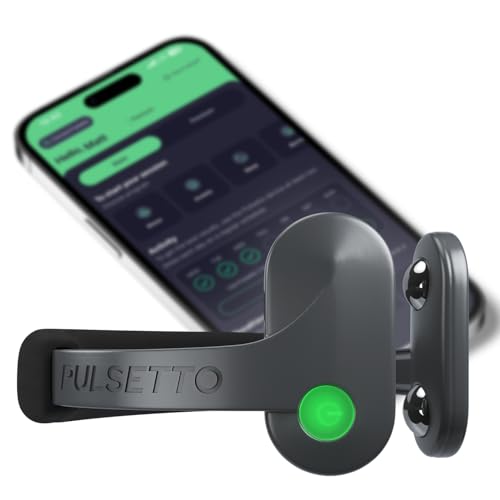
Pulsetto Lite (V1) Wellness Wearable – Relaxation & Daily Wellness Support Device
- Quick Relaxation Sessions: 4-10 minute calming routines
- Portable Wellness Device: Compact for home or on-the-go use
- Customizable with Pulsetto App: Personalize sessions and track progress
As an affiliate, we earn on qualifying purchases.