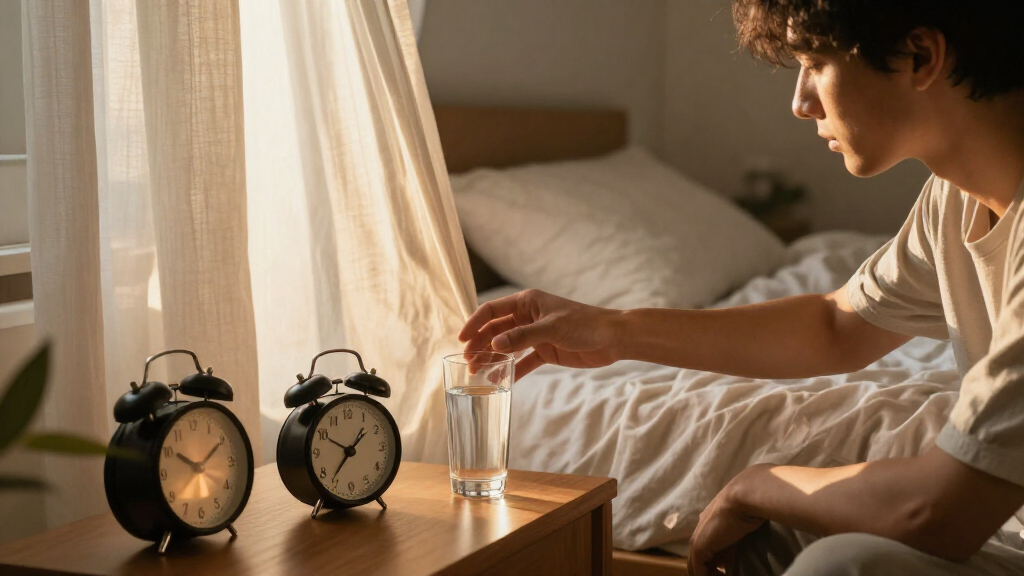
TL;DR

Get wellness gear delivered free with Prime
- Fast, free delivery on millions of items
- Prime Video, Amazon Music and more included
- Member-only deals all year
Sleep inertia is the temporary drop in alertness and performance after waking. Research reviewed in the source material points most consistently to getting enough sleep and avoiding an alarm during your biological night; caffeine and light may help some people, but neither is an instant or proven fix.
Sleep inertia—the temporary grogginess and reduced performance after waking—is more likely to ease when people get enough sleep and avoid waking during their biological night, according to research cited in a recent review of the evidence. Caffeine and morning light may help in some situations, but studies do not establish either as a reliable, immediate way to clear the fog.
Sleep inertia is a recognized period of impaired alertness and mental and physical performance after waking, not a measure of character or effort. A 2019 review by Hilditch and McHill describes the state; clinical writing also associates it with grogginess, disorientation and difficulty becoming fully awake. It can affect people who otherwise sleep well, though its severity varies.
The most consistent factors identified in the supplied research are sleep loss and when a person wakes. People tend to perform worse after partial sleep deprivation than after a full eight-hour sleep opportunity. Waking during the circadian low point—part of the body’s biological night—can also make inertia worse. A 2023 review by Kovac and colleagues places that low point at about 3 a.m. to 5 a.m. for someone sleeping roughly 11 p.m. to 7 a.m., while stressing that timing shifts with schedule and chronotype.
Evidence on other interventions is less settled. Several studies link waking from deep, slow-wave sleep with stronger inertia, but results vary and may be affected by sleep pressure and circadian timing. That uncertainty limits claims made for apps that promise to identify a light-sleep window and prevent grogginess.
Caffeine has limited experimental support. A small study found improved vigilance 12 to 18 minutes after waking among people given caffeine gum after a nap. But a separate crossover study found median time to peak blood caffeine was about 40 minutes for gum and 38 minutes for a caffeinated drink, with no significant difference. Caffeine may begin to have effects before its peak, but it is not an instant switch, and the evidence does not show gum works faster than a cup of coffee.
Light may improve how waking feels without clearly improving measured performance. Two home studies found that artificial dawn lighting, ramping to 50 or 250 lux before waking, reduced reported inertia complaints over two-week conditions. In a 2023 at-home crossover study of 36 adults woken 45 minutes after bedtime, light-emitting glasses improved self-reported alertness and energy, but not psychomotor vigilance performance.
Sleep science · morning performance
Sleep Inertia Remedy: What Actually Clears the Fog
Sleep inertia is a short-lived drop in alertness and performance after waking. Evidence most consistently points to getting enough sleep and avoiding wake-ups during your biological night. Caffeine and light may help in some situations, but neither is an instant, proven fix.
Recommended by nightlysolutions.com · AI-assisted guides
More support exists for sufficient sleep and circadian timing than for popular quick fixes.
Self-reported alertness and objective vigilance do not always move together.
01 / What sleep inertia is
A real transition, not a character flaw
Grogginess, disorientation and reduced mental or physical performance can follow waking—even in people who otherwise sleep well. Severity varies from person to person.
Alertness dips
Sleep inertia describes a temporary period when alertness and performance are degraded after waking.
Sleep and timing
Partial sleep deprivation is linked with worse performance than a full eight-hour sleep opportunity. Waking in the circadian low can add to the effect.
Sleep stage
Deep, slow-wave sleep has been linked to stronger inertia in several studies, but findings vary and may be confounded by sleep pressure and timing.
02 / How the evidence compares
Prioritize the foundations
The source material includes reviews and small experiments with different populations and outcomes. These evidence bands summarize the relative support described there.
These are qualitative summaries of the supplied review, not measured effect sizes or a direct comparison. The research does not establish cold water, a distant alarm, a specific routine, or sleep-stage apps as dependable ways to restore morning performance.
03 / What interventions show
Promising signals have limits
Some studies found changes in how participants felt or performed. Neither caffeine nor light has been established as a reliable, immediate remedy for everyone.
May help, but takes time
A small post-nap study found improved vigilance 12–18 minutes after caffeine gum. A separate crossover study found median time to peak blood caffeine was about 40 minutes for gum and 38 minutes for a drink, with no significant difference. It is not an instant switch.
Feeling brighter is not the whole picture
Two home studies reported fewer inertia complaints with artificial dawn lighting. In a 2023 study of 36 adults, light-emitting glasses improved self-rated alertness and energy, while psychomotor vigilance performance did not improve.
04 / Research voices
What the papers say
These findings describe specific studies and schedules. They do not provide a universal alarm time or individualized treatment plan.
“Sleep inertia is a transition after waking in which alertness and mental and physical performance are degraded.”
Hilditch and McHill · 2019 review
05 / A practical sequence
Start before the alarm
Use the evidence as a guide to sensible questions, not as a prescription for a particular schedule or product.
Sleep opportunity
Consider whether your schedule leaves enough time for sleep and whether that opportunity is consistent across nights.
Wake timing
When your schedule allows, review whether the alarm regularly falls in your biological night. Timing shifts by schedule and chronotype.
Quick fixes carefully
Light or caffeine may help in some situations, but neither guarantees immediate alertness or better performance.
Persistent sleepiness
Ongoing or severe sleepiness is different from ordinary short-lived inertia. Consider professional advice for persistent sleep problems.
06 / Safety and uncertainty
Do not assume you are fully alert
The evidence does not identify the cause of an individual’s persistent morning impairment. It also does not establish a precise alarm adjustment, a universal circadian clock, or the suitability of caffeine and light devices for every health condition.
Updated October 2026 · Sleep science & basics
Shopping for sleep science?
Explore guides kept up to date. These product roundups are separate from evidence for treating sleep inertia.
Sleep Timing May Beat Morning Tricks
The reviewed evidence provides more support for sleep opportunity and circadian timing than for commonly suggested quick fixes such as cold water, placing an alarm across the room or following a particular morning routine. Studies have not established those tactics as dependable ways to restore performance.
The distinction between feeling awake and performing better matters for people who must drive, operate equipment or make decisions soon after rising. Light may improve self-rated energy while leaving a vigilance test unchanged, and caffeine can take time to reach peak levels. Neither finding establishes that a person is fully alert immediately after waking.
Persistent or severe sleepiness differs from ordinary short-lived inertia. The evidence summarized here concerns waking-related impairment and does not diagnose its cause in any individual. People with ongoing sleep problems may need professional advice rather than relying on alarm adjustments or stimulants alone.
Products Worth Considering

BowFlex Results Series SelectTech Adjustable Dumbbells (Pair)

Bowflex SelectTech 840 Adjustable Kettlebell

Therabody Theragun Mini 3rd Generation Massage Gun, Black
As an affiliate, we earn on qualifying purchases.
How the Evidence Breaks Down
The source material draws on reviews and experiments rather than reporting a new clinical trial or public-health announcement. Hilditch and McHill’s 2019 review describes sleep inertia and discusses sleep loss, timing and sleep stage as possible influences. A 2023 review by Kovac and colleagues gives an example of circadian timing for a typical 11 p.m. to 7 a.m. sleep schedule, not a universal clock for everyone.
The intervention findings come from studies with different designs and outcomes. The caffeine-gum research involved a small post-nap study, while the light-emitting-glasses study involved 36 adults woken shortly after bedtime. Some measured performance; others recorded how participants said they felt. These differences make the results useful but limited: an improvement in one measure, population or setting does not establish a general remedy.
Sleep stage is another unsettled piece. Deep sleep has been associated with stronger inertia in several studies, but the evidence does not cleanly separate stage from how much sleep a person needs or when they wake. That is why a device’s prediction of sleep stage should not be taken as a guarantee of a clear-headed morning.
“Sleep inertia is a transition after waking in which alertness and mental and physical performance are degraded.”
— Hilditch and McHill, in a 2019 review
Where the Remedy Evidence Falls Short
The studies do not establish one remedy that reliably clears sleep inertia for everyone. The reported caffeine and light results come from limited experiments, and effects differ depending on whether researchers measure how alert someone feels or how well they perform. The source material also does not provide a direct head-to-head comparison of the full range of popular morning tactics.
Individual circadian timing cannot be inferred from the example clock hours alone. It shifts with sleep schedule and chronotype, and the studies described do not establish a precise alarm time that will work for a particular reader. Findings linking deep sleep with stronger inertia also remain disputed or potentially confounded.
The supplied material gives no detail on the safety or suitability of caffeine or light devices for particular health conditions, and it does not offer an individualized treatment plan. It also does not establish whether persistent morning impairment in any one person reflects sleep deprivation, a timing mismatch or another sleep or health issue.
Practical Changes Before the Alarm
The evidence points first to reviewing sleep opportunity: whether there is enough time set aside for sleep and whether that amount is consistent across nights. If a schedule allows, moving the alarm later may increase sleep opportunity, but the studies do not establish a specific adjustment, such as 20 or 30 minutes, as an effective intervention. Any change should also account for individual circadian timing.
People who use morning light or caffeine should note the limits of the evidence: light may change perceived alertness without improving a performance test, and caffeine takes time to reach peak blood levels. The source material does not identify a single proven protocol for either intervention. Anyone with a medical condition, ongoing sleep disruption or persistent daytime sleepiness should seek guidance from a qualified health professional rather than treating a morning routine as a substitute for assessment.
No new study, guideline or next publication date is specified in the source material. Further research could clarify which interventions improve performance, how long any benefit lasts, and which people are most likely to benefit.
Key Questions
What is sleep inertia?
Sleep inertia is the temporary grogginess and reduced alertness or performance that can follow waking. Research describes it as a recognized state, and it can occur even in people who generally sleep well.
What has the strongest support for reducing morning fog?
The research summarized here most consistently points to getting enough sleep and avoiding an alarm during a person’s biological low. Neither is a guaranteed cure, and the relevant timing differs between people.
Does coffee clear sleep inertia immediately?
No. Limited research suggests caffeine may reduce some impairment, but blood caffeine levels take time to peak. One comparison found median peak times of about 38 minutes for a drink and 40 minutes for gum, with no significant difference.
Can morning light make someone more alert?
Some studies found that artificial dawn lighting or light-emitting glasses improved reported alertness or reduced complaints. In one 2023 study, however, improved self-rated alertness did not translate into better psychomotor vigilance performance.
Do sleep apps prevent grogginess by waking someone at the right stage?
The evidence linking sleep stage to inertia is mixed and may be confounded by sleep pressure and body-clock timing. The studies described do not show that an app can reliably select a light-sleep moment and prevent morning fog.
Source: lifehack.org