
TL;DR

Get wellness gear delivered free with Prime
- Fast, free delivery on millions of items
- Prime Video, Amazon Music and more included
- Member-only deals all year
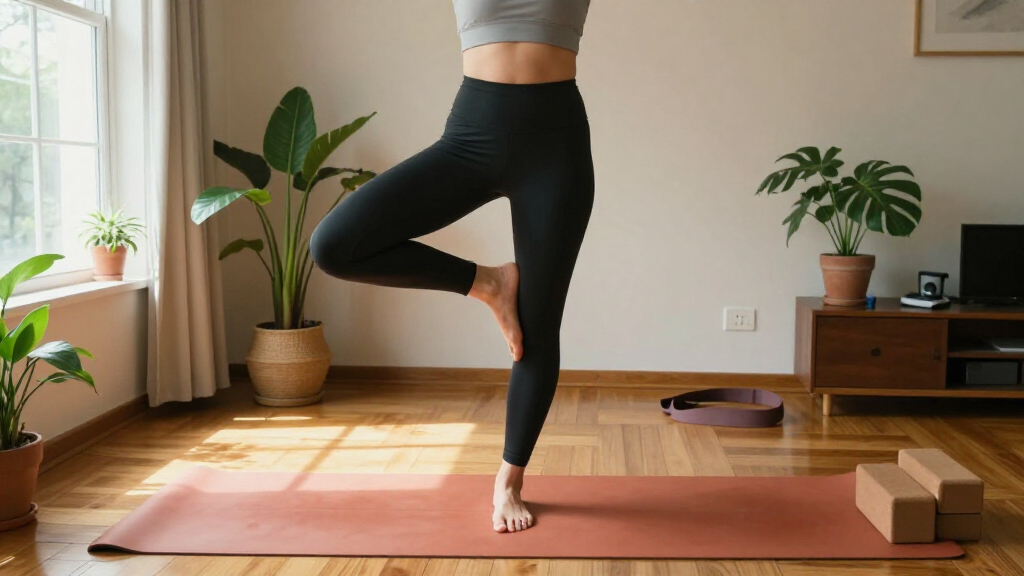
Yoga teacher Cheryl McColgan recommends tree pose, eagle pose and warrior three as single-leg exercises that can train balance and stability. She advises beginners to start with tree pose, use a fixed gaze and add a wall or chair for support as needed.
A Fit&Well report names tree pose, eagle pose and warrior three as three yoga poses that teacher Cheryl McColgan recommends for practicing balance and stability. The poses use single-leg positions, and McColgan advises beginners to start with tree pose and use a wall or chair for support if needed.
McColgan, founder of Heal, Nourish, Grow, says yoga can train proprioception: the body’s ability to sense its position and movement. She says poses that involve balancing on one leg also work muscular strength and endurance. These are her explanations for why the movements may support balance practice, not findings from a clinical trial cited in the report.
For tree pose, stand on one foot and place the other foot against the standing ankle, calf or inner thigh, avoiding pressure on the knee. Hands can rest in prayer position, reach overhead or hold a support. In eagle pose, bend the knees slightly, cross one thigh over the other and, if possible, hook the raised foot behind the standing calf. The arms cross in front, with palms coming together if comfortable.
In warrior three, shift weight onto one leg, hinge forward at the hips and extend the other leg behind, keeping a slight bend in the standing knee. Arms may be held in prayer, extended back alongside the torso or reached forward for a greater balance challenge. The report suggests holding each position for three to 10 breaths before switching sides. McColgan recommends fixing the gaze on one point; beginners can keep toes on the floor in eagle pose or use a chair or wall.
Building Balance With Supported Practice
Balance exercises can form part of a movement routine as people age, and these poses offer a structured way to practice shifting weight and maintaining control on one leg. McColgan says the movements engage muscles around the ankles, knees and hips while asking the body to adjust its position. The report does not establish how much these poses improve balance, or whether they prevent falls or injuries.
The suggested adjustments make the sequence adaptable: a practitioner can begin with a steadier version and reduce support only when comfortable. That matters because balance poses may feel difficult even when performed slowly. A wall, chair or toes kept lightly on the floor can make practice more manageable than attempting the full pose immediately.
As an affiliate, we earn on qualifying purchases.
A Three-Pose Beginner Progression
The report presents the poses in a suggested order: tree pose first, followed by eagle pose and then warrior three. Tree pose allows several foot placements and arm positions, while eagle adds crossed legs and arms. Warrior three asks the practitioner to hinge forward while lifting the back leg, making the body’s balance demands different from the upright poses.
All three are held for a short, breath-counted interval, with a switch to the other side afterward. McColgan also offers a simpler starting exercise for people not ready for the full positions: stand on one leg while brushing your teeth. The source does not provide a detailed training schedule or specify how often to practice.
“One of my favorite things about yoga is that it trains proprioception—your body’s ability to sense its own movements and position—so it can definitely help with balance and stability.”
— Cheryl McColgan, yoga teacher and founder of Heal, Nourish, Grow
As an affiliate, we earn on qualifying purchases.
Limits of the Report’s Evidence
The supplied report gives a yoga teacher’s recommendations and instructions, but does not cite a study directly comparing these three poses or measuring their effects. It is unclear how much balance or stability may change, over what period, or whether results differ by age, experience or health status. The article also does not describe a clinical protocol or claim that the poses prevent falls.
Individual comfort and ability can vary. People with injuries, pain, mobility limitations or health conditions may need tailored guidance before trying balance exercises. The report does not offer individualized advice or specify warning signs for stopping a pose.
As an affiliate, we earn on qualifying purchases.
How to Begin the Practice
The report’s practical next step is to try the poses in sequence, beginning with a supported version of tree pose and moving on only as balance and comfort allow. Keep a stable chair or wall within reach, choose a fixed point for the gaze and stop if a position causes pain or feels unsafe. In eagle pose, the foot can remain on the floor rather than being wrapped around the calf.
Readers looking for evidence beyond the recommendations will need research that measures outcomes from a defined yoga program; none is cited in the supplied report. For now, the poses are presented as options for balance practice, not as a guaranteed result or substitute for professional advice when health concerns are present.
As an affiliate, we earn on qualifying purchases.
Key Questions
Which three poses does the report recommend?
Yoga teacher Cheryl McColgan recommends tree pose, eagle pose and warrior three for balance and stability practice.
Which pose should beginners try first?
McColgan suggests starting with tree pose, then progressing to eagle and warrior three as comfortable. A wall or chair can provide support.
How long should each pose be held?
The report suggests holding each pose for three to 10 breaths, then switching sides.
What if I cannot do the full pose?
Use a support or an easier variation. For example, in eagle pose, the lifted foot can stay on the floor instead of wrapping around the calf. McColgan also suggests briefly standing on one leg during a routine task, such as brushing your teeth.
Does the report show these poses prevent falls?
No. It reports a teacher’s recommendations and explanation, but does not cite evidence that the poses prevent falls or establish how much they improve balance.
Source: rss
Fall Picks
fall essentials
As an affiliate, we earn on qualifying purchases.