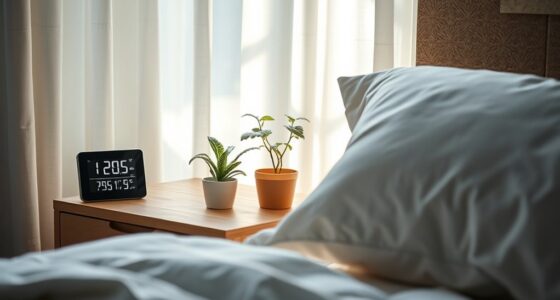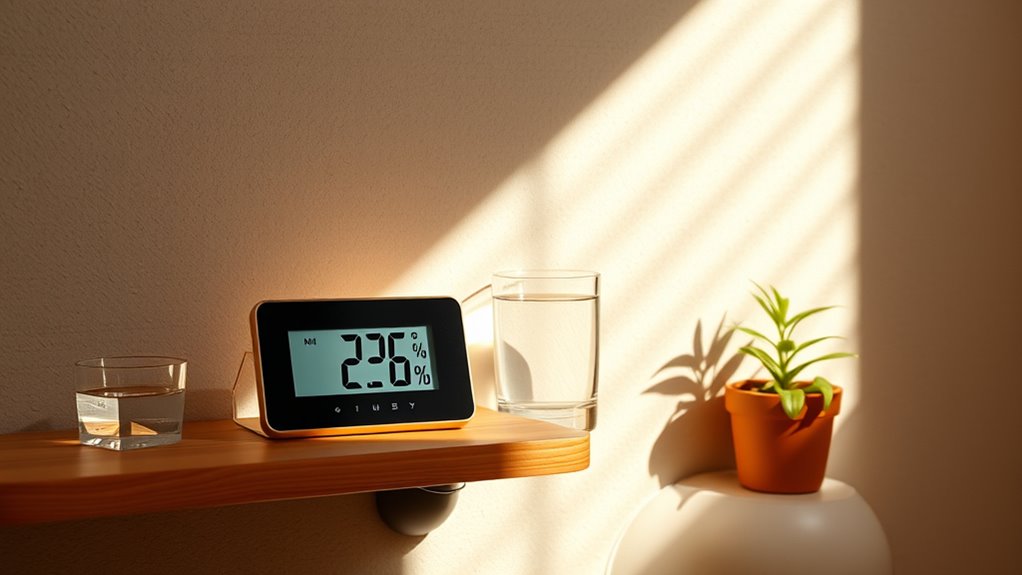

The quickest and cheapest way to measure your room’s humidity is by using a simple, affordable hygrometer. These devices are easy to find online or at local stores and give instant readings of your indoor moisture levels. Digital hygrometers are especially user-friendly and accurate for everyday use. If you want to learn how to keep your indoor air comfortable and healthy, keep going to discover more tips and tricks.
Key Takeaways
- Use an affordable digital hygrometer to quickly measure indoor humidity levels.
- Calibrate your hygrometer regularly with a salt test or calibration kit for accuracy.
- Keep the hygrometer at room temperature, away from direct sunlight or moisture.
- Check humidity levels frequently to monitor indoor air quality easily.
- Maintain 30-50% humidity with humidifiers or dehumidifiers based on readings.

Have you ever noticed how indoor air can feel damp or dry without you realizing it? That’s a common sign that your room’s humidity levels might be off. To get a clear picture, you’ll want to measure your humidity accurately. The simplest way is to use a hygrometer, a handy device that shows you the current moisture level in the air. But it’s not enough to just buy one—you also need to guarantee it’s giving you accurate readings. That’s where hygrometer calibration comes into play. Over time, these devices can drift out of calibration, which means their readings may no longer reflect the actual humidity. To keep your measurements reliable, it’s a good idea to calibrate your hygrometer periodically. You can do this at home easily by using a salt test method or a calibration kit, ensuring your device stays trustworthy. Regular calibration helps maintain measurement accuracy, which is crucial for managing indoor air quality effectively.
Knowing the ideal humidity levels is vital for comfort and health. Most experts recommend keeping indoor humidity between 30% and 50%. At this range, your air isn’t too dry, which can cause dry skin and respiratory irritation, nor is it too damp, which promotes mold growth and dust mites. Once you’ve calibrated your hygrometer, check the reading regularly. If you notice the humidity falls outside the ideal range, you can take simple steps to adjust it. For dry conditions, using a humidifier can add moisture to the air, while a dehumidifier or increased ventilation can reduce excess humidity. Small adjustments like opening a window or placing bowls of water can also help fine-tune the moisture level.
Measuring your room’s humidity doesn’t have to be complicated or expensive. Digital hygrometers are affordable and straightforward, giving quick and accurate readings. Keep in mind that temperature impacts humidity readings, so consider monitoring both, especially if you’re trying to optimize air quality or prevent mold. By regularly checking and calibrating your hygrometer, you guarantee that you’re acting on accurate data. This helps you maintain a comfortable living environment and protects your health. Remember, understanding your indoor humidity is a simple yet effective way to improve your home’s air quality without costly equipment or extensive effort. Just a few minutes of regular checking and some minor adjustments can make a significant difference in how your home feels and functions.
Frequently Asked Questions
Can I Measure Humidity Without Any Tools?
Yes, you can estimate humidity without tools using DIY methods and household indicators. Pay attention to things like condensation on windows, mold growth, and static electricity, which suggest high humidity. If your skin feels dry or your wooden furniture warps, humidity might be low. These signs aren’t precise but give you a rough idea of your room’s moisture levels without needing specialized equipment.
How Often Should I Check My Room’s Humidity?
Think of checking your room’s humidity levels like tuning a musical instrument—you want it just right. You should check your DIY hygrometer weekly, especially during seasonal shifts or if you notice stuffy air or condensation. Regular checks keep your environment in harmony, preventing mold or dryness. Staying attentive to humidity levels guarantees your space remains a comfortable, healthy haven, like a well-conducted symphony that’s always in tune.
What Is the Ideal Humidity Level for a Room?
The ideal indoor air humidity level for your room is between 30% and 50%. Maintaining this range helps with humidity control, preventing issues like mold or dryness that can affect comfort and health. You should regularly check your indoor air humidity with a hygrometer to make certain it stays within this range. Proper humidity control keeps your environment comfortable, minimizes allergens, and protects your home’s structure.
Can High Humidity Cause Mold Growth?
You might wonder if high humidity causes mold growth, and it definitely can. Excess moisture creates the perfect environment for mold to thrive, which impacts air quality and makes mold prevention harder. To keep your space healthy, monitor humidity levels and reduce excess moisture. Proper ventilation, dehumidifiers, and fixing leaks are key steps. Controlling humidity helps prevent mold, improves air quality, and keeps your home safe and comfortable.
Are There Natural Ways to Reduce Humidity?
Yes, you can naturally reduce humidity by using natural dehumidifiers like silica gel or charcoal, which absorb moisture effectively. Houseplants also help control humidity levels by releasing moisture into the air, so choose plants known for humidity regulation. Ventilate your space regularly, open windows, and use exhaust fans when possible. These simple steps can lower humidity without harsh chemicals, creating a healthier, more comfortable environment.
Conclusion
Now that you know how to measure your room’s humidity quickly and cheaply, you’re like a detective with the tools to solve the mystery of comfort. Keeping your humidity in check is as essential as a gust of fresh air on a hot day. Don’t wait for problems to creep in—stay proactive and guarantee your space feels just right. With these simple tips, you’ll create a cozy, healthy environment you can truly enjoy.