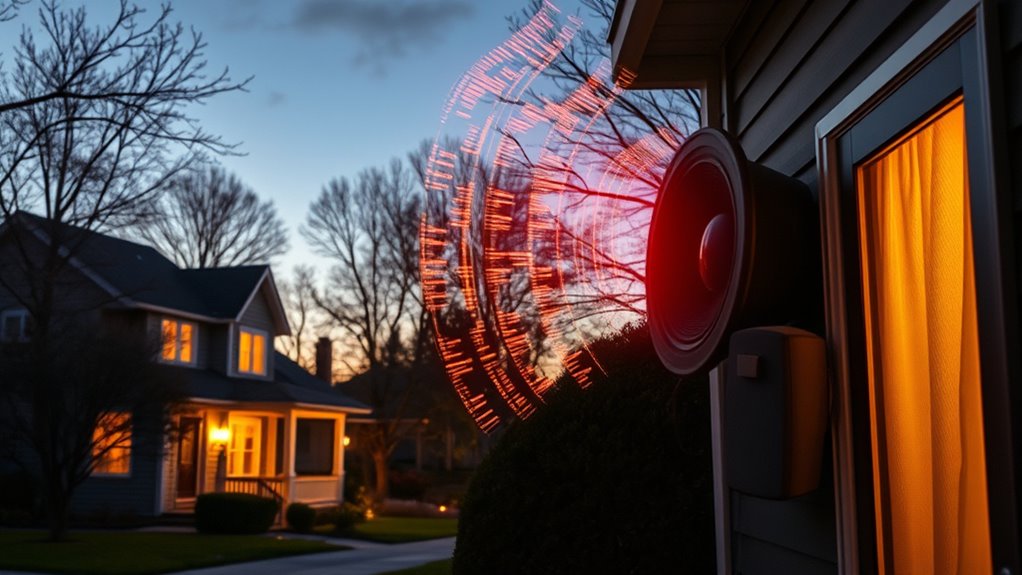

If your neighbors’ bass keeps you up, try sealing gaps around doors and windows to block sound leaks. Use heavy, dense materials like acoustic panels or thick curtains to add mass and dampen vibrations. Position furniture like bookshelves against shared walls and add rugs with padding to absorb sound. Playing white noise or ambient sounds can mask bothersome bass. Combining these strategies enhances your chances of peaceful sleep—discover more effective low-frequency fixes ahead.
Key Takeaways
- Seal gaps around doors and windows to prevent sound leaks from bass vibrations entering your space.
- Add heavy, dense materials like acoustic panels, mass-loaded vinyl, or thick curtains to absorb low-frequency sounds.
- Place furniture such as bookshelves or upholstered items against shared walls to dampen bass energy.
- Use white noise, ambient sounds, or music to mask and reduce the perception of bass noise.
- Collaborate with neighbors to lower their bass volume during late hours for a mutually agreeable solution.
Ever since your neighbor cranked up their bass late at night, you’ve been struggling to get any sleep. The deep thumps and low-frequency vibrations seep through your walls, making it impossible to relax or focus. Luckily, there are soundproofing techniques you can try to block out the bass and restore some peace. First, focus on reducing the amount of sound that enters your space. Heavy, dense materials work best for soundproofing, so think about adding mass to your walls with acoustic panels, mass-loaded vinyl, or even thick curtains. These materials absorb and dampen vibrations, preventing bass frequencies from passing through. Installing bass traps in corners can also help absorb low-frequency energy, which tends to accumulate there. Additionally, sealing gaps around doors, windows, and electrical outlets ensures that sound doesn’t find sneaky paths into your home.
Adding acoustic panels, heavy curtains, and sealing gaps can significantly reduce bass noise entering your home.
Another effective approach is bass frequency adjustment. If your neighbor’s sound system has adjustable bass controls, try speaking with them to see if they can lower the bass levels during late hours. Many modern sound systems allow you to reduce bass output or shift it to higher frequencies that are less intrusive. If they’re unwilling or unable to make adjustments, you can use your audio equipment or white noise machines to mask the bass. Playing ambient sounds, such as white noise or nature recordings, can drown out the low-frequency vibrations and make the bass less noticeable. Understanding soundproofing materials and their properties can help you choose the best solutions for your specific situation.
When tackling bass noise, it’s also helpful to think about furniture placement. Heavy bookshelves filled with books or large, upholstered furniture can act as additional sound barriers. Placing these against shared walls helps absorb some of the bass energy and prevents it from bouncing around your room. Rugs and carpets, especially those with thick padding, can also dampen vibrations that travel through your floors. If possible, add a layer of drywall or acoustic panels to your walls for extra soundproofing. These don’t have to be permanent; removable panels can be effective and flexible.
In the end, combining soundproofing techniques with bass frequency adjustment offers the best results. While you might not be able to eliminate all noise, these strategies drastically reduce the impact of your neighbor’s bass. Taking proactive steps not only helps you sleep better but also creates a more comfortable living environment. Remember, a little effort goes a long way in making your home a peaceful retreat from noisy neighbors.
Frequently Asked Questions
Can Soundproofing Completely Eliminate Bass Noise From Neighbors?
Soundproofing can’t completely eliminate bass frequency noise from neighbors, but it can markedly reduce it. The effectiveness depends on the type of soundproofing materials you choose and how well you install them. Thick insulation, mass-loaded vinyl, and resilient channels help absorb low-frequency vibrations. Keep in mind, achieving total elimination is difficult, but proper soundproofing can make a noticeable difference in minimizing that deep bass noise and improving your comfort.
What Are the Legal Limits for Bass Sound Levels in Residential Areas?
You should know that sound level regulations and noise ordinance limits vary by location, but generally, residential areas restrict bass noise to about 55-60 decibels during daytime and lower at night. Check your local laws to find specific noise ordinance limits. If your neighbor exceeds these limits, you can file a complaint with local authorities or seek mediation to resolve the issue legally.
How Do I Identify Which Neighbor Is Causing the Noise?
You can’t judge a book by its cover, so start by using sound level meters and noise mapping to pinpoint the source of the bass. Move around your home during noisy times, taking recordings to identify which neighbor’s sound spikes. Share your findings calmly with neighbors or authorities. This data-backed approach helps you identify the culprit without guesswork, moving toward a peaceful resolution.
Are There Any Eco-Friendly or Non-Invasive Solutions for Bass Noise?
You can try eco-friendly solutions like adding soft furnishings or acoustic panels made from natural materials to absorb bass vibrations. Non-invasive methods include using white noise machines or earplugs to mask the sound without disturbing your neighbor. Consider communicating kindly about the issue, and explore soundproofing options that don’t require major renovations. These eco-friendly and non-invasive methods can help reduce the bass impact without creating conflict.
How Long Should I Wait Before Taking Further Action Against Persistent Bass Noise?
You should wait at least a week before taking further action, allowing time for noise monitoring and understanding the timing considerations of your neighbor’s bass patterns. Keep a log of incidents and note specific times to build a clear case. If the noise persists beyond this period, consider speaking to your neighbor calmly or contacting building management or local authorities. Patience and documentation are key to resolving persistent bass issues.
Conclusion
Don’t let your neighbor’s bass become a tidal wave crashing into your peace. With a few simple fixes, you can turn down the volume and restore calm to your nights. Remember, soundproofing is your shield, and communication is your bridge. By taking action, you’re building a quieter, more peaceful harbor amidst the storm of noise—because peace isn’t just a dream; it’s a home you create.